Cover illustration

TheDaily Front

Issue No. #261024 Saturday, October 24 2026 #261024 — SATURDAY, OCTOBER 24, 2026
The algorithms promise tomorrow; the balance sheet asks for receipts.
Saturday, October 24, 2026 The Daily Front No. #261024 — Contents
30stories
8,981points
5,265comments
252kllm tokens
Assembled with 31 model calls — 176,732 tokens read, 75,090 written.

Highlights

No signs of AI payoff outside the tech sector

A chart-heavy dispatch finds AI’s financial gains concentrated in Big Tech, with little evidence yet of a broader corporate productivity boom.

We should be more ambitious with the software we build

A call for software builders to attempt difficult, consequential projects rather than settle for AI-era wrappers and rewrites.

Node2Shell evolves to HTTP2Shell, blast radius affects many HTTP libs and apps

A Brotli vulnerability widens from Node to a potentially sprawling ecosystem of HTTP libraries and applications.

Elon Musk Just Gave Europe a Reason to Replace American Technology

Europe’s strategic dependence on American infrastructure returns to the fore after the Starshield episode.

America has lost 200k of jobs in media, film and the arts. How much is AI?

The steep decline in creative-industry employment raises an uneasy question: how much is AI, and how much is the wider economy?

From the Editor

The machines have not yet delivered the promised dividend to Main Street, but they have certainly delivered a fine stack of arguments. Elsewhere, the old questions of sovereignty, security, and who controls the pipes have returned with fresh urgency. Read on before the next platform update changes the terms of service.

  1. No signs of AI payoff outside the tech sector3
  2. We should be more ambitious with the software we build4
  3. Elon Musk Just Gave Europe a Reason to Replace American Technology5
  4. America has lost 200k of jobs in media, film and the arts. How much is AI?6
  5. Node2Shell evolves to HTTP2Shell, blast radius affects many HTTP libs and apps7
  6. Twelve years of distributed SQLite8
  7. How close can pure functional programming get to C?9
  8. The Goose Programming Language10
  9. The Goose Programming Language11
  10. Small Programs and Languages12
  11. How Block Blast harvests its players for ad money13
  12. Alzheimer's breakthrough: 2 hrs of sleep restored without clearing brain plaques14
  13. Apple Security Research Device15
  14. Dream-116
  15. Google illegally cut down 250K trees in Finland for data center17
  16. Root shell on Samsung TV18
  17. OBS Studio 3319
  18. GPU-unlock: FP/BF16 instruction issue rate on Nvidia 3000's cards20
  19. FreeDNS21
  20. SpeedCrunch 1.121
  21. Danish Government silently drops plan to dump MS Office21
  22. Why is AI generated language so hard to understand?22
  23. Around a dozen banking apps began specifically permitting GrapheneOS23
  24. Show HN: Steal My Bitcoin23
  25. I don't understand quantum physics (2018)23
  26. Roku developer repositories moved from GitHub to GitLab23
  27. Listen and read USA nuclear forces Emergency Action Messages, heard on 11175 kHz23
  28. PHP Foundation 'under-funded' with one full-time staff member, director says23
  29. The St. Helena 5 pence coin shows Jonathan, a roughly 190 year old tortoise23
  30. Bbtree: Fastest Ordered Map23
The Daily Front Page 2 of 24
Saturday, October 24, 2026 The Daily Front No. #261024 — The AI Dividend, Still Deferred
article

No signs of AI payoff outside the tech sector

by the-mitr·▲ 566 points·596 comments·apollo.com ↗
the technology has delivered zero financial payoff to corporate America outside of tech.

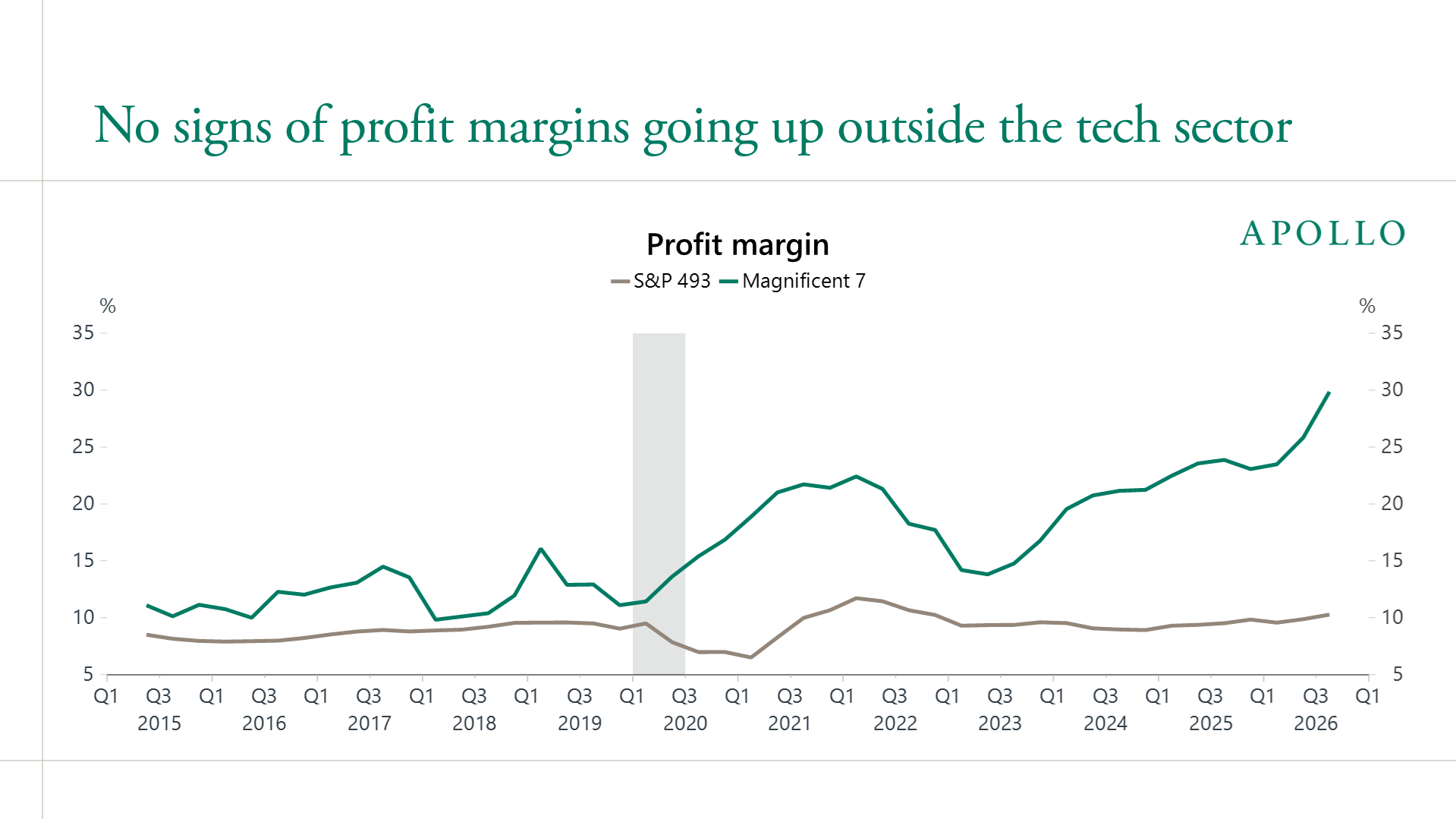
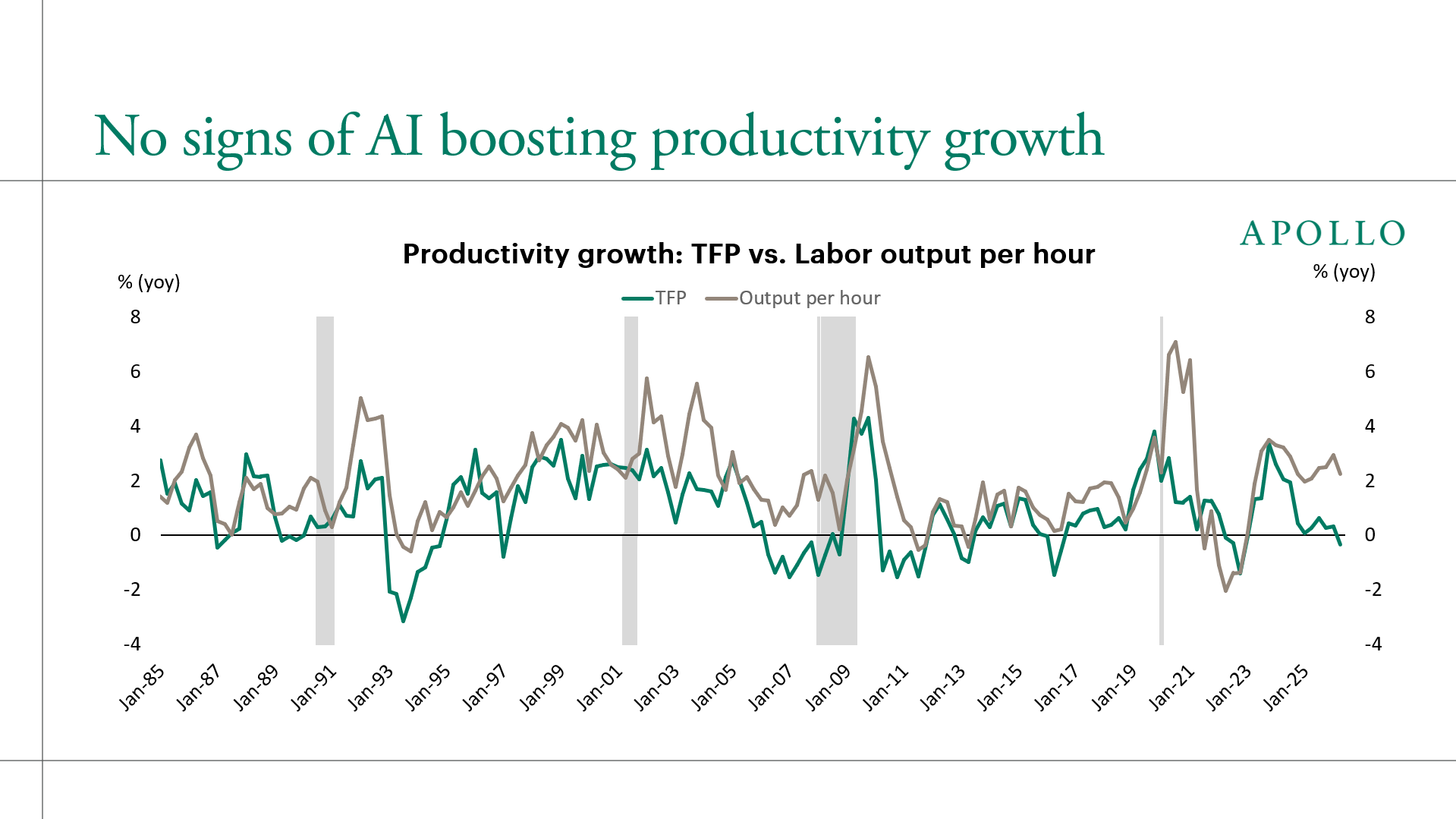
Despite massive investments and widespread hype surrounding artificial intelligence, the technology has delivered zero financial payoff to corporate America outside of tech. Revenue per worker is rising for the Mag 7 but is flat for the S&P 493, see the first chart below. Profit margins are rising for the Mag 7 but are flat for the S&P 493, see the second chart below. And there are still no signs of AI boosting productivity growth, see the third chart below. With no impact on the bottom line, mainstream corporate America is pulling back and starting to view token spending not as a source of growth but as a cost center that weighs on margins.

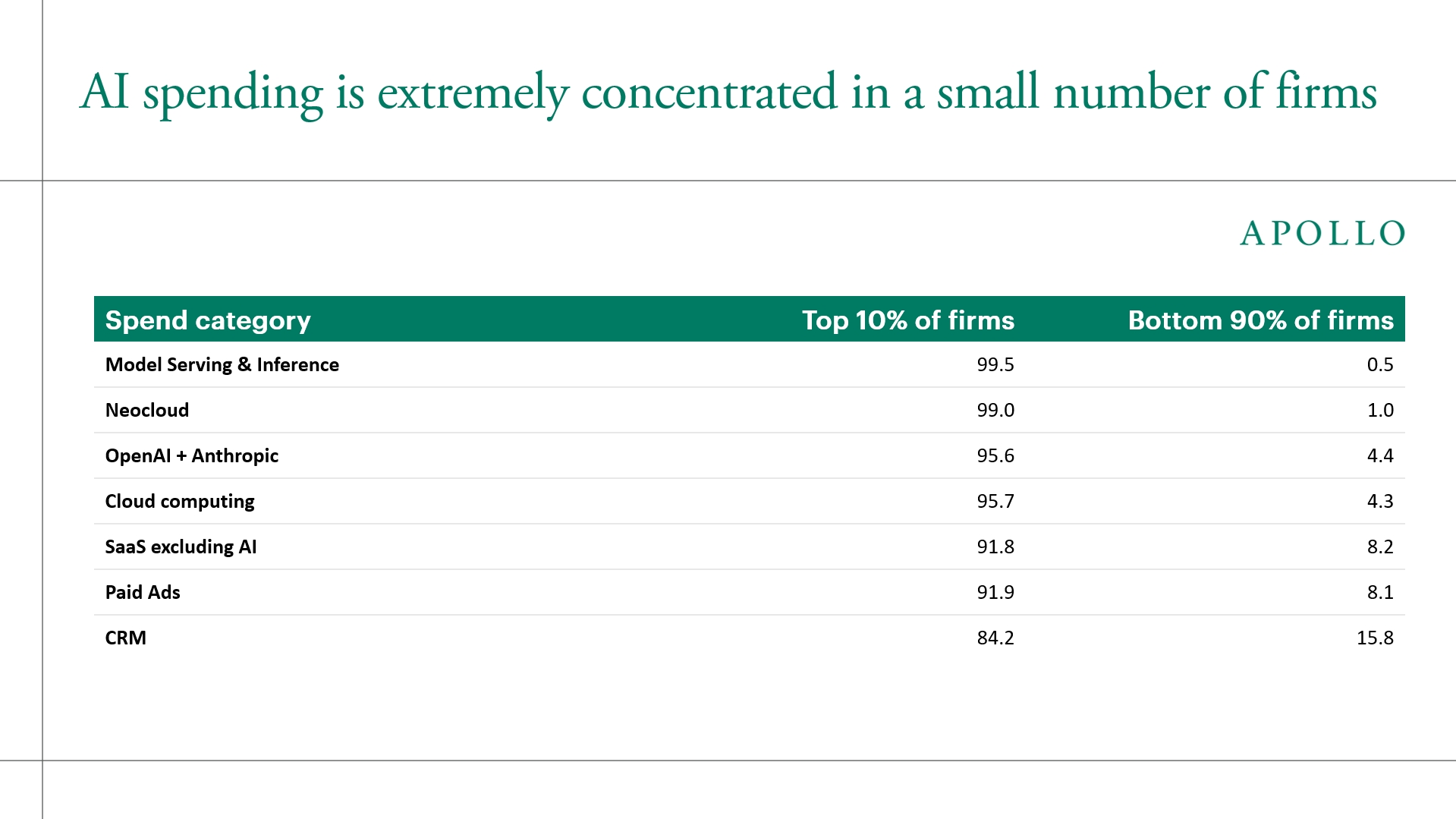
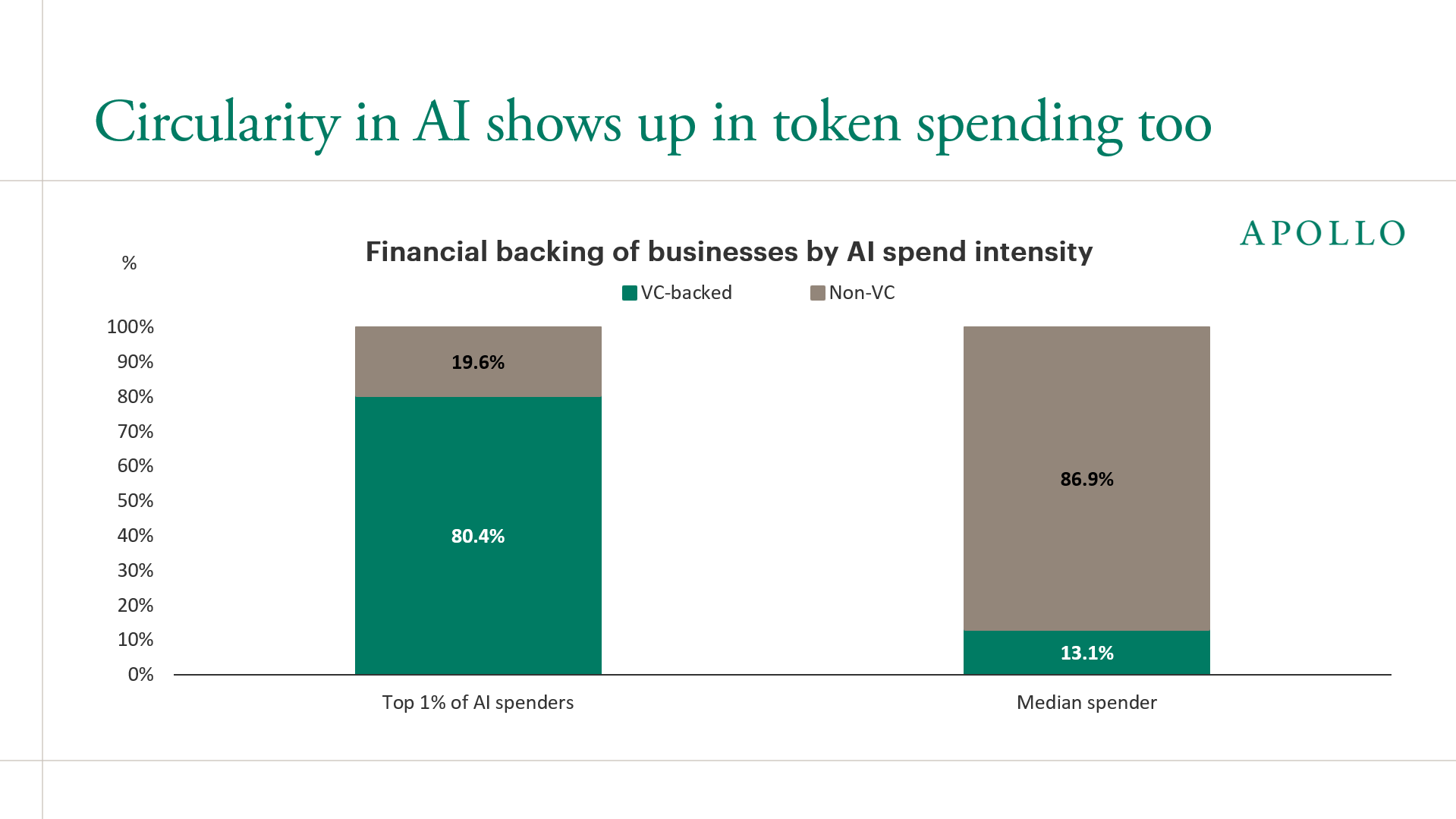
VC-backed companies are spending more and more on tokens, but mainstream corporate America does not need the latest model and is unwilling to pay for it. As long as agentic AI and token spending are confined to a small part of the economy, the macroeconomic effects of AI will be very limited, see the fourth and fifth charts below.

The question looking ahead is whether, even as models become commoditized, mainstream corporate America can turn increasingly cheap intelligence into higher revenue growth and higher profit margins. That may be harder than it sounds. AI may be a great calculator, but in business, intelligence is mostly judgment. Judgment depends on context, and the answer varies with which human or which model you ask. Perhaps most importantly, AI does not understand accountability, trust, culture, unwritten rules, ethical trade-offs or fairness, all of which shape reputational risk and ultimately drive revenue growth and profit margins.

The bottom line is that the AI story will be decided in the S&P 493, not the Mag 7, and so far, there is no evidence that revenue growth or margins are improving outside the tech sector.

Revenue per worker moving up for tech but not for the rest of the economy

Note: Inflation adjusted to 2019 Q4. Sources: Bloomberg, Macrobond, Apollo Chief Economist

No signs of profit margins going up outside the tech sector

Sources: Bloomberg, Macrobond, Apollo Chief Economist

No signs of AI boosting productivity growth

Note: Total Factor Productivity (TFP) is the utilization-adjusted series from the San Francisco Fed (Fernald, 2014), adjusted for cyclical variation in factor utilization. Sources: Federal Reserve Bank of San Francisco, US Bureau of Labor Statistics, Apollo Chief Economist

AI spending is extremely concentrated in a small number of firms

Sources: Ara Kharazian, Chief Economist, Ramp; Apollo Chief Economist

Circularity in AI shows up in token spending too

Sources: Ramp AI Index, Apollo Chief Economist

The Daily Front Page 3 of 24
Saturday, October 24, 2026 The Daily Front No. #261024 — The Builder’s Brief
article

We should be more ambitious with the software we build

by ltratt·▲ 493 points·421 comments·danluu.com ↗
We should be more ambitious with the software we build.

Since early this year, Michael Malis (of pgrust) has been showing me interesting things he's done and saying

[W]e should be more ambitious1 with the software we build

There is, understandably, a lot of skepticism about projects like pgrust because there are so many low-quality AI-generated projects out there. If I didn't know Malis and didn't look into it, I would just assume that pgrust was another vibe slopped project that's never going to work. But I know Malis well enough to trust his work without looking into it, and if you look into it a bit, you'll see that in testing pgrust, he's testing thoroughly enough that he's even uncovering real bugs in Postgres, such as this numerical bug that can cause valid SP-GiST operations to fail, this format cache bug that can cause incorrect results from JSONPath, this pgcrypto bug that can cause later operations to fail, multiple memory safety bugs in the dictionary loader2, this money overflow bug, etc.

This isn't to say that pgrust is bug free3, but it does indicate that there's a substantial amount of testing happening and, even if pgrust itself is never successful, just making the attempt will have improved Postgres in a durable way. The main pitch for pgrust is actually performance, and that's where the really interesting work is happening; if pgrust fails, it's possible that some of the optimizations they've demonstrated will make it into Postgres, Clickhouse, etc., but that's obviously less direct than filing Postgres bugs which get fixed.

That being said, I find it understandable that, every time I see pgrust discussed on a news aggregator, most people dismiss it as vibeslop garbage because almost all of these rewrite projects are slop. If I didn't know Malis, I would make the same assumption, because who has the time to look into all of these projects? Because I know Malis, I didn't bother to look at it; I just trusted him (I only found the above because I wanted to check on pgrust before using it as an example for this post).

As a consumer of software, everywhere you look, there's slow software that the creator is claiming is fast because the creator is touting some slop benchmark, e.g., here's one of multiple examples I saw yesterday, and of course low-quality software that doesn't work is more common than ever.

But, as a builder of software, it doesn't matter that almost all of these projects are vibeslop, that other people are out there shoveling out huge piles of crap and calling it gold. You can build things like pgrust or other projects that would've been too large to really be feasible in the past and, if you do a reasonable job with testing and benchmarking, that stuff can actually be good-enough quality to use.

If I were writing it, I would say "we can be more ambitious with the software we build" and not "we should", but Malis has been casually chatting with me when he's said this, so maybe he would say the same in an actual post; don't read too much into should vs. can here. What's interesting to me is how capabilities have advanced such that we can do a lot more.

Just for example, after hearing that OpenAI was going to use Cerebras for their SOTA models and not just fast-but-low-quality models like 5.3-Codex-Spark, I looked at where time on my computer would go if I was using a SOTA model, but 10x to 100x faster; some things that were already sometimes a bottleneck that would only get worse with a faster model were:

  1. Ripgrep
  2. Compiling Rust
  3. Syscall and filesystem overhead

At the level of a "works for me" project, these are all things that can seriously be improved. I don't have much spare time at the moment but, even so, I built this regex engine that can be tweaked to be faster than other general-purpose regex libraries on any particular workload I care about, this ripgrep fork that uses the native code compiler from the regex engine and is faster for my codex ripgrep workloads (of course a text index is the better solution, but I've already worked on text indexing and this was a "just for fun" project where I wasn't trying to do the optimal thing), and a Rust that sped up builds for my projects (huge improvement for cold builds, moderate for warm, limited by wanting to avoid forking the Rust compiler front-end). For syscalls and filesystem overhead, just switching development from Mac to Linux improved this a lot, and of course this is another thing that can be sped up a lot as well, especially when agents are hammering lots of small filesystem operations (it's not uncommon to see my machine waiting on filesystem ops because the standard OS filesystem interface wasn't designed with modern disk performance in mind). With modern disks, there's no reason to use the *nix filesystem API. In the past, writing a developer toolchain that uses direct I/O instead of normal filessytem operations would've been an absurd endevaor, but that's totally doable now.

For someone like me who doesn't know anything about regexes, string matching algorithms, compilers, interpreters, etc., this set of projects would've taken a year or more to get to "works for me" quality. Instead, this was a low single-digit number of hours of my time. If I wanted to make any of these things meet a "useful product or open source project" quality bar, that would be a lot more work0, but it's still pretty incredible how much this process is sped up.

My read of Malis's meaning when he says “we should be more ambitious with the software we build”, is that it doesn't even occur to people to do these things that are now easy. For weeks, every time I logged into Twitter, I saw someone complain about how Rust compilation is slow and is limiting development velocity (I think this wasn't actually true when I saw the complaints, in that this was before 5.6 Sol and 6 Astra were available on Cerebras, and if you measured where the time actually went, Rust compilation time wasn't actually that much of a bottleneck at the time). Sure, Rust compliation is slow. You can just write a Rust interpreter as well as speed up compilation directly. There are problems like this which I see people complaining about daily that are solvable without a lot of time or effort now. As far as I can tell, these problems are problems because people are implicitly carrying around a pre-agentic cost model. Ten years ago, the kind of person who implemented a new compiler because their compiler was slow was the kind of person who started programming a new 3d game engine when they wanted to make an indie game, i.e., the kind of person who never ships anything. Most productive programmers I know still have an aversion to this kind of thing, even though it is now actually reasonable to implement this kind of thing now4.

Another project I previously mentioned was this Azul AI which is superhuman at matched time controls. When I did that (with GPT-5.1/5.2), with zero AI knowledge, it took about 5 hours of my time to get something superhuman, and about 20 hours of my time to become what appeared to be the strongest AI at the time, including being stronger against humans than this AI that was used to cheat on Board Game Arena. Gabriel Cangussu recently built an AI that demolishes my AI, and AFAICT, it took him substantially less time than my AI took me. From talking to him about it, one key difference is that Fable 5.1 and Opus 5.5 have a much better understanding of board game AIs. When I used GPT-5.1/5.2, pretty much every suggestion they had was wrong and I had to do a lot of steering to get things to be remotely reasonable. If I had GPT read a codebase or a paper to implement relevant techniques from the paper, it would fail. If I read the paper myself and named a technique, it would say it did the technique, but it would generally do something that superficially looked like the technique but wasn't the actual technique until I issued some corrections. When the model is that far from being able to do the right thing, if you have no background in the area, it's fairly time consuming to check if the model did the right thing since you have to learn enough about what it's supposed to do to be able to check that it did what was claimed.

When I did that project, I said to friends that I didn't think the state models were in could last. It seemed impossible that they wouldn't get good enough to be able to read a paper and implement the techniques soon, and it seemed like they should also be able to pick out codebases and papers to crib from as well. From my experience messing around a bit with Fable 5 and Cangussu's experience with Fable 5.1 and Opus 5.5, that seems to have happened, which is a huge time saver for someone like me who doesn't know anything about board game AIs (I know a little bit now, but still less than any real AI researcher)5.

For any particular domain, like board game AIs, you can say, "who cares? Board game AIs don't matter", but I've found this increase in capability to be true in quite a few different domains. Just for example, I did this toy eval of verification and test techniques with GPT-5.6 Sol implementing zstd on medium and xhigh. I haven't had time to write it up, but when I published that post, I also re-did the evals with GPT-6 Astra. 6 Astra was so good that I had to find different evals because models had advanced too much. For zstd, 6 Astra succeeds at passing all of the registered tests more than 99% of the time across all conditions, even the ones that significantly impair performance, like using TDD (and, BTW, it does it more cheaply as well, taking about $1 to implement zstd). I ended up using the IMAP RFC, which 5.6 Sol couldn't do effectively, and Pandoc, which is a pretty major thing to implement as it needs to be able to read and write many different formats6.

BTW, when people have said they used the new model and everything just works, software is solved, etc., I haven't found this to be true at all. It's true that there are a lot more things the newer model can one-shot, where things basically just work, but this just means that I end up working on more ambitious things where models still struggle7. I'm more productive and can work faster, but I find that, in terms of what I'm doing, I get farther from "it just works" with each more capable model because the gap between what the model can verify effectively without significant handholding and what the model can implement has been increasing8. All of that is a long-winded and less eloquent way of saying: we should be more ambitious with the software we build.

Thanks to Laurence Tratt, Yossi Kreinin, Alex Kolovsky, and Michael Malis for comments/corrections/discussion.

I've had this note on my recent posts, which also applies to this one. In order to get more posts out, I'm trying to crank posts out in half an hour and not review them much. This definitely means less well-supported posts. If I were writing this in my standard style, I would've had comprehensive benchmarks for all of my projects that I mentioned. Instead, I did a quick comparison that satisfied my curiosity and am writing this up without rigorous benchmarking, and there are maybe twenty or thirty things in this post that I'd like to do but haven't done.

I haven't even written up this Rust interpreter. If, five years ago, I'd cobbled together a Rust interpreter that got a 50x speedup on cold compiles and 2x on warm/cached builds (with much more being possible if edits to the Rust compiler were in bounds), that woudl be a super interestin thing that I'd want to write up, but even operating in this mode where I barely edit posts and just blast them out, this isn't interesting enough to write up because it's so easy to do things that would've been considered very interesting not all that long ago.

Appendix: we should be less ambitious with the software we build

Here's a comment from Yossi Kreinin, quoted (with permission, of course):

If you publish this I will publish a response explaining that for most people they should be less ambitious with the software they build with AI or they'll experience abject failure. I think a lot of the problems don't lend themselves that well to "agentic loops" since you don't have clear pass/fail criteria, and even when you do most people have trouble reasoning about giant black boxes which they can impose constraints on but can't understand the innards of [I include myself in this set.] This is a little bit like microservices I guess, where some people both need it and are very good at using it but likely for most people, they need it less and can't use it well at all. I sort of envy the ones who should and actually can be this ambitious about the software they build of course; not saying you shouldn't be more ambitious at all but moderating said ambition is a big part of handling the current situation for most I think

I have a similar thought about "there's no reason for software to be slow" BTW; in many cases, if you use AI to speed up some flow, you will add a bunch of messy code that will be overfit for the use case you tested on and will neither generalize, perf-wise, for all the use cases you should care about, nor will be maintainable upon future changes. If you know what you're doing and you understand how the system should be decomposed into parts and when it makes sense to go all-in on optimizing some part or a combination of them working together and how to properly benchmark it, etc., then things are great, but if for instance you have a manager who thinks there's no reason for software to be slow and he pushes people to use AI to make random parts of the software fast... Run for cover

My feeling is that, overall, the situation here is a bit analogous to the discussion here about why I don't like when people talk about how AI gives a 100x or 1000x productivity increase. There are some things that are sped up by a very large factor, easily over 1000000x. And some things don't currently get sped up at all. If you do exactly what you would've done five years ago, but with AI, the speedup is fairly poor because of Amdahl's law. But, in the general case, you can choose what to speed up and if you're looking for things that are productive to do, this often seems to involve things that were previously too expensive to do.

And, I think that you can often set up systems that have some kind of self-checking property even when most people wouldn't. This discussion of the implementation of Guards of Atlantis 2 is an example of that. It's a poor choice for an AI project because the official rules are a mess of ambiguous and contradictory English text (it's probably the game I've seen humans misplay at the highest rate, and the rules are confusing enough that the designer has often changed their mind about what their own rules mean despite continually maintaining that the rules are perfectly clear and one can play the game by simply reading the rules as written). If you try to produce a working set of rules in a naive way, AI won't really help with this (although it can speed up implementation once you have a clean spec), but for that, I was able to set up some kind of janky set of consistency checks between all of the inconsistent explanations of the game rules, which got fairly close to a correct set of rules (approximately as close as what someone else did with much more human effort and less of a systematic approach), which was enough to compare it to someone else's implementation and get a working set of rules. This setup did cost a lot more in tokens than a more manual approach. But it was "only" a month or two of the $200/mo OpenAI subscription with GPT-5.1/5.2, which is a lower cost than the cost in time of me sitting down and writing a clean spec for the game, i.e., a copy of the rules that is actually consistent and correct.

I feel like a lot of problems are in something like this class of problem, where it's possible to set up some kind of at least partially self-checking setup that a human can spend a small amount of time on. This also feels analogous to the situation about software testing at large, where (before coding agents) I found fuzzing and property-based testing to be highly effective. For most domains, people told me some kind of reason this kind of testing wouldn't work, but when I've tried these techniques with all of the domains people told me these techniques don't work for, they work fine. They're somewhat more work to apply, but they're still applicable and, AFAICT, more efficient and effective than writing traditional unit tests.

Part of the gist of Yossi's comment is that people aren't doing this kind of thing. Considering how many more bugs I see now than I used to, e.g., the last time I opened up the web chat for a big AI lab, I ran into a double-digit number of bugs within one minute, it's hard to say that Yossi is wrong. But, to that point, I still have my original opinion. Just because other people are pumping out vast quantities of barely working slop doesn't mean that you have to do the same thing.

Appendix: a few "random" examples

The examples in the body of the post I gave for things I've done are tooling things I never would've done. There are a lot more things like that as well since it's so easy to build "works for me" quality tooling that's intended solely for me. I do think it's possible to go further than is productive, e.g., Steve Yegge wrote a lot about Gas Town and how productive it was, but when he was building his next agentic framework, he noted that he never used Gas Town to successfully build anything other than Gas Town, people were into Ralph Loops for a while even though, when I tried comparing them, they seemed worse than just doing the naive thing I was doing at the time, normal loops with context where you sometimes clear context as appropriate instead of doing it by default at the completely arbitrary point of when a single turn is completed, etc., so I've tried to stick to things where the impact is pretty direct. Besides the obvious reason this has been effective, the dramatic change in model and harness capability over time means that what tooling it makes sense to build changes very quickly, so spending a lot of time working on any particular tool that will be suboptimal at best and quite possibly obsolete in three months doesn't really make sense.

And, for a lot of my personal tools, my assumption is that an AI lab will obsolete anything I make in short order. For a very silly example of this, I have a tool that was useful since the release of GPT-5.6 Sol that restarts codex when it finds a memory leak. Presumably, OpenAI will fix this at some point and this tool will become worthless. For a slightly less silly example, take the Rust interpreter I had some agent build. For token-budget reasons, a lot of things that ought to be done for a very high-performance interpreter haven't been done.

For example, the interpreter doesn't modify the actual Rust front-end compiler to make it easy to take updates; performance would be much better if I just made changes to the Rust front-end, but I don't have the token budget to maintain a compatible fork of the Rust compiler, but this shouldn't be a problem for OpenAI. OpenAI spent $10B+ on getting access to Cerebras while also preventing Anthropic from having access.

Funnily enough, for coding, on many tasks, if you actually use one of their SOTA models and compare it to what you get from Anthropic, the actual speedup isn't all that large because of time spent on things like compiling Rust. Given that they were willing to commit $10B+ on this, it stands to reason that they'll eventually do a better job at speeding up the relevant tools than anyone could feasibly do outside an AI lab, so there's not much point in spending too much effort on this (this could arguably be untrue if non-coding tasks are expected to completely dominate future OpenAI revenue in the short term, but even then, given what they pay for tokens vs. what I pay, it still seems like it would make sense for them to speed a lot of these things up given that I could do it outside of a lab; perhaps there's some kind of argument like, if you have access to their usage data, there are so many more important bottlenecks that this one doesn't make sense to prioritize, but it still seems like it should make sense for them at some point even if it doesn't fall into the top 100 bottlenecks for Cerebras-enabled coding agents).

Another kind of thing that one might not call ambitious, but that speaks to the kind of thing that's possible, are games that I've made. There are games I've thought about and wanted to make that I don't think are generally enjoyable enough that they make sense for a real audience, but that I've wanted to play. For example, ever since reading David Gerrold's Star Wolf books in the 90s, I've wanted to play a game that implements combat as described in the books, which is a sort of like submarine combat. At least among realistic war games, this genre is extremely niche because almost everybody finds naval combat boring, and submarine combat is a particularly boring subgenre of naval combat games, so this doesn't really make sense as a money-making game, but it's so easy to implement games that I had an agent implement the game so I could play it for an hour or two. I never would've spent 10-20 hours implementing a game so that I could play it for an hour or two, but I'd spend 5 minutes. I've also previously mentioned implementing a game with the same rules as Scout and Guards of Atlantis 2. I was never going to take the time to implement these games by hand just so I have a way to play with my friends on the occasions where we can't get together in-person, but I'm happy to have an LLM bash these things out. And, of course, for people who want to make games with a wider audience, there's a game renaissance going on right now due to coding agents. It's pretty amazing how many interesting and creative games are being made now that having programming skills and the time to put them to use is no longer a bottleneck for making games.

Data analysis is another thing where the productivity multiplier can be very high and I can do all sorts of things I never would've done. As I've mentioned in a number of my last posts, I have way too many of these projects to really be able to write them up, even when attempting to write very quickly and bash out posts in half an hour apiece.

When I've talked to people about their one-off tooling, there's a lot of fun stuff people have done. For example, here's something Peter Geoghegan mentioned a month or two back:

I had Fable implement a custom Neovim Lua function that formats code according to my very specific preferences. This is both something I don't want to maintain myself and inherently a Rube Goldberg device. Theoretically I could accomplish the same outcome in a principled way by patching clang-format, but my requirements are so exact that I think that approach would never be satisfactory.

We use a tool call pgindent, which is our fork of bsd_indent. You can approximate the same formatting rules using clang-format, but that isn't good enough. If I commit something that isn't perfectly formatted/indented according to pgindent, I get a CI failure that I'm expected to fix quickly -- something I'd really prefer to avoid ...

Practically speaking, getting slick, clang-format-style formatting that avoids nag emails about misindented code requires a total architectural mess (I also don't want to spend the time developing a principled approach, but that's really a separate issue). The function allows me to effortlessly format a given block of code from Neovim, similar to the clang-format LSP integration. I'm being unreasonably fussy here, of course, but I find that LLMs allow me to be this exacting about tooling.

The function performs multiple passes: an initial formatting pass using clang-format/clangd, and a separate formatting pass using pgindent. I need it to do both because clang-format handles some cases correctly that pgindent misses. This is brittle because I only want to format the code within a range of lines selected via block visual mode (I don't want to run clang-format on code not added by my patch). This conflicts with pgindent's design; it can only format whole C files.

Figuring out which relevant subset of the temp whole file buffer needs to be copied back into my working buffer is nontrivial. The initial line range I selected doesn't directly map to the affected C AST elements. So the function uses tree-sitter to intelligently delineate the exact subset of the temp indented C code that needs to be copied back. The rules need to be fuzzy in exactly the right way for cases where my selection straddles the same block of code. There are a bunch of edge cases.

Another complicating factor is that pgindent relies on a typedef file generated with objdump to identify types; without that file, the formatting looks wonky. The formatting function dynamically generates any extra typedefs from clangd, for that one file, so I don't have to worry about a stale typedef file (I might have created a new struct seconds before running the formatting tool, I don't want to run objdump on the whole postgres binary each time, that'd blow up latency).

This appears to work perfectly. The latency is totally acceptable. I have only a vague understanding of how all this works, though. I don't even know Lua. This will probably continue to work, even as further changes are made to our fork of bsd_indent that somewhat alter how code is formatted, which happens from time to time.

I'm skeptical of the saaspocalypse. But I do think that LLMs are writing a lot of useful software that would have been insanely uneconomical to write any other way. There's an interesting small subset of software that'd be impossibly tedious for any human to maintain, relative to the value that it creates.

I also caught with Malis while writing this and found out about all sorts of fun stuff he's been doing. It's enough that writing it all up in detail could be its own post, but one fun thing is that, the last time I taked to him about pgrust verification, he mentioned using Kani to verify some parts of the code. He's since switched to Lean and has been using Lean to verify things that are too complex to do in Kani. This would be another topic for another post, but I wonder why people have generally settled on Lean for LLM-driven proofs (as opposed to, say, ACL2). I wonder how Lean would look in an updated version of this theorem prover comparison, or if someone were to run a theorem prover eval that's analogous to this language eval.

Of course, you can think of plenty of examples out of AI labs, such as a mid-sized team Anthropic building an internal replacement for GitHub as well as some other tooling in five months

A team of seven people built both Scion and Antique (our code review tool, which we could easily write a whole other blog post about), not to mention half a dozen related systems, and fully migrated to them in five months.

I think these kinds of examples are interesting and they point to where the industry will be in the not-so-far future, but what you can do with unlimited tokens, while relying on other infrastructure and tooling built with unlimited tokens doesn't tell you much about what you can accomplish today without unlimited funds. Projects like pgrust as well as projects that people I know do in their spare time (of which I've probably mentioned something like 1%—there are just a lot of these, like David Turner creating an skipper for podcasts that's "works for me" quality that works better than anything he could find, the spare-time projects Dennis Snell mentioned here, etc.) are more representative of what you can do today.

  1. In this post, we're going to use ambitious in a way that feels consistent to me, but that one could argue is overloaded. I'm using this to mean, doing more than you could've before, in a generic sense. One could say that there's a difference between building a project that's larger than was reasonably feasible before and building some kind of super-specialized tool that could've been done before but just wasn't worth the time to build. While these are very different things, I think they both fall out of the same thing (it being much easier to produce software), so I feel pretty comfortable with this arguably overloaded definition. [return]

  2. Alex Kolovsky pointed out that these were not considered a bug. I see the argument from a security standpoint and I don't have enough context on Postgres to weigh on on this specifically, but I'll say that, for projects I've worked on, I've liked eliminating this kind of issue because it's a lot easier to find real bugs if you try to make your code clean from all issues like this. [return]

  3. One reason I trust Malis is that he's a lot more careful about what he claims than a stereotypical founder. For example, when I joined the pgrust discord to check out what people are saying, I saw this message from Malis (dated a month ago, 2026-09-17, an eternity in agentic coding land) in response someone asking about pgrust's readiness for use as a production database:

    I would not recommend using it as your primary production database today. We are setting a production deployment for a company right now, but they are more tolerant to their production database going down than most people. We'll have good empirical evidence on how reliable pgrust is after they start running it

    Malis doesn't seem like someone who would claim something is production ready when it's clearly wildly unready, like many well-known projects have, and it turns out he's not doing that.

    I wrote the draft of this a week before publishing and didn't have time to publish it. Since then, there was this pgrust Clickhouse benchmark controversy. On looking into this, the accusations of nefarious cheating seem to be false, and the accusation that it was premature to submit the preview of pgrust to the benchmark is something Malis acknowledged. I do think this is the kind of thing that a project will never live down, in that regardless of the truth of the matter, people will be bringing this up years later. You can see this right now in discussions around that specific controversy, and as we discussed when we look at Ed Zitron's prediction track record and when we looked at futurist predictors like Kurzwil, almost nobody actually looks at what actually happened and people will repeat incorrect statements that were based on vibes indefinitely.

    I don't think I can really present all of the evidence for why I trust Malis (technically, I could do it, but it would easily be a 20k+ word post), but if you look at how he discusses pgrust vs. how typical database founders market their new DB projects, it seems dramatically different to me. Of course there are extreme examples like MongoDB, which disputed correctness issues for years despite Kyle Kingsbury repeatedly showing that the anecdotes people had about data corruption were real. For an example that's more typical, a friend of mine worked as an early employee for a database startup. Their webpage bragged about doing some huge number of QPS. On testing it, my friend found that the claim was off by multiple orders of magnitude and suggested that the webpage get changed. The founder disagreed because they were going to hit the performance numbers, so it was still a true claim. After multiple years of performance improvements, the company eventually reduced the claim by one order of magnitude and they can still only hit that number with a very contrived, unrealistic, workload. This is, unfortunately, pretty normal for a company peddling a product based on its performance. By contrast, when I look at the pgrust discord to see what Malis is saying about performance, here's his most recent message:

    Right now, the best way to help is to find bugs and performance issues in 0.4-beta. The new query engine is very fast on some workloads, but it causes performance regressions on others, and it doesn't support some more complex queries. We're trying to track down everything that's either slower than Postgres or errors out. It's not an easy thing to do given the massive space of queries you can run

    We want to fix these things before the general release of 0.4-beta. Off the top of my head, there was a big performance regression in very fast queries. This is because we primarily optimized the new query engine for large-scale OLAP-like workloads. I'm doing optimization work to fix the very slow queries. I don't think there's any fundamental reason why the new engine should be slower than the previous one for fast queries

    Even though he was a founder and exec of a successful startup prior to starting the pgrust project, he never really got into the mindset that most founders seem to, where they seem to be able to say anything and believe anything they say. You might say this is a low bar, and I'd agree, but I still think it's rare and it's why I trusted what he says about pgrust without looking into it and also why, when I looked into it, his claims seem to be borne out by reality.

    [return]

  4. Another way to look at it is [this framing from Thomas Ptacek]:

    The last year in the technology industry has felt like 100 years all happening at once. Our industry is destabilized in a way nobody’s experienced since the advent of the personal computer. Every limit AI runs up against collapses within a month. Everything we do with frontier models today, in a few years we’ll be doing instantaneously and for free.

    Given the pace of change recently, I find it understandable that most people, even most programmers, aren't quite aware of what's possible right now. Speaking to non-programmer responses, one of the things I thought was interesting was how many people objected to this review of Ed Zitron's prediction accuracy because they thought that AI capabilities hadn't increased in the past two years. For most people I talk to, the idea that AI didn't improve from fall 2024 to fall 2026 is completely baffling (even if you think of programming as an exception and look at other capabilities), but there's a lot of people out there who are perhaps looking at the Google AI summary at the top of search results or using Copilot integrated into some Microsoft suite, who don't realize that capabilities have advanced. At every scale, there seems to be an information gradient like this, where very few people outside of labs have a good idea of what the most productive people are doing with models today.

    [return]

  5. This comment about an increase in cheating online has come to pass. On re-reading the actual comment that I wrote, I didn't explicitly write that it seemed inevitable that there would be a large increase in cheating, although it can be inferred from connecting the statements there together, and I've been on the record in public on some discords, etc.

    I don't follow the online game scene, but I'm told that for Azul (the most popular game on BGA, the biggest online board game platform for modern board games), 3 of the top 10 places last season were taken by cheaters, including top place. Also, as I've noted elsewhere in the past, BGA doesn't seem equipped to make reasonable policy decisions on almost any level. Things like the mechanics of their Elo ranking algorithm, their structure for game seasons, their policy for counteracting collusion, their policy for countering cheating, etc., are worse than the most naive straightforward solution you can think of so, as expected, they don't have a reasonable policy to counter cheating. The top ranks of the most popular game have been overrun with cheaters and this should be expected to spread to other games. As harms from AI go, this is a fairly benign one. It just happens to be one of a double-digit number of examples I saw last week of people being more ambitious in the software they create. I'm half mentioning this because it's easily quantifiable, and half because I predicted this would happen and it seems reasonable to follow up and see what happened.

    [return]

  6. Pandoc supports {html, docx, xlsx, pptx, csv, markdown, gfm, commonmark, commonmark_x, markdown_strict, markdown_mmd, markdown_phpextra, markdown_github, rtf, epub, odt, tsv, latex, ipynb, mediawiki, rst, asciidoc, bibtex, biblatex, org, typst, jira, docbook, endnotexml, ris, opml, dokuwiki, textile, man, mdoc, jats, csljson, fb2, pod, vimwiki, djot, creole, tikiwiki, twiki, t2t, haddock, muse, json, xml, native} as input formats and {pdf, html, html4, docx, plain, pptx, markdown, gfm, commonmark, commonmark_x, markdown_strict, markdown_mmd, markdown_phpextra, markdown_github, rtf, epub, epub2, odt, latex, ipynb, mediawiki, rst, asciidoc, asciidoc_legacy, bibtex, biblatex, org, typst, bbcode, bbcode_phpbb, bbcode_steam, bbcode_xenforo, bbcode_fluxbb, bbcode_hubzilla, jira, docbook, docbook4, revealjs, beamer, opml, dokuwiki, textile, man, texinfo, context, jats, jats_publishing, jats_articleauthoring, tei, icml, opendocument, csljson, fb2, ansi, chunkedhtml, djot, xwiki, zimwiki, vimdoc, haddock, markua, muse, ms, slidy, s5, dzslides, slideous, json, xml, native} as output formats (native is a serialized version of Pandoc's AST). [return]

  7. BTW, this makes public evals not very meaningful for many use cases because what I and other programmers who are using models often care about is how good the model is at a task where the model still needs human guidance, not how good the model is at a task that's trivial for the model. [return]

  8. This is not a claim about the future. Perhaps almost all or perhaps even all of the software skills I have will become irrelevant in the near future. But we're not there yet. At the moment, programming skills seem higher leverage than ever before. There's something a bit funny about the current moment, where it seems like having the skills that models are replacing makes one much more effective than people who are trying to use models without having those skills. I like Max Bittker's framing that models are very good at counterfeiting and the level of expertise it takes to distinguish a counterfeit from the real thing has been increasing as models improve. [return]

The Daily Front Page 4 of 24
Saturday, October 24, 2026 The Daily Front No. #261024 — Strategic Dependence
article

Elon Musk Just Gave Europe a Reason to Replace American Technology

by sblank·▲ 451 points·479 comments·steveblank.com ↗
it has sent tremors across Europe.

I’ve been in London for the last month and have heard policymakers react to the wake up call Elon Musk just delivered.


The decision of the U.S. to shut off intelligence and throttle the military version of Starlink called Starshield to Ukraine may have been a blip in the news in the US, but it has sent tremors across Europe.

For years doomsayers in the UK and Europe were worried about the U.S. having a kill switch in weapon systems and critical commercial technology that could disconnect them at will. Most people, including me, thought that it was a paranoid fantasy.

Until it happened. Seemingly on a whim of a single individual, (according to the Wall Street Journal) Elon Musk personally ordered the restrictions, and the effect was to tilt Russia’s war against Ukraine in favor of the Russians. This wasn’t an articulated U.S. foreign policy nor was it an announced act of the U.S. government. From news accounts it appears to have been a personal decision of an American CEO acting unilaterally.

Blowback

For whatever reason, whether it was to satisfy a request from the White House or some personal animosity to the Ukrainians, from Europe’s perspective, that’s almost beside the point. An American company operating critical military infrastructure was able to degrade the capability of an American partner in the middle of a war. Without warning.

The message heard loud and clear here in Europe was that the U.S. is an unreliable security and technology partner willing to throw any partner under the bus, at any time, for any reason.

The conversations I’ve heard have included, “what happens if other U.S. CEOs – Microsoft, OpenAI or Anthropic, Oracle, Palantir, or Google – decide to restrict/limit or deny access to their products? What capabilities would Europe lose if enterprise software and/or AI across Europe goes dark?” This was a laughable scenario until this week. To a lot of European decision makers, it is no longer outside the realm of possibility.

The lesson that was brought home was that no nation, Europe or elsewhere, can continue to outsource its national sovereignty and security by depending solely on US data systems or intelligence.

Unintended Consequences

Besides the political ramifications, the business ones are going to come home to roost. If every U.S. vendor is now a kill-switch risk, the allied market for that whole ecosystem shrinks. As it sinks into the European countries that the U.S, can simply shut off any technology, over time they will find and build alternatives. In the years ahead, this may cost American companies tens if not hundreds of billions of lost revenue.

Europe has been debating digital sovereignty for years. Up to this year, the idea of cloning the capabilities of the best U.S. products seemed like an insurmountable problem. And some, like low-cost access to space, still are. But today AI collapses the cost of creating sovereign software at exactly the time that geopolitical risk is increasing customers’ willingness to switch. AI makes recreating the features, functions and compatibility of Microsoft Office, Oracle, Salesforce, Palantir, Anduril, et al. within reach. AI puts it well within the capabilities of most nations.

The U.S. spent decades establishing itself as the world’s indispensable technology supplier. A substantial part of that advantage depended on customers believing American technology would remain reliable and available.

Going forward a U.S. founder selling into European defense or government now needs an answer to “who holds the switch” before the first meeting; and European founders just got sovereignty as a sellable feature.

What was done in a fit of pique will cost the U.S. both leadership and jobs.

The Daily Front Page 5 of 24
Saturday, October 24, 2026 The Daily Front No. #261024 — The Creative Class
article

America has lost 200k of jobs in media, film and the arts. How much is AI?

by gnabgib·▲ 391 points·405 comments·apricitas.io ↗
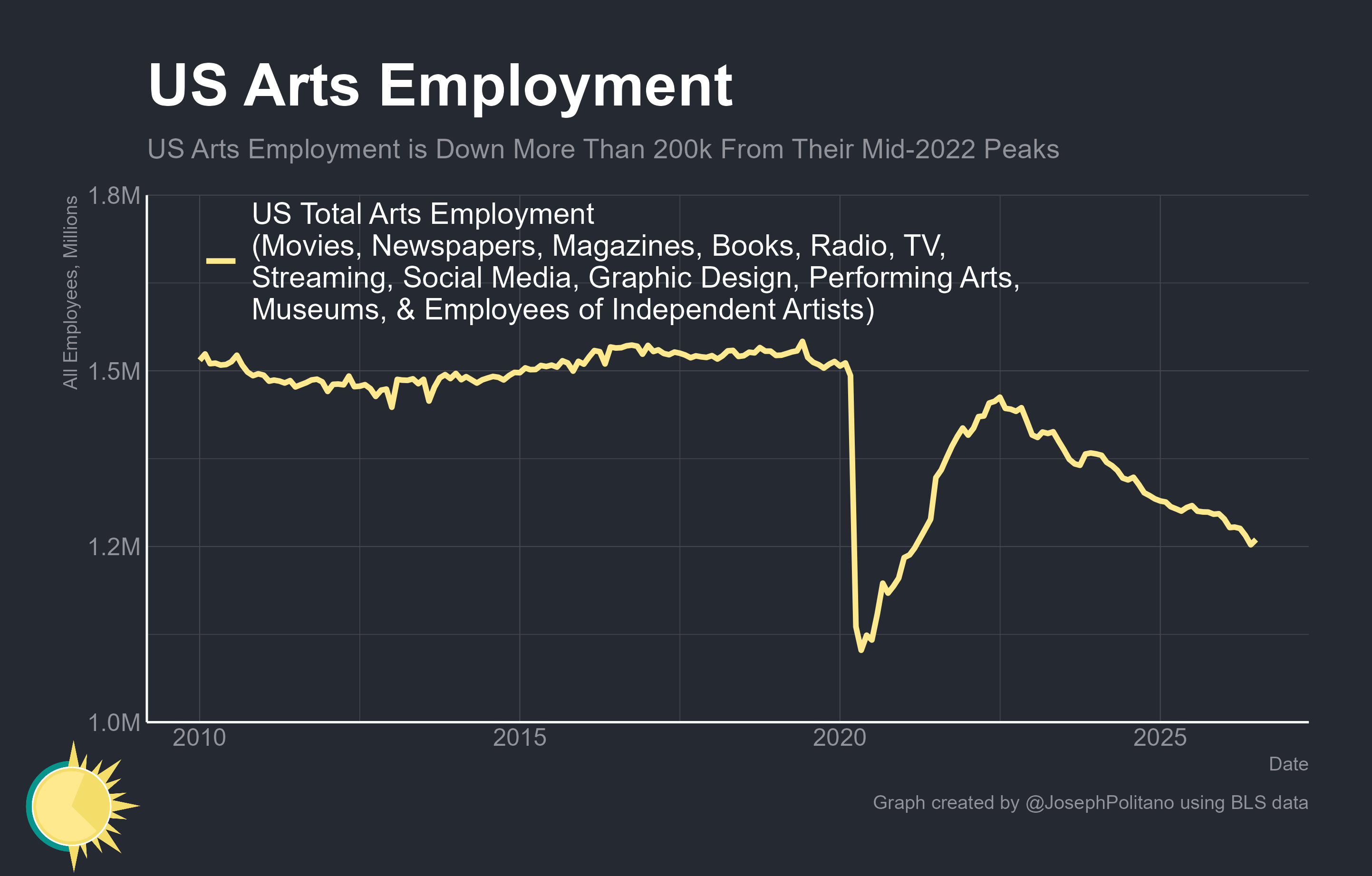
America has lost more than 200k jobs in “creative” industries over the last four years.

America is Losing Hundreds of Thousands of Jobs in Media, Film & the Arts. How Much is AI to Blame?

America has lost more than 200k jobs in “creative” industries over the last four years, with roughly 50k lost within the last year alone. That makes for one of the worst stretches for media employment in modern US history, with similar job loss intensity and duration occurring only during the major economic recessions of 2001 and 2008. Yet there’s no generalized recession today—instead, this period of job loss coincides with the rise of AI systems that can compose wholesale novels, photorealistic images, soundalike music, and practically every other form of digital art, en masse and at extremely low costs. Is this the fall of the Creative Class?

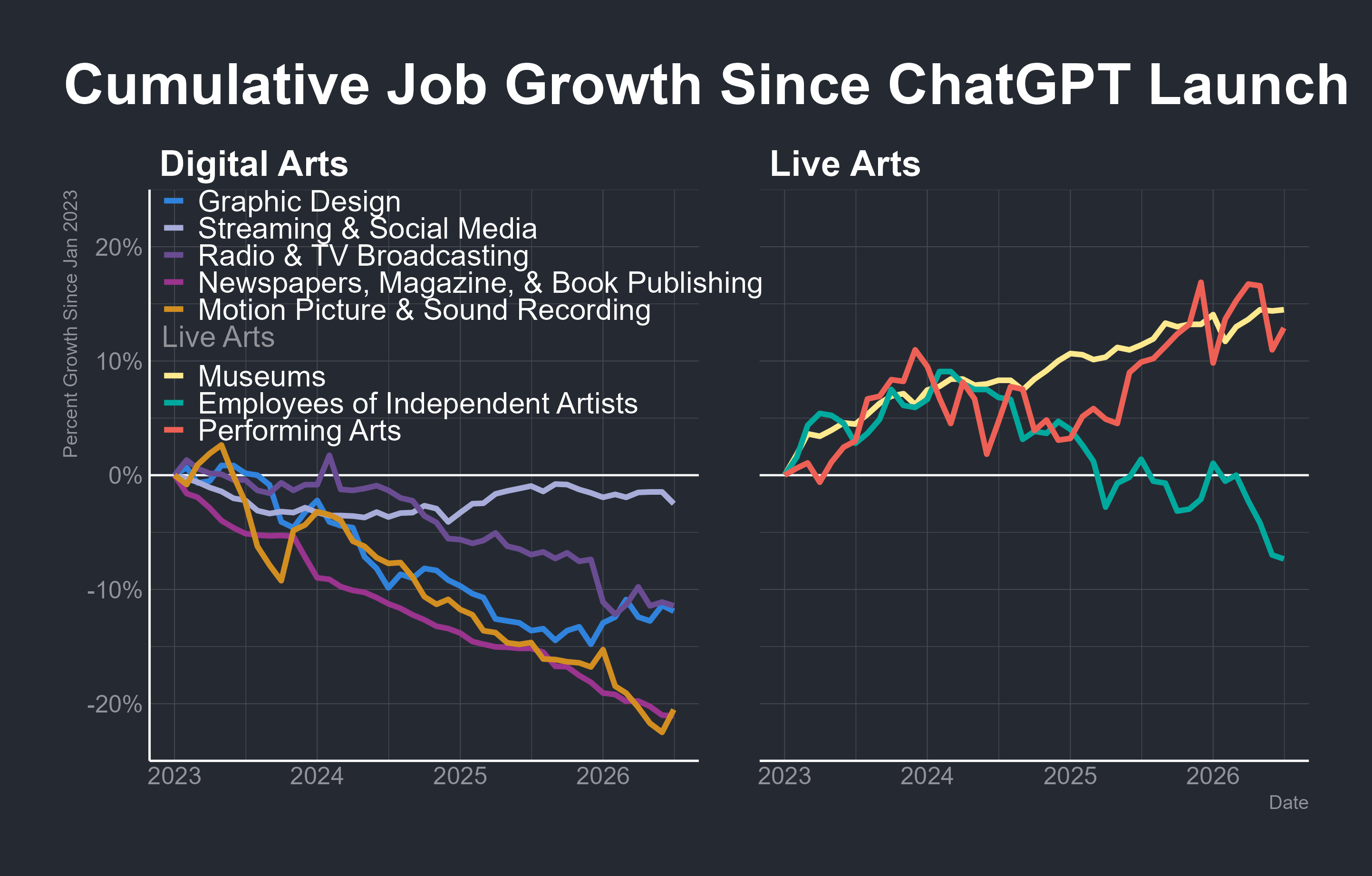
Proving the exact amount of AI-driven job loss in the arts is extremely difficult. Media firms are decidedly coy about their AI use, both to protect against public backlash and, more financially important, to preserve the legal basis for their copyrights. The effects of AI are also hard to disentangle from other factors currently affecting arts businesses, like consolidation in Hollywood, offshoring of content production, or the continued displacement of traditional media providers in favor of social media creators. Yet perhaps the clearest evidence of AI’s influence is just that all subsectors of the digital arts industry are losing jobs, while in-person entertainment is still growing at a healthy pace.

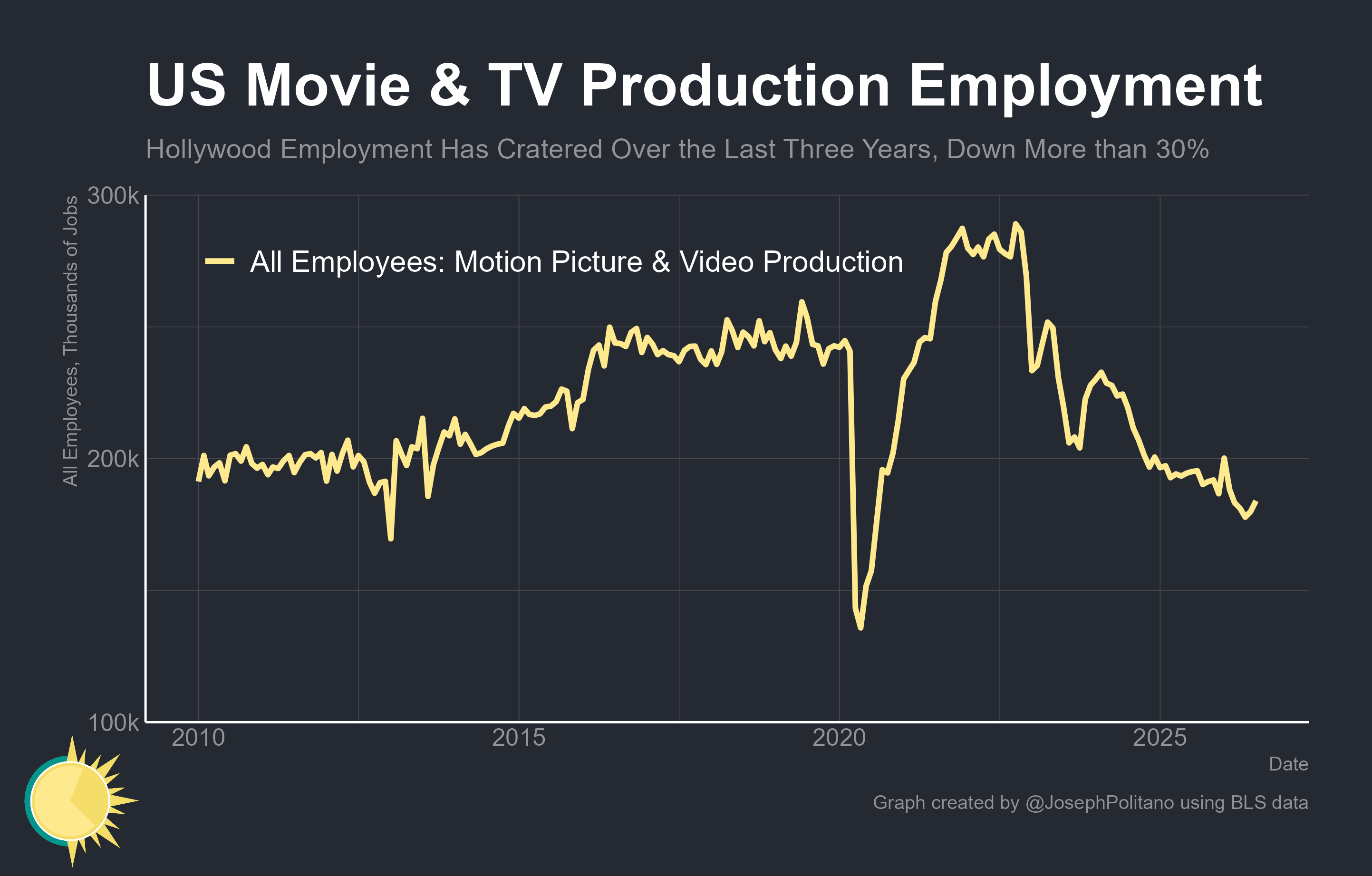
Some of those digital job losses are just a continuation of prior trends, like in the publishing industry where technological change has been continually grinding away newspaper and magazine jobs for decades. Yet for sectors like live broadcasting, streaming, or graphic design, recent experience is an unusual downturn compared to the tranquility of years prior. Then there’s the worst-hit sector, movie & sound recording, which has been bleeding jobs at a nearly unprecedented pace over the last three years.

Hollywood has never seen a stretch as bad as the last four years, with the movie & TV industry losing more than 100k jobs, nearly one-third of the sector’s total. At the depths touched this summer, total employment was lower than at any point since the 2008 recession and approaching the lowest point in 30 years. The streaming era has proven an extremely difficult transition, with traditional films and TV shows losing watch time to user-generated and increasingly AI-assisted or AI-generated content flows.

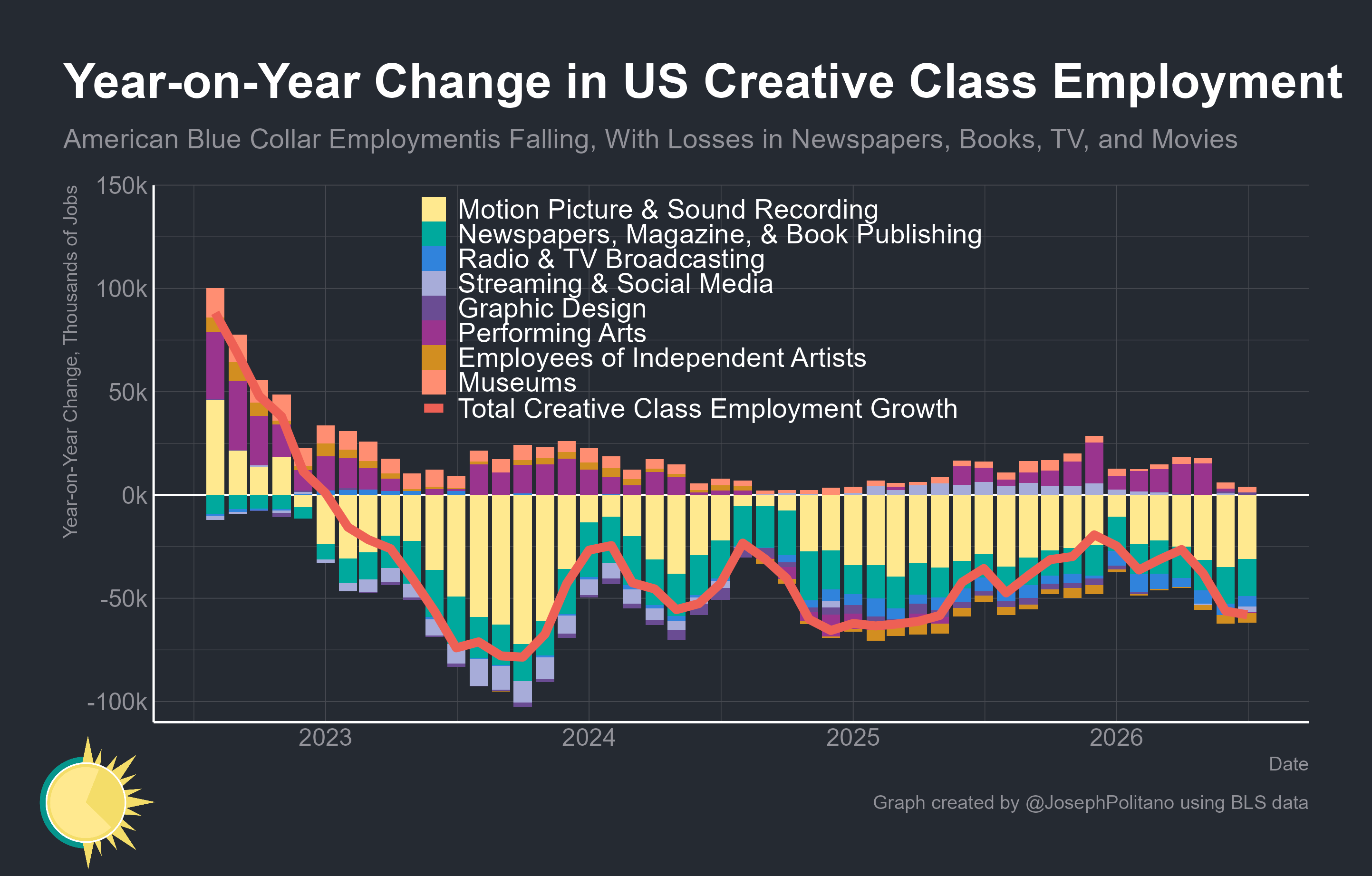
Overall, nearly half the media job losses of the last four years have been concentrated in the movie & sound recording sector that includes Hollywood. Written publishing has been the next-largest source of job loss, with employment down by more than 70k over the same time frame. Yet the job losses have by no means been contained to any particular part of media; instead they’ve hit nearly every subsector at some point. Nor do they show any sign of abating, with losses consistently hovering at around 50k per year and even accelerating in recent months. Will further AI development continue displacing workers in creative industries?

Can the Arts Business Model Survive?

To understand what could happen to the business of art amidst the rise of AI, it’s important to understand what did happen to it during the first digital transition, the rise of the internet.

It was the turn of the millennium, and Metallica had a problem. Demos of their upcoming, unreleased tracks were bouncing around radio and the internet, originally leaked onto a new internet file-sharing website called Napster. There they found thousands of files shared amongst hundreds of thousands of users, many of which were direct rips of albums that sold for $15 being offered for free. The most anticipated albums were often leaked online even before they were on store shelves. Metallica sued Napster for copyright infringement, and they were soon joined by separate suits from other prominent artists and eventually the Recording Industry Association of America (RIAA).

Much of the general public was understandably unsympathetic to Metallica, perceived as a bunch of already-successful millionaires trying to bilk even more money from listeners, and were even less sympathetic towards the RIAA, perceived as scurrilous middlemen who take from artists and fans alike. But the two of them easily won their lawsuit, forcing Napster into bankruptcy. Yet Metallica may have been right on the law but were on the wrong side of technology; the RIAA had won the battle but was losing the war.

The modern internet made file-sharing extremely easy, and no matter how much whac-a-mole companies played, they could not possibly catch every illegal upload. The perennial threat of piracy undermined their copyright and limited their ability to charge for music. Eventually, the value of individual songs fell to the point that companies like Spotify and Apple Music could swoop in to acquire massive catalogues, consolidate them, and charge a comparatively trivial fee for access. For what a single Metallica album would have cost in 2000, you can now get a month’s worth of unlimited access to nearly all human-made music.

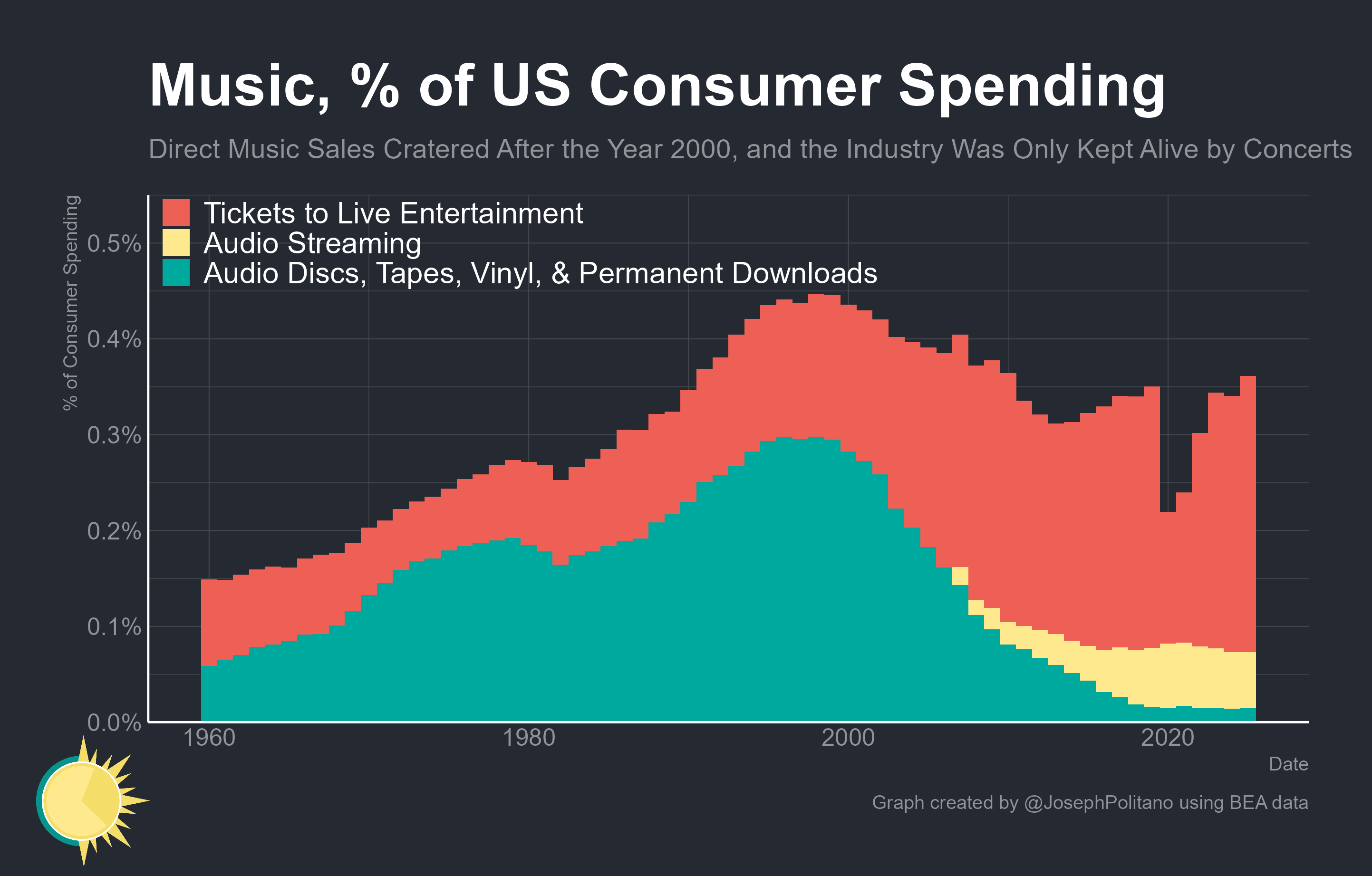
The music industry has never returned to the heyday paydays of the peak CD era—even without adjusting for inflation, streaming revenue pales in comparison to ‘90s physical media sales. This was a massive boon to consumers, but it was also a squeeze on musicians that forced them to fundamentally change their business model over time. Instead of just selling records to earn money directly, music itself increasingly became a loss-leading advertisement for the live concerts (and merch) that provided a growing share of artists’ income. Tours got longer, venues got bigger, ticket prices skyrocketed, and musicians frequently took on roles closer to public influencers than isolated artistes. Were it not for rising concert sales, the business model of music would have completely collapsed, and the income going to musicians would have cratered.

Of course, there were still significant downsides to the transition into the streaming era. Bands (especially smaller ones) complain about the unending pressure to always be on tour. Musicians whose content was suited to home listening lost out to those more suited to giant festivals. Even accounting for concert revenues, musicians made less money than before. Yet musicians fared better than many areas of entertainment subsectors because there was a live component to fall back on—for many media industries, the digital era left no such comfort.

Over time, the business of video has moved in the opposite direction of music—out of the theatre and into the home. Hollywood formerly made most of its money enticing customers to visit sold-out movie theatres, but these were gradually supplanted by broadcast TV, cable, and physical media. Yet because each successful technological leap increased total video watch time, the industry was still able to thrive amidst technological upheaval. That is, until the modern streaming era.

Today, the plethora of video options and the rise of social media have sent video producers into a vicious competition for limited attention. Even before adjusting for inflation, movie ticket sales ended last year down 25% from their 2019 peak, cable revenue is down 18% from its peak, and streaming revenue has not been able to compensate for the drop. The mountain of free user-generated content on YouTube, Twitch, TikTok, or social media was already presenting harsh competition for traditional video companies in the years before ChatGPT’s launch, and now streaming services are also competing with a flood of AI-generated content. The business model of video media is fundamentally getting squeezed, and unlike in the music industry, there’s basically no equivalent to live concerts that Hollywood can be used to ease the pain.

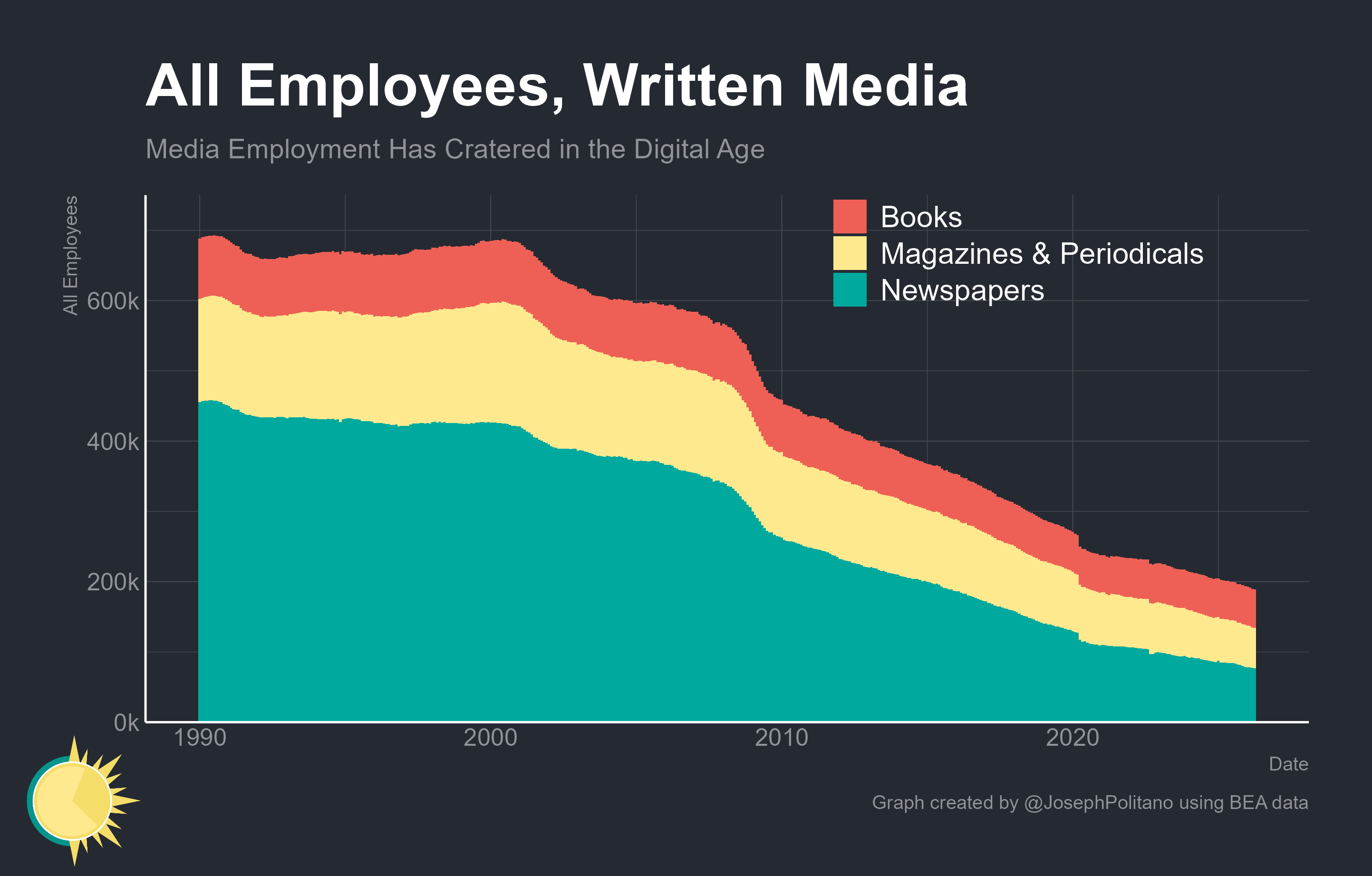
The actual worst-case scenario for creative workers amidst the AI revolution is something similar to what happened to the publishing industry after the advent of the internet—that is, near-total collapse of their fundamental business model. Newspapers used to employ roughly half a million people in the US, more than the entire oil industry, and now their payrolls are down nearly 85% and still dropping. Magazine publishers likewise have let 66% of their staff go since the 90s, while book publishers have lost 40%.

The routine informational updates that previously formed newspapers’ bread-and-butter were all de-bundled—box scores moved to sports websites, stock movements went to financial websites, forecasts went to weather websites—each loss compounding on itself to undermine consumers’ need to buy the paper. Search engines became the first place people looked to for information, and newspapers’ advertising revenue rapidly started flowing to companies like Google instead. The collective of social media users became faster at breaking any news story than a daily paper could ever hope to be. When papers eventually did start aggressively paywalling content, the internet made it trivially easy for people to just copy the articles’ content and share it beyond the paywall. The entire business model had collapsed, to the point that now only a select few major newspapers can even survive.

That scale of copyright dilution and forced unbundling is the worst-case scenario for media businesses in the age of AI. It’s possible arts jobs could survive via consumers’ deep-seated aversion to explicitly AI-generated content, but AI is increasingly being used throughout media in ways invisible to the average end consumer. Roughly 32% of workers in the overall arts, entertainment, and recreation sector use Generative AI to some extent, which is less than the 62% average across all industries, but still enough that virtually every major media project could have some AI within its workflow.

Indeed, AI is likely seeping into media production processes in ways large companies themselves would struggle to prevent even when they desire to—how can a TV studio be sure nobody in their writers’ room is consulting ChatGPT for jokes or any storyboard artist is generating concept art? And even if professional TV and movie studios do effectively hold out against temptation and prevent internal AI use, how long can they compete with the large mass of wannabe independent creators with much fewer scruples? Plenty of media businesses tried to hold out against the algorithmic content waves of the 2010s and were buried as a result.

Conclusions

Yet fundamentally, it’s difficult to meaningfully predict how new technologies will interact with existing arts businesses. Take the unexpected resurgence in book sales over the last four years. The novel as a commercial art form had been struggling for decades, with fewer books sold in 2019 than at the beginning of the millennium, but the last six years have seen an unprecedented 70% surge in sales. The unlikely savior of the printed word came from perhaps its polar opposite—TikTok.

Of course, fewer people read now than ever before—for the general public, short-form video apps have accelerated the displacement of reading, just as TV, video games, or social media before them. Yet for a dwindling number of dedicated repeat readers, “BookTok” became a new way to source reviews, analysis, discourse, and community in a way that boosted the reading experience and absolutely turbocharged book sales. It’s possible that AI tools could have those same totally unpredictable spillovers for other museums, concerts, or other forms of art in ways that are unpredictable today, in much the same way short-form video saved books in ways that could never have been anticipated beforehand.

At the end of the day, the arts are only a small sector of the overall macroeconomy. Media made up a small share of the labor market even at its peak, and it has always been difficult to get hired in creative industries to the point that making fun of art students’ job prospects became an easy punchline. The movie industry has an income profile closer to eggs or bicycles than something major like healthcare or finance. Were the goal to create art for art’s sake, for the intangible and nonmonetizable cultural benefits, it would be relatively easy to counterbalance any economic impacts of AI on artists just by reversing recent cuts to the National Endowments for the Arts & Humanities.

It’s telling that Anthropic, the most prominent AI lab, has basically never bothered with image, video, or music generation, because the prospective economic benefits are marginal when compared to using AI to tackle math or scientific problems. OpenAI learned this lesson the hard way when it was forced to abandon its video generation platform Sora, deciding it had better use for its limited compute than making synthetic TikToks. Nowadays, the art generation is done primarily by secondary players running smaller models, though even these are large enough to threaten significant disruption to legacy media businesses.

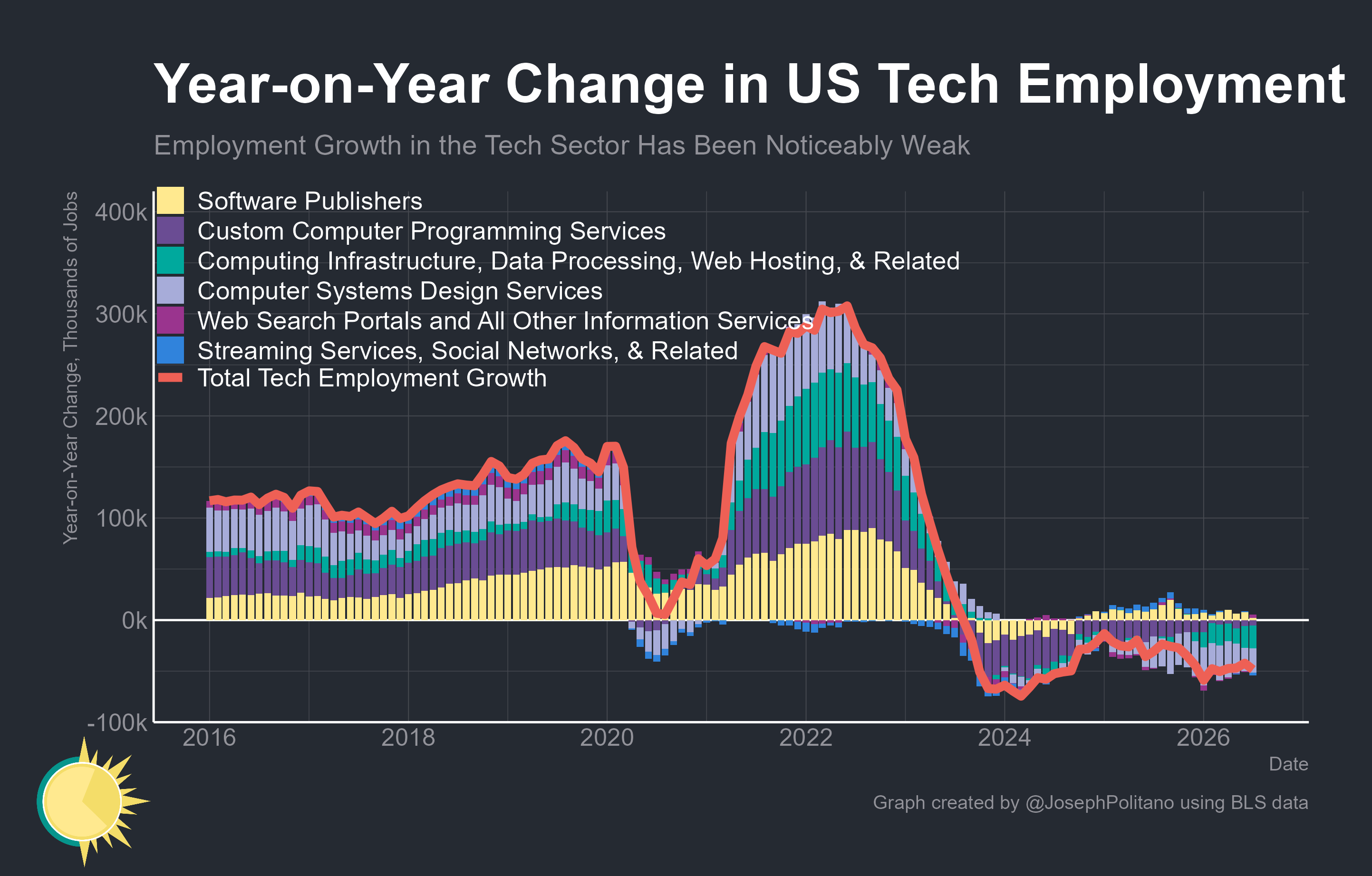
In other words, the primary impacts of AI art will be on culture and society rather than the macroeconomy. Yet arts jobs might be a microcosm for other “creative-adjacent” work that occupies a much larger share of economic activity. Take the tech sector itself, which is the clearest place where AI-driven job loss has shown up outside the media business, as powerful coding agents replace human programmers. Annual tech job gains stood at nearly 300k in 2022, but the sector has been bleeding jobs every year since then in what is now its longest labor market downturn.

Right now, AI-driven job displacement has been relatively minor outside of these few narrow sectors. Unemployment is higher than it was four years ago but still below even the 2010s average, and overall job turnover rates remain extremely low. Some white-collar sectors that looked prime for AI automation have even been on a hiring spree over the last few years, including legal and engineering firms. Yet if the economic impact of AI ends up being anywhere near large enough to validate the trillions of dollars investors are currently betting on it, these economic disruptions will only spread from here.

The Daily Front Page 6 of 24
Saturday, October 24, 2026 The Daily Front No. #261024 — The Brotli Alarm
article

Node2Shell evolves to HTTP2Shell, blast radius affects many HTTP libs and apps

by theanonymousone·▲ 337 points·162 comments·aikido.dev ↗
Brotli is a widely used compression library from Google.

Buckle up.

TL;DR

⚠️ Brotli is a widely used compression library from Google. On Wednesday, October 21st NodeJS disclosed CVE-2026-111497, dubbed “node2shell,” wherein a Node.js process that decompresses attacker-controlled Brotli data can be made to leak memory or run arbitrary code. On Thursday, Python disclosed that Python packages were vulnerable to CVE-2026-111497 as well. On Friday, October 23rd, it has become known that this CVE affects other major languages and service applications using HTTP, where patches are not yet fully available. Check if you are decoding Brotli as a dependency within your libraries. Stay on guard for wider announcements and be ready to upgrade as soon as possible. If there is no patch available for a library or application that may be affected, we recommend disabling Brotli decoding until patches become available. Update 4:12PM PT: Patches are available for libbrotli, Python, C++, NodeJS, bun, Envoy and more coming. Apache and Nginx do not decode brotli by default.

Update 4:15 PM PT: OpenAI shares that they discovered this vulnerability in February. While the root cause issue was fixed in the Brotli source code at the time, it wasn’t known that it gave rise to a security vulnerability. OpenAI's advisories here.

What is Brotli?

Brotli is a lossless compression algorithm and data format developed by Google. It’s a way to make data smaller for storage or sending over the internet. Software then unpacks it to recover the original data. It’s widely used for HTTP compression to compress web content such as HTML, CSS, and JavaScript.

What is CVE-2026-111497?

CVE-2026-111497 is an out-of-bounds write in the Google Brotli decoder affecting versions 1.0.3 through 1.2.0 on all platforms. This is the same Brotli decoder flaw behind Node2Shell announced a couple days ago. A remote, unauthenticated attacker can send a crafted Brotli-compressed stream to corrupt memory, leak sensitive data, crash the process, or potentially execute arbitrary code. It carries a CVSS v4.0 score of 9.2 (Critical), and Node.js is affected through its bundled Brotli library.

A bug makes the Brotli decoder keep accepting more bytes when it should reject the data. Those bytes can overflow a small working buffer and damage the program’s memory. An attacker can use that damage to control what runs, such as their own code.

OpenAI found this in February reported it as unauthenticated remote code execution that works in both directions, so a malicious client can take over an unpatched server and a malicious server can take over an unpatched client that accepts compressed responses.

The root cause was fixed in the Brotli source code in February, but it wasn't recognized as a security issue at the time and no release shipped with the fix until now. That means every project that bundles Brotli has to ship its own update.

‍You’re exposed if any environment has Brotli 1.2.0 or earlier or brotlicffi 1.2.0.x installed, since HTTP clients such as requests, httpx, and aiohttp load these packages automatically when they’re present. Upgrade to Brotli 1.2.1 or brotlicffi 1.2.1.0 and rebuild any container images that bundle them. As of October 23, advisory databases don’t map the CVE to either PyPI package, so pip-audit, Dependabot, and Safety won’t flag vulnerable versions yet.

‍You can see what we’ve tracked here in Aikido Intel.

As for unaffected software, Apache’s standard mod_brotli does not decode Brotli

How to patch HTTP2Shell CVE-2026-111497

For CVE-2026-111497, update the affected runtime or Brotli library:

  • Node.js: upgrade to 22.23.4, 24.22.1, or 26.12.1, or a newer supported release in the corresponding release line.
  • Native Brotli / libbrotli: upgrade to 1.2.1 or later. For older release lines, use patched 1.0.10 or 1.1.1.
  • Python packages: upgrade Brotli to 1.2.1 or later and brotlicffi to 1.2.1.0 or later, wherever installed.
  • curl / libcurl: update its Brotli dependency to 1.2.1, a patched older release, or the vendor’s security-fixed package. Bundled or statically linked copies require an updated application build.
  • Bun: upgrade to 1.4.4 or later. Rebuild compiled executables that bundle Bun.
  • Envoy: upgrade to 1.40.0, 1.39.3, 1.38.6, or 1.37.8, or a newer release in a supported branch. 1.36.12 also includes the fix, but the 1.36 branch is unsupported.
  • Istio: the fix is included in 1.29.9, 1.30.6, and 1.31.2. Use a newer supported release in the corresponding line; the 1.29 branch is end of life.
  • Operating-system packages: install the vendor’s security update. Vendors may backport the fix without changing the upstream version number.
  • Other HTTP servers, reverse proxies, API gateways, and HTTP clients: update the affected runtime or Brotli library they use. Where Brotli is bundled into the product, install the product vendor’s release that explicitly addresses this CVE. For managed services, confirm remediation with the provider.

Update dependency locks, rebuild affected applications and container images, redeploy, and restart services. Verify that running workloads use the patched components.

Fixed releases, reviewed October 23, 2026

Project Patch status Fixed versions Notes
Node.js Patch available 22.23.4 · 24.22.1 · 26.12.1 Use a supported release line.
Bun Patch available 1.4.4 Includes Brotli 1.2.1.
Envoy Patch available 1.40.0 · 1.39.3 · 1.38.6 · 1.37.8 1.36.12 also includes the fix, but 1.36 is unsupported. Use a supported branch.
Istio Patch available 1.29.9 · 1.30.6 · 1.31.2 1.29 is end of life, so move to a supported line.
Google Brotli (upstream) Patch available 1.0.10 · 1.1.1 · 1.2.1 Choose the fixed release for your library branch.

What to do if you can't upgrade yet

These workarounds reduce exposure while you prepare the upgrade:

  • Python applications: where Brotli support is optional, uninstall both Brotli and brotlicffi from affected environments. Remove dependency extras such as httpx[brotli] and any other requirements that would reinstall them, then regenerate dependency locks and rebuild/restart workloads. HTTPX, Requests, and urllib3 retain gzip and deflate support without these optional packages. However, a server that sends Brotli anyway may produce an unreadable response or an application error; automatic fallback is not guaranteed.

    • Uninstalling both Python packages and restarting workloads removes the decoding paths provided by those packages for incoming and outgoing data. It does not remove separate Brotli decoders bundled into other runtimes, libraries, or products.
  • Incoming HTTP requests: reject requests whose Content-Encoding includes br at the reverse proxy, load balancer, or application middleware, before any vulnerable decoder processes the body. Match br case-insensitively, including within lists of encodings.

  • Outbound HTTP requests: remove br from Accept-Encoding. Also disable Brotli response decoding or reject responses whose Content-Encoding includes br before decoding begins. Ensure this check occurs before automatic body processing; checking after the client has downloaded and decoded the response is too late.

Changing Accept-Encoding alone is insufficient: a malicious server can send a Brotli response regardless of what the client advertises, and urllib3 selects its decoder from the response’s Content-Encoding header.

Keep these controls in place until affected components are patched and verified. Review coverage as vendors confirm additional affected components or attack paths.

How Aikido helps with CVE-2026-111497

Aikido flags vulnerable versions of Brotli and brotlicffi in your repositories, container images, and dependencies, including when they arrive as transitive dependencies. Your dashboard shows which services still run a vulnerable version, so you can upgrade the ones that call outside servers or accept compressed request bodies first.

Once you've upgraded, Aikido checks if the finding is gone.

The timeline

Brotli is a widely used compression library from Google. On Wednesday, October 22nd NodeJS disclosed CVE-2026-111497, dubbed “node2shell,” wherein a Node.js process that decompresses attacker-controlled Brotli data can be made to leak memory or run arbitrary code. Users were exposed if their app or a library decompresses bad Brotli data (e.g. the built-in fetch(), body-parser).

The next day, Python released a security update that patches the same flaw; Python packages were also vulnerable to CVE-2026-111497. Brotli flaw may affect even more languages and service applications, given how widely integrated the library is downstream. It turns out OpenAI had found this back in February.

Techincal details of CVE-2026-111497

The flaw sits inDecodeBlockTypeAndLength(), which handles block switches, the points where a Brotli stream changes which Huffman tree it uses. In vulnerable versions the function returns a plain boolean, and BROTLI_FALSE can mean either "this stream is malformed" or "I need more input." Callers can't tell the two apart, and on the fast path the decoder discards the return value entirely.

A crafted stream can declare a single block type and then exhaust that block's length, which forces a switch that can't succeed. The decoder then either reports that it needs more input for a stream that's complete, or keeps decoding with the block state it already had. That second path leads to the out-of-bounds write.

The upstream fix, google/brotli commit 0ed4268, makes the function return an error code and adds a new error, BROTLI_DECODER_ERROR_FORMAT_BLOCK_SWITCH (-17). Decoding now stops on a format error on both the safe and fast paths. OSM diffed the Brotli 1.2.0 and 1.2.1 source distributions and found that 1.2.1 differs only in the version bump and the decoder changes from that commit.

Brotli vulnerabilities in Python libraries (CVE-2026-111497)

The Brotli flaw behind Node2Shell (CVE-2026-111497) affects Python. Two PyPI packages, Brotli and brotlicffi, compile the same vulnerable Brotli decoder that Node.js bundles. An official advisory was posted on GitHub. Brotli has 82.8 million downloads per month.

You're affected if any Python environment you run has Brotli 1.2.0 or earlier, or brotlicffi 1.2.0.x, installed. Popular HTTP clients such as requests and httpx load these packages automatically when they're present. Some packages automatically install Brotli as a dependency such as Scrapy, while others require explicit mention of it. An attacker can reach the vulnerable decoder by sending a malicious Brotli response to a request your app makes, or by sending your app a request body compressed with Brotli. That means an app can be exposed without importing Brotli anywhere in its own code. It’s a popular transitive dependency, so check your systems.

To fix it, upgrade to the patched releases:

  • Brotli -> 1.2.1
  • brotlicffi -> 1.2.1.0

The release notes for both fixed versions don't mention the CVE. As of October 23, advisory databases don't map it to either PyPI package yet, so pip-audit, Dependabot, and Safety won't flag these versions.

Who is affected by CVE-2026-111497 in Python?

You’re affected if any of your Python environments have one of these packages installed:

Package Affected versions Fixed version
Brotli (PyPI) 1.2.0 and earlier 1.2.1
brotlicffi (PyPI) 1.2.0.x 1.2.1.0

Your code doesn’t have to import either package. These HTTP clients advertise Accept-Encoding: br and decode Brotli responses automatically:

  • urllib3 (and therefore requests) when Brotli or brotlicffi is installed
  • httpx with the brotli extra
  • aiohttp when Brotli is installed
  • Scrapy, and anything built on the clients above

Attacker data can reach the decoder through two routes:

  • Outbound requests. Your app fetches a Brotli response from a server an attacker controls, such as through a webhook delivery, URL preview, crawler or “fetch this URL” feature.
  • Inbound requests. Your framework or middleware decodes a request body sent with Content-Encoding: br, which is the Python equivalent of the Express 5 case in Node.js.

How to fix CVE-2026-111497 in Python

The fix is a package upgrade, and it takes four steps:

  1. Upgrade whichever package you have installed with pip install -U "Brotli>=1.2.1" or pip install -U "brotlicffi>=1.2.1.0". If you use a lockfile with Poetry, uv, or pip-tools, update the constraint and regenerate the lockfile.
  2. Rebuild your container images and any wheels that bundle either package. An image built on a vulnerable version stays vulnerable until you rebuild it.
  3. Check every environment you run, including laptops, CI runners, servers and containers. Many projects pull in Brotli through an HTTP client extra, so look at your full resolved dependency tree.
  4. Rely on a manual check for now. pip-audit, Dependabot and Safety won't report this until the advisory databases map the CVE to the PyPI packages.

If your Python Brotli bindings came from a Linux distribution package instead of PyPI, the fix comes through your distribution, so check its security advisory as well.

What is the Python Brotli vulnerability (CVE-2026-111497)?

Python Brotli vulnerability refers to CVE-2026-111497, the Brotli decoder flaw known as Node2Shell, as it affects Python packages on PyPI. The CVE record pairs CWE-252 (unchecked return value) with CWE-787 (out-of-bounds write).

How serious is CVE-2026-111497 for Python, and is it being exploited?

The CVE record gives the flaw a CVSS 4.0 score of 9.2, and Node.js rates it high severity. OSM built Brotli 1.2.0 and 1.2.1 with AddressSanitizer and ran a crafted stream through both. Version 1.2.0 consumed all of the roughly 23 MB stream and kept reporting that it needed more input, whether the stream arrived in one piece or in chunks as small as one byte. Version 1.2.1 rejected the stream with error -17 every time.

OSM didn't pursue memory corruption or code execution in the Python extension. The decoder code is the same code that researchers exploited against an unmodified Node.js 24.22.0 build, as Imperva and others reported. For Node.js, The Hacker News reported no exploitation in the wild as of October 22.

Treat it as urgent anyway. The bug is a memory-safety flaw in a component that handles untrusted network input, and the fix is a routine version bump. Services that call outside servers or accept compressed request bodies should go first.

How to check if your Python app is exposed

  1. Check installed versions with pip show Brotli brotlicffi in each environment, and with docker run --rm pip show Brotli brotlicffi for each container image.
  2. Find what pulls the packages in. Run pipdeptree -r -p Brotli to see which dependencies require it, and search your lockfiles with grep -i brotli poetry.lock uv.lock requirements*.txt.
  3. List the outbound HTTP calls that go to servers you don't control, and any endpoints that decode Content-Encoding: br request bodies.
  4. Upgrade the services that match step 3 first, then the rest.

If you're reproducing the bug from Python, brotli.decompress() raises a generic brotli.error: decoder failed for any error, so you can't see which error code fired. A Decompressor() fed the crafted stream incrementally will never finish on 1.2.0.

FAQ

‍Which versions fix CVE-2026-111497 in Python?

Brotli 1.2.1 and brotlicffi 1.2.1.0, along with any newer releases.

Do I need to import Brotli in my code to be affected?

An installed package is enough. urllib3, requests, httpx and aiohttp use Brotli or brotlicffi automatically when either is present and decode Brotli responses from any server your app calls.

Will pip-audit or Dependabot flag this?

Not yet. As of October 23, the CVE record, OSV and the GitHub Advisory Database don't list either PyPI package. OSM is submitting PYSEC entries and a PyPI package mapping for the GitHub advisory so that tooling picks this up.

Is there a workaround?

Uninstalling Brotli and brotlicffi removes the vulnerable decoder, and HTTP clients fall back to gzip and deflate. Rejecting Brotli-encoded requests at the edge reduces inbound exposure, but it doesn't protect against Brotli responses your app fetches.

The Daily Front Page 7 of 24
Saturday, October 24, 2026 The Daily Front No. #261024 — A Distributed Decade
article

Twelve years of distributed SQLite

by otoolep·▲ 375 points·64 comments·philipotoole.com ↗
take SQLite, put a Raft log in front of it, and replicate every write to a cluster.

In September 2014 I published a short post announcing rqlite. The idea was simple: take SQLite, put a Raft log in front of it, and replicate every write to a cluster so that the loss of a node did not mean the loss of the data. The source went on GitHub that same weekend. As far as I can tell, that was the first open-source system to combine Raft and SQLite. Nobody else was doing it, and for several years nobody else tried.

Today “distributed SQLite” is a category with a dozen projects in it, a few of them venture-funded, two of them acquired. Since the people now writing about the category tend to start the story around 2021, I thought I should write down the version that starts in 2014. I was there for all of it.

2014: rqlite

The need was concrete. A clustered system I worked on at jut.io needed a small amount of relational storage, and the question of which node should hold it had no good answer. Replicating SQLite with a consensus protocol solved it. We went another way at work, but I kept building rqlite because the problem was general and the solution was small. The first version used goraft, the same library InfluxDB and etcd used at the time (I subsequently joined InfluxDB as a core developer around the same time). In early 2016 I replaced it with Hashicorp’s Raft implementation which rqlite still uses.

The design decision that mattered most was made then and never changed. rqlite is a CP system. Writes must go through the leader, a majority must acknowledge, and a partitioned minority refuses writes. Everything else, the HTTP API, the read-consistency levels, the snapshotting, followed from that.

Before 2014, and alongside it

Two things deserve mention for honesty’s sake. Expensify had been replicating SQLite inside its own infrastructure for years with a Paxos-style protocol; they released it as Bedrock in 2016. And ActorDB, an Erlang system that gave each “actor” its own SQLite database replicated by Raft, appeared around the same time as rqlite. Neither was widely adopted outside its origin, but both show the idea was in the air. What rqlite did was make it a standalone, general-purpose, open-source thing anyone could run.

2017: dqlite

Canonical built dqlite to get LXD and later MicroK8s an embedded replicated store without running etcd. Mark Shuttleworth actually called me once, and we talked, hoping that rqlite could be made to work, but it never quite fit. dqlite began in Go and was rewritten in C with its own Raft library. It is the project most similar to rqlite in intent, and the main difference is of one of packaging: dqlite is a library you embed, rqlite is a server you run. Canonical’s need was a database inside their products: mine was a database beside anyone’s product.

2021: Litestream, and a change of approach

Ben Johnson (whom I worked with at InfluxDB) released Litestream in early 2021. Litestream does not use consensus at all. It watches the SQLite WAL and streams it to S3, giving you disaster recovery for a single-node SQLite database at almost no cost. Ben’s argument was that most applications do not need a cluster; they use one machine and need a way to recover if it dies. He was right about a great many applications, and the “SQLite is enough” movement of the next few years, with blog posts and conference talks, owes a lot to that argument.

Litestream and rqlite answer different questions. Litestream: what if the machine dies? rqlite: what if the machine dies and I cannot wait to restore? The first question is more common, the second is the one people have when they come to rqlite.

Fly.io hired Ben in 2022 and shipped LiteFS, which replicates SQLite at filesystem level with leases from Consul. It was the first attempt to make replicated SQLite a platform feature rather than a thing you deploy. And in a final twist, Litestream inspired rqlite’s v8.0 approach to handling the SQLite WAL.

2022: forks and extensions

Two projects in 2022 took approaches that neither rqlite nor Litestream had. cr-sqlite added CRDTs to SQLite as an extension, so that multiple writers could diverge and merge without a leader. That is the AP corner of the design space, and it suits local-first applications where rqlite’s CP guarantees would be a hindrance.

libSQL forked SQLite itself. ChiselStrike, later Turso, wanted to change things inside the engine that the SQLite project, which does not accept outside contributions, and would not change. On top of the fork they built a hosted service with replicas at the edge. Turso raised venture money on that, and in 2026 Supabase acquired them.

Around the same time, SQLite Cloud appeared, offering hosted SQLite replicated with Raft. It is the project closest to rqlite’s original design, wrapped in a cloud service.

2022 onward: the platforms

Cloudflare announced D1 in 2022, SQLite as a serverless database inside their edge network, and later put SQLite storage inside Durable Objects. This is replicated SQLite as a managed product from a company that does not need to tell you how it works. Turso’s service is the same shape. The category had gone from “a thing you run” to “a thing you buy.”

What the twelve years show

Three things, I think.

The core was right. SQLite as a storage engine, with replication added on the outside, has been reinvented by at least eight teams with different needs and different protocols. Nobody has found a reason to stop doing it.

The design space has three corners, and they appeared in order. Consensus first (rqlite, dqlite): one leader, strong consistency, a cluster. Streaming second (Litestream): one writer, cheap recovery, no cluster. Merge third (cr-sqlite, and parts of the local-first movement): many writers, eventual consistency. Each is correct for a different question, and most of the arguments are arguments between their users about which question is being asked.

And the money went to the platforms. rqlite, dqlite, and Litestream are open source and free. The projects that raised the capital or got acquired are the ones that turned replicated SQLite into a service with a bill. That is the usual fate of infrastructure ideas, and I do not mind it. But it is worth recording that the idea was open source for eight years before anyone sold it.

rqlite is still here. It does the same thing it did in 2014, a good deal better, and it is still the thing you reach for when you want a fault-tolerant relational database you can run yourself, understand fully, and not pay anyone for. Twelve years in, I am content with that position in the story.

The Daily Front Page 8 of 24
Saturday, October 24, 2026 The Daily Front No. #261024 — Functional at Full Tilt
article

How close can pure functional programming get to C?

by stmonty·▲ 272 points·98 comments·rtfeldman.com ↗
lean-zip beats every single compression level miniz_oxide provides.

In Why Lean is Faster Than Rust, the author shares an impressive result: a DEFLATE compression library written in Lean 4, a functional programming language and proof assistant, outperforming an equivalent Rust package that crates.io says has been downloaded over a billion times. From the article:

lean-zip beats every single compression level miniz_oxide provides, i.e. we're capable of providing the same compression at higher throughput. At its fastest setting we're 15% quicker and the output is 8.8% smaller.

However, the article also notes that while they managed to surpass Rust's miniz_oxide, they were no match for the end boss of DEFLATE performance: libdeflate, written in C.

lean-zip is certainly not the best here: libdeflate unsurprisingly blows it out of the water (unsurprisingly because this is a very carefully tuned implementation using architecture-specific SIMD, that we can't touch in Lean).

Enter Roc, a functional programming language (but not a theorem prover) with an explicit focus on runtime performance.

Roc's tagline is "Fast, Friendly, Functional," and Fast comes first because both running fast and compiling fast have always been central goals. Roc is not a mature language (it's still weeks away from its first numbered release, 0.1.0), and its nascent package ecosystem has had almost no optimization work done on it. Still, between its language design, longstanding optimizations, and brand-new compiler implementation, I figured Roc already had enough of a foundation in place to take on the champ: libdeflate.

So I spent a bunch of time grinding through performance optimizations on roc-deflate, a package Niclas Ahden wrote (and uses in paid production work) for DEFLATE compression. I didn't expect to beat libdeflate's performance across the board, but I wanted to see how close it could get on the non-streaming APIs (as roc-deflate hasn't implemented streaming yet), using the classic Silesia corpus for benchmarking and verifying that it produced identical outputs.

Under 10% Slower

Here's where the benchmarks stand today, running on the 2021 M1 MacBook Pro where I did all the optimization work, as well as on an AMD Ryzen 9 3900X Ubuntu machine for an x64 comparison.

roc-deflate ran these 144 benchmarks slower on average than libdeflate, in the median case 8.9% slower on the Ryzen 3900X, and 2.6% on the M1 MacBook Pro.

Compression on Silesia corpus

So while we didn't outperform the champ on average, a median slowdown percentage in the single digits compared to such a carefully-tuned SIMD-powered C library is wild. It's frankly not a result I knew was achievable going in, since Roc is a functional language with automatic memory management racing against code that doesn't have to do bounds checks. (Bounds checks have a cost, but then again, the last time a skipped bounds check in C compression code led to a major Remote Code Execution vulnerability was yesterday.)

The graph shows more detail than just the median gap. On the worst-case inputs, roc-deflate was 18% slower than libdeflate, but on the best-case inputs, roc-deflate was slightly over 18% faster! That's not because Roc has some magical optimization that C can't access; it's just that the two implementations are different, and although on average roc-deflate is slower, for certain inputs it happens to be faster. So while it's possible to get a speedup by switching from libdeflate to roc-deflate, you shouldn't expect it on average.

To be clear, C's performance ceiling is higher than Roc's. For any input where roc-deflate currently outperforms libdeflate, C code can close that gap. The reverse is not true; Roc code is memory-safe, does automatic reference counting, checks bounds, and supports no Rust-style unsafe to opt out of any of that. These properties give Roc code stronger safety guarantees than code written in C, Zig, Rust, and other languages that allow full access to the hardware—and the price it pays for those guarantees is a lower performance ceiling.

Obviously we can't extrapolate from this one result about how close Roc can get to C in the general case, but now something has been demonstrated that nobody knew was achievable before. As far as I know, this is the most optimization effort that has been put into any Roc package to date, so how close others can get to this result is a complete unknown right now. So while I'm thrilled by this result, I'm fully aware that we won't know how well it generalizes until we've optimized a wider sample of real-world Roc code bases!

What the Performance Gap Buys

An obvious question is "Why settle for any amount slower?" If you could get C levels of performance, why not use libdeflate itself and close that remaining gap?

A pure-Roc implementation has several advantages over a pure-C one:

  • Memory safety. Roc code is fully memory-safe and has no language primitives that let you opt out of it. This code is only able to approach C levels of performance because Roc's optimization pipeline determined that many bounds checks and reference counting operations were provably safe to optimize away. Compression packages written in pure Roc don't have access to the unchecked memory operation that caused yesterday's Brotli Remote Code Execution vulnerability.
  • No side effects. Roc's type system infers which functions are pure and which can perform side effects. Pure functions' types use a thin arrow, like Bool -> Bool, whereas effectful functions use a thick arrow, like Bool => Bool. (As with memory safety, Roc enforces this and supports no way to opt out.) So when you see that roc-deflate's functions have only thin arrows in their annotations, you know they really are pure functions.
  • Supply-Chain Security. Roc does not have an arbitrary FFI, meaning you know for sure that roc-deflate's pure functions can't even attempt to do I/O or access arbitrary memory. Given the explosion in supply chain attacks, it's valuable to know that the damage a malicious actor can do with a pure function in a compromised Roc package is limited to returning the wrong value, crashing, or wasting system resources. Roc packages also don't support build scripts, which was the vector used to successfully compromise the popular Rust arrayref package two months ago.
  • Portability. Roc pure functions are designed to be extremely deterministic: they always return the same values when given the same arguments—not just when run on the same machine, but also on any target you compile that code to. (The functions may also crash or fail to terminate, but that behavior should also be deterministic across targets.) The only way a Roc pure function should be expected to behave differently when run on two different systems is if one system runs out of memory mid-execution.

If any of these guarantees don't hold in practice, it can only be due to a defect in Roc's compiler, the platform the application is running on, or the underlying hardware. So when you see in roc-deflate's docs that the entire package is 100% pure functions, you can be confident you are getting all of the above properties from everything the package has to offer. The type system enforces it!

The reason we've been working so hard on all this might become clearer if you look at the proposition in reverse: would you give up guaranteed memory safety, guaranteed lack of side effects, guaranteed deterministic behavior across all targets, and the security benefits of having no exploitable build scripts in packages...for an average speedup percentage in the single digits?

That answer can legitimately vary by use case—Roc's own compiler, for example, wants the maximum performance the hardware can deliver—but I bet a lot of people reading this can see why we're so excited to have achieved this result.

Roc-Specific Optimizations

Most of the optimizations that improved roc-deflate's numbers came from general optimization techniques that are widely beneficial across languages. (I always recommend Casey Muratori's Performance-Aware Programming Series, which I paid for and learned a lot from.) Some of the optimization techniques were Roc-specific, though, and I wanted to mention them here as a reference for others. Even if you're not writing Roc code, this can also give you an idea of how Roc achieves its performance.

Avoid Unnecessary Sharing

One of Roc's most effective optimizations is opportunistic mutation (which Koka calls "Functional but In-Place"). You can learn how it works in Roc's docs on opportunistic mutation, but from a performance optimization perspective, it's critically important to avoid unnecessary sharing so that values remain unique and therefore eligible for in-place mutation.

Hoist Bounds Checks

You can't opt out of bounds checks (e.g. getting a value out of a dynamically-sized collection) in Roc like you can in C, Zig, and Rust, but Roc's compiler can optimize them away if it knows they'd be guaranteed to pass. Bounds checks are most costly inside loops, so you can get a lot of mileage out of adding something like if collection.len() <= highest_index_used { return 0 } before the loop starts. This adds an additional check that looks redundant, but it can allow the optimizer to safely delete costlier checks inside the loop, once it can tell that failures would not be reachable after that early return.

Build Lookup Tables at Compile Time

Roc's compile-time evaluation can be used to assemble lookup tables at compile time as long as nothing depends on runtime inputs. Even better, since their lengths are known at compile time, you can do things like Ok(entry) = lookup_table.get(5) to do an exhaustive pattern match that Roc's compiler will know is valid thanks to compile-time evaluation. This avoids runtime bounds checks that non-constant tables might have to pay for.

Consider Wrapping Arithmetic

In Roc, a + b desugars to a.plus(b). For an integer like U64, U64.plus includes an overflow check, whereas plus_wrap does not. Although plus is the safer default, overflow checks have a runtime cost, as CPUs can do wrapping integer arithmetic in one instruction. When Roc's compiler can prove that overflow won't occur, both plus and plus_wrap will optimize to the same instructions, but when it can't, you may get a speedup by choosing plus_wrap.

Room for Improvement

I'm sure there are still opportunities to improve roc-deflate's performance—especially on x64 CPUs—as well as the optimization pipeline in Roc's compiler.

At this point I feel reasonably confident that all the low-hanging fruit has been picked, but if anyone wants to try it out for themselves, here's the script I ran to set up and run the benchmark suite on Linux. (Note that Claude Opus 5.5 generated this script, and I haven't vetted it for security; run it outside a sandbox at your own risk!) It pins both Roc compiler revisions and roc-deflate versions, so you'll want to adjust those commits if you're trying out potential improvements.

For my part, I'll be focusing on the upcoming Roc 0.1.0 release from now until it's out. It's been eight years in the making, so I'll be very happy for us to finally have a numbered release! If you'd like to learn more about Roc, check out roc-lang.org or come say hi on Roc Zulip!

The Daily Front Page 9 of 24
Saturday, October 24, 2026 The Daily Front No. #261024 — A Language Without the Heap
article

The Goose Programming Language

by bobbydigitales·▲ 445 points·272 comments·aardappel.github.io ↗
A memory-safe systems language with no heap allocator, garbage collector, or lifetime annotations.

A memory-safe systems language with no heap allocator, garbage collector, or lifetime annotations. In this repository's benchmarks, Goose runs faster than C++ and Rust while using less memory.

Tutorial · Reference · Specification · Packages · Samples · Benchmarks · Standard library

Goose has syntax familiar to C and Rust programmers, but there is no heap. Every dynamic value lives inline on a data stack managed by the compiler. Growth advances a pointer, and memory is freed when its scope ends. The language's type and lifetime rules make this memory model safe to use.

Why Goose

  • Faster than C++ and than safe Rust, while memory safe. Over sixteen benchmarks Goose runs at 3.3x the speed of idiomatic C++, 1.16x hand-optimized C++ and 1.12x the best safe Rust, on 1.9x, 1.3x and 1.2x less memory (results). These gains come from Goose's data layouts and memory model.
  • No allocator, no GC, no reference counting, no destructors. Memory is a handful of data stacks that the compiler assigns statically. Freeing a million-element structure is one store, however deeply it nests.
  • Growth preserves references. A reference into a growing array stays valid for as long as the array does. You keep typed references where C++ must reserve and safe Rust uses u32 indices in the corresponding benchmarks.
  • Memory safe with zero annotations. No lifetime syntax, no aliasing or exclusivity rules, no unsafe. The compiler infers what every reference is rooted in and rejects references that could outlive their owners.
  • Nested data stays inline. A string, an array of strings, a record with variable-size fields and an array of those records are each one contiguous block with no pointer in it. A record that is 160 bytes and an allocation in C++ is 29 bytes and none in Goose.
  • Enums that cost what they hold. Variable-mode ADTs give each value its own variant's size rather than the largest one's: 4x less memory and 2x the speed of a Rust enum on the benchmark that exercises it.
  • Links narrower than pointers. A relative reference stores a typed, checked link as a 1, 2 or 4-byte offset. Structures built from them are position independent, so your data structure is already its file format: saving is a write, loading is a read plus a verification pass that rejects hostile bytes.
  • Everything is built in place, guaranteed. A value is constructed at its final destination through any depth of calls. items.push(parse(line)) writes the parsed record straight into the array, and returning a growable array by value costs nothing.
  • Returns across multiple calls. return err from load returns from a function any number of frames up, statically checked, with no unwinder, no Result type and no ? on every call.
  • Threads that share nothing. A worker is compiled as a separate program with its own memory, and flat values cross typed queues as a memcpy. Data races, locks, atomics and memory orderings do not exist in the language.
  • Generics and higher-order functions with no overhead. An untyped parameter is generic. Function values are compile-time entities, so xs.filter() { it > 0 } compiles to the loop it looks like and builds its result straight into its destination.
  • Plain C in, plain C out. Goose compiles to one C file, so it runs wherever a C compiler does and calls C directly through extern fn. The bundled TinyCC backend compiles and runs a program in-process, with no build step.

The tutorial walks through all of this by example, the reference covers the whole language topic by topic, the specification has the exact rules, and the benchmarks have the numbers, losses included.

Features

This section focuses on what distinguishes Goose. The tutorial explains these features in more detail, and the samples show them in thirty-one complete programs.

One memory model: stacks, and scope exit is the free

A program has the native call stack, static data and N data stacks, where the compiler works out N. A data stack is a large address-space reservation with a bump pointer, and there is no other memory. At most one resizable value is live per stack and it is always on top, so growth never moves anything and never checks a capacity. All of this is proved at compile time; the runtime tracks only the bump pointers.

for round in 3 {
    var scratch: u8[>..] = [];                        // grow-only: growth is a pointer bump
    for i in 100000 { scratch.push((i % 256) as! u8); }
    print("round ", round, ": ", scratch.len, " bytes");
}                                                     // the free: one store to the stack top

Nothing moves, so references survive growth

struct Item { id: i32, weight: f32 }

var items: Item[>..] = [];
let first .= items.push(Item { 1, 0.5 });             // a reference to element 0
for i: i32 in 2..1000001 { items.push(Item { i, 0.0 }); }
first.weight = 99.5;                                  // still valid, a million pushes later

push returns a reference to the new element, so a program can link elements while building the array. A vector<T> or Vec<T> may reallocate and cannot provide this guarantee. Stable references account for several benchmark gains.

Safe references, no annotations

Every reference and slice has a static root: the variable that bounds its target's lifetime. A reference must not outlive the variable that owns its target or access that target through an incompatible type. The compiler infers roots and specializes functions for them, so no annotations are needed. There are no aliasing or exclusivity rules. When a lifetime check fails, the error names the reference's root and its destination:

fn longest(a: u8[:], b: u8[:]) -> u8[:] { if a.len >= b.len { a } else { b } }

var outer: u8[>..] = [];
var w = outer[..];
{
    var inner: u8[>..] = [];
    format(inner, "inner text");
    w = longest(outer, inner);     // error: storing a reference rooted at inner,
}                                  //        which does not outlive the destination (§9.2)

A slice T[:] lets a function accept a range from any array kind without copying its elements. For example, split returns slices into its input, and a dictionary keyed by u8[:] stores views of strings rather than copies.

Nested data stays inline

There is no single array type. There is a family that differs only in what happens to the size, and every member is [metadata][elements...], inline and packed, never a pointer to an element block:

Spelling What it is T[k] fixed size, known at compile time T[], T[varint] sized at construction, frozen after; a fixed or variable-width length T[..k], T[..] capacity inline; grows and shrinks within it T[>..] grow-only: the workhorse; references into it stay valid T[>..<] grow-shrink: stacks, queues, heaps

Strings are just u8 arrays: u8[>..] is a builder, u8[] a finished string stored inline in whatever holds it, u8[..16] a small string inside a struct, u8[:] a view. A struct may contain variable-size parts, and they sit inline in declaration order, so a record is a run of bytes with nothing indirect in it:

struct Item  { sku: u8[varint], qty: varint, cents: varint }
struct Order { id: varint, customer: u8[varint], items: Item[varint] }

var book: Order[>..] = [];
book.push(Order { id: 1001, customer: "alice",
                  items: [Item { sku: "SKU-441", qty: 2, cents: 1999 },
                          Item { sku: "SKU-7", qty: 1, cents: 500 }] });

That order is 29 bytes and 0 allocations. As C++ std::string + std::vector<Item> it is 160 bytes and 1 allocation, and as Rust String + Vec<Item> 153 bytes and 4. A whole order book is one array that streams through the cache. The price is that an array of variable-size elements is sequential: you can iterate it but not index it (unless you keep a second array of references into it as an index).

Enums in two sizes

Algebraic data types are the only dynamic polymorphism: no inheritance, no vtables. Every ADT can be stored two ways, chosen at the point of use. Fixed mode (Shape) is a tag plus room for the largest payload, indexable and overwritable. Variable mode (Shape..) gives each value exactly its variant's size; the array becomes sequential and a value never changes variant, and in exchange you may take references into a payload:

enum Shape { Circle { r: f64 }, Rect { w: f64, h: f64 }, Dot }

var packed: Shape..[>..] = [];                 // 9, 17 and 1 bytes, not 17 each
packed.push(Shape.Circle { r: 1.0 });
packed.push(Shape.Rect { w: 2.0, h: 3.0 });
packed.push(Shape.Dot);
for s in packed {
    match s { Rect &r => { r.w += 1.0; }, _ => {} }   // edits the payload in place, inside the array
}

Case functions provide another way to dispatch on a variant: define one overload per variant. Calls dispatch on the tag through a jump table, and the compiler checks that the overloads cover every variant:

fn area(s: Shape.Circle) -> f64 { 3.14159 * s.r * s.r }
fn area(s: Shape.Rect) -> f64   { s.w * s.h }
fn area(s: Shape.Dot) -> f64    { 0.0 }

for s in packed { print(s, " area ", area(s)); }

Links narrower than pointers

A T& is a machine address: eight bytes, never dangling. A relative reference is the same link stored as a narrow offset: T&<u32> is measured from the field itself to a target in the same array, so the structure is position independent, and T&<u32 in pool> from a named pool's base, so other arrays can link into the pool. T&<u32>? uses offset 0 as null. Here is a binary search tree in one grow-only array, with 12-byte nodes:

struct Node { key: i32, left: Node&<u32>?, right: Node&<u32>? }   // 12 bytes, links included

fn insert(pool: Node[>..]&, key: i32) {
    if pool.len == 0 { pool.push(Node { key: key }); return; }
    var cur .= pool[0];                             // .= binds a reference; = would copy the node
    loop {
        if key == cur.key { return; }
        let next = if key < cur.key { cur.left } else { cur.right };
        if next { cur .= next; continue; }          // narrowed by `if`: next is a Node&
        if key < cur.key { cur.left .= pool.push(Node { key: key }); }
        else             { cur.right .= pool.push(Node { key: key }); }
        return;
    }
}

References are transparent (no *, no ->), .= binds or retargets one, and Node? is a nullable reference that if, guard and assert narrow. The insert is one push and one store, and the push cannot invalidate cur. When lifetimes are not nested, a reusable pool pairs a grow-only array with a hidden freelist: alloc_ref reuses a slot or pushes, free hands one back, and since nothing is ever actually freed, a stale slot reads a different value of the correct type rather than corrupting memory.

Your data is already a file format

var image: u8[>..] = tree.to_bytes();           // a framed byte image of the whole array
var loaded, ok = from_bytes<Node[>..]>(image);  // verified before it becomes a value
image[image.len - 3] = 200;                     // tamper with a link ...
var bad, bok = from_bytes<Node[>..]>(image);    // ... and it is false and an empty array

The tree's links are self-relative, so it means the same thing wherever it sits: saving is writing its bytes and loading is reading them back, with no serializer, no schema and no pointer fixups. from_bytes checks the framing, every tag, every length and every link before the bytes become a value, so a corrupt or hostile file is a false, never a wild reference.

Built in place, always

The copy-free construction guarantee (spec §4.3) says a constructed value is always built in its final home, propagated top-down through calls. A function returning a grow-only array by value writes its elements straight into the caller's variable, or into a field of the record being built inside another array, so out-parameters mostly do not appear.

words.push(str("word", i));                    // formatted straight into the new element
let evens = xs.filter() { it % 2 == 0 };       // built straight into `evens`: no temporary
book.push(Order { id: 1001, customer: "alice", items: parse_items("SKU-441:2:1999;SKU-7:1:500") });

Returning errors across calls

struct User { name: u8[..16], age: i32 }

fn load(text: u8[:]) -> User[>..], u8[] {
    var users: User[>..] = [];
    each_split(text, '\n') { users.push(parse_user(it)); };
    return users, "";
}

fn parse_user(line: u8[:]) -> User {              // returns a User: no Result, no error parameter
    let comma = find(line, ",");
    guard comma >= 0 else { return [], str("expected name,age: ", line) from load; }
    let age, ok = parse_int(line[comma + 1..]);
    guard ok else { return [], str("bad age: ", line) from load; }
    let name = trim(line[..comma]);
    return User { name: name, age: age as i32 };
}

return E from f returns E as the result of the innermost active call of f, however many frames up, and every function in between keeps its plain signature. It is checked statically, so every call of parse_user must lie inside a load call and nothing is uncaught at runtime. It is a hidden discriminant checked per frame rather than an unwinder, and the message is built directly where load's caller wants it. The parsers in the samples use it for every syntax error.

Generics and function blocks

fn twice(x) { x + x }                              // an untyped parameter is a generic one

fn each_pair<T, F>(xs: T[:]) {                     // F is a function value: a compile-time entity
    for i in 0..xs.len - 1 { F(xs[i], xs[i + 1]); }
}

fn first_gap(xs: i64[:]) -> i64 {
    each_pair(xs) { a, b => if b - a > 1 { return a; } };   // returns from first_gap, not each_pair
    return -1;
}

let evens = xs.filter() { it % 2 == 0 };
let total = fold(xs, 0) { acc, x => acc + x };
sort(xs) { a, b => a > b };

Everything is monomorphized. Type arguments are inferred from argument types; parameters absent from those types can be supplied explicitly. Function values are passed as generic parameters: every call is direct and inlinable, they cannot escape, and there are no closure objects or function pointers, so a higher-order function compiles to exactly the loop it looks like. A block may return from its lexically enclosing function, and nested functions see the enclosing function's locals.

Threads that share nothing

thread_fn worker() {                                // a separate program with its own memory
    loop {
        let job = qget<Job>();                      // blocks on the typed queue for Job
        guard job.n >= 0 else { break; }            // -1 means stop
        qput(Result { n: job.n, digits: count_digits(job.n) });
    }
}

for i in n { ids.push(thread_spawn(worker)); }

There is no shared mutable memory. A thread_fn and everything it calls is compiled as its own program with its own data stacks and its own copies of the globals. Values cross through typed queues, one per type, and must be flat, with no references at any depth. That is cheap because a flat Goose value is contiguous: a job or a result carries real data, pixels included, and crossing is a memcpy.

A failed check or abort in a worker started with thread_spawn_contained ends only that worker. Its message goes to whoever waits for it, not to stderr, so a supervisor can log it and start another:

var why: u8[>..] = [];
while !thread_wait(thread_spawn_contained(serve, attempt), why) {
    log(why);                                       // "assert failed (serve.goose:12)"
    why.clear();
    attempt++;
}

The first thread_wait(id, msg) for a worker takes the message; a caller that doesn't ask for it loses it.

Plain C in, plain C out

extern fn hypot(x: f64, y: f64) -> f64;             // straight from libm
extern fn crc32_bytes(s: const u8[:]) -> u32;       // a slice crosses as { data, len }
extern fn stats_of(xs: i32[:], out: Stats&);        // a struct filled through a pointer

An extern fn binds a Goose signature to a C symbol. The math and os modules use this interface. Only types with supported C representations may cross the boundary; unsupported signatures are rejected at the declaration. The compiler emits one C file for the whole program. The bundled TinyCC backend can compile and run that C inside the Goose compiler's process.

Where the speed comes from

Much of the speed comes from the memory model: no heap allocation or per-object teardown, contiguous data, narrow links, and enums sized for the variant they contain. Every index is bounds-checked, and the compiler removes checks it can prove unnecessary. An assert on a slice length often lets a kernel eliminate its remaining checks and vectorize. --bce-lines reports the checks that remain. checkfree fn rejects a kernel if any bounds check survives; index types let graph edges retain validation done during construction. Benchmark measurements use whole-process wall-clock time, including teardown.

The summary explains the gains and losses; results.md has every measurement, and design.md explains what the suite tests.

What it costs you

  • You think about where data lives: who owns this, and how long does its scope last. Usually the answer is "the function that builds it", and that is free; when it is not, it is a reusable pool.
  • Recursive functions cannot keep growable data across a recursive call; scratch ends before the call, and what outlives it is passed in as a pool.
  • Arrays of variable-size elements iterate but do not index (short of an index of references kept beside them), a fixed-mode enum cannot be pointed into, and a variable-mode one cannot be overwritten. You choose per container.
  • No escaping closures, no function pointers, no dynamic dispatch beyond ADT tags, and whole-program compilation only.
  • A slot handed back to a reusable pool and still named reads whatever its next owner put there: a logic bug, never memory corruption.

Tutorial §18 is the full list.

Install a release

Prebuilt compilers for Windows (x64), Linux (x64) and macOS (Apple silicon and Intel) are on the releases page, with the graphics, audio, ui and physics packages compiled in. Unpack one anywhere and put its directory on PATH: the compiler finds the standard library, TinyCC's runtime and the packages beside itself, and keeps what it builds under ~/.goose (GOOSE_HOME). The archive also holds these docs, the samples and the VS Code extension.

Running a program in-process (goose file.goose) needs nothing else on Windows. On Linux it needs the C library's headers (libc6-dev, or glibc-devel); on macOS, the SDK of the Xcode command line tools (xcode-select --install). goose build also needs a C compiler: Visual Studio 2022 or later, or clang, on Windows; gcc or clang elsewhere. The Linux compiler needs glibc 2.35 or later (Ubuntu 22.04, Debian 12), the macOS one macOS 13.3 or later. macOS keeps a downloaded archive's files from running until xattr -dr com.apple.quarantine is run on the unpacked directory.

Build and run

You need CMake 3.27 or later, a C++20 compiler (MSVC, clang or gcc) and Python 3 for the test and sample runners. TinyCC, which the in-process backend is built from, is part of the tree. The graphics, audio, ui and physics modules are packages in repositories of their own (goose_gfx and goose_physics; docs/design/packages.md): -DGOOSE_BUILTIN_LIBS=all fetches them at the pinned tags (git, at configure time) and compiles them into the compiler, so their programs run with nothing else installed. Without it the compiler builds alone, and a program importing one of them has it built into ~/.goose the first time, which needs git, cmake and a C compiler.

git clone https://github.com/aardappel/goose
cd goose
cmake -B build -DCMAKE_BUILD_TYPE=Release -DGOOSE_BUILTIN_LIBS=all
cmake --build build --config Release

GOOSE_BUILTIN_LIBS can also name some of the packages (physics, or gfx, which carries audio and ui too). On Linux, SDL needs the X11 or Wayland development packages (third_party/SDL/docs/README-linux.md); without them the build leaves the gfx module out and says what to install.

The runner scripts prefer build/Release, then build/RelWithDebInfo, then build, then build/Debug. Pass --exe to select a specific compiler; use an explicit Debug executable when testing with compiler assertions enabled. The compiler is build/goose (build/Release/goose.exe with the Visual Studio generator), and it finds the standard library in the source tree it was built from. On Windows 10 version 1903 and later, its embedded manifest selects a UTF-8 process code page so compiler paths do not depend on the system locale. Earlier Windows versions retain their legacy code page. Generated native executables retain their own process settings.

Run a program straight from source, in-process (goose run says the same explicitly, and goose check only typechecks):

build/goose samples/01_tour.goose

Or build an executable, which lands beside the source (-o puts it elsewhere). The compiler finds a C compiler on the machine (goose toolchain says which: MSVC or clang on Windows, cc, gcc or clang elsewhere; --cc chooses) and links the generated C with the runtime and whatever native modules the program uses, graphics included. Programs that use threads need this route, since TinyCC cannot place thread-local storage.

build/goose build samples/01_tour.goose && samples/01_tour
build/goose build samples/27_gfx_cube.goose && samples/27_gfx_cube

--debug turns on the overflow, range and tag checks in the generated C, each abort naming its source line (and an overflow or a cast the values involved), and builds the C with debug information; --dry-run prints the commands a build would run, for a build system of your own; -v prints them as they run. Intermediates go under ~/.goose (GOOSE_HOME), the runtime object compiled once per C compiler. Useful flags of both forms: -O0/-O1/-O2 set the inlining level (-O2 by default), --bce-lines reports the bounds checks kept per line, and -DGS_DEBUG=1 is what --debug defines. Every resizable value lives on a data stack of 2 GB of reserved address space, committed as it is used: --stack-reserve 16G changes that for a program, --stacks reports how many data stacks the program and each of its workers can take and the cap that puts on hardware_threads(), and -DGS_STACK_STATS=1 makes a program report its actual use as it ends.

A program with C of its own names it in a sidecar beside the source, foo.build beside foo.goose: c_sources = ["impl.c"];, with c_include, c_defines, c_libs and _windows, _linux or _macos variants of each for one platform's part. Both forms build it: goose build links it in, and goose run builds it into a library the in-process run loads, so an extern fn reaches it either way. A library does the same with a sidecar beside its entry (or names the static library target of its own CMake project, cmake_target = "x";, which the compiler builds through cmake), and a program takes a library with import name from "source"; in its root file: a directory ("./lib"), or a git repository at a tag or commit ("owner/repo@v1" on GitHub, "host/owner/repo@ref"), fetched into ~/.goose and built there once per C compiler (docs/design/packages.md).

Underneath, goose -o tour.c tour.goose writes the C, which holds the program and the part of the runtime that inlines into it; the rest of the runtime (the OS layer, data stack reservation, threads, printing) is one more C file, which goose --emit-runtime goose_runtime.c writes, to be compiled once and linked with every program (cc -O2 tour.c goose_runtime.o -o tour -lm -pthread; on Windows cl /O2 tour.c goose_runtime.obj). Build the runtime with the compiler and flags the programs use; it takes no -D of its own, and a program from another version of the compiler fails to link against it. --standalone writes a C file that holds the whole runtime instead, and builds on its own. A program using audio, gfx, physics or ui also links that module's layer, which goose --audio-link msvc|cc, --gfx-link, --physics-link and --ui-link name in a response file (cc cube.c goose_runtime.o -o cube @$(goose --gfx-link cc), a ui program's before the gfx one it draws through). goose build --dry-run prints all of this for the program at hand.

A program using audio plays procedural mono/stereo PCM through SDL3 without opening a graphics window. See the audio reference.

The test suite and the samples run on Windows, macOS and Linux:

python test/run_tests.py
python samples/run_samples.py

For editing, the VS Code extension gives syntax highlighting, the compiler's language server (goose lsp: errors as you type, hover, go to definition, completion, rename, symbols) and one-key runs through the JIT:

code --install-extension vscode/goose-language.vsix

Other editors can run goose lsp themselves; editors has the configuration for Neovim, Helix and Emacs.

Documentation

Status

Goose is new. What exists today is a whole-program compiler of about thirty thousand lines of C++, the specification, the standard library, the samples, and a test suite that CI runs on Windows, macOS and Linux with an extra sanitizer job. Deliberately out of scope for now: moves for resizable values, more than one resizable per struct, labeled break, namespace privacy, and more OS/library access. Open items are tracked in the specification's Appendix B.

License

Goose is licensed under the Apache License, Version 2.0.

Authors

Wouter van Oortmerssen: Language Design, Compiler Design, Coding standards. home page, twitter.

Claude Fable: Compiler implementation, Benchmarking, Sample & Doc writing.

History & Use of AI

This repo was produced almost entirely with AI, from a human language design. I had designed Goose several years ago, and had started to implement it, but running a game startup (which is built on another programming language of mine, Lobster) there was no time to finish it. Which was sad, because I knew Goose could do things other languages can't, and it should exist.

I had not expected AI to help with this until Fable came out. I thought it might be capable enough to do a good job. I made it essentially clone the style and structure of my other recent compiler (Lobster), which is why if you look at the code, it looks rather similar to that. My initial design had left lots of things unspecified, and lots of back and forth with Fable made me decide on all of those, and it is now a better language for it.

It is also an experiment in using AI to implement a new language, rather than reproduce an existing one.

You may wonder why I had it work in C++, if clearly I could have used any language, like Rust, or my own Lobster, or.. Goose itself (that may still happen). With Fable, it was my observation that it is almost equally capable in any language, and the strong guardrails of Rust or other languages are not as pressing as they once were. Since the compiler emits C, you likely already need to have a C/C++ compiler around, so sticking inside one ecosystem would seem to simplify deployment and adoption. I've also integrated libtcc and who knows what other C libraries in the future. And, like I said, to have the compiler code mimic my existing Lobster compiler seemed fun, at least I can read it like it is my own.

The Daily Front Page 10 of 24
Saturday, October 24, 2026 The Daily Front No. #261024 — The Goose, Again
article

The Goose Programming Language

by andsoitis·▲ 172 points·1 comments·aardappel.github.io ↗
A memory-safe systems language with no heap allocator, garbage collector, or lifetime annotations.

A memory-safe systems language with no heap allocator, garbage collector, or lifetime annotations. In this repository's benchmarks, Goose runs faster than C++ and Rust while using less memory.

Tutorial · Reference · Specification · Packages · Samples · Benchmarks · Standard library

Goose has syntax familiar to C and Rust programmers, but there is no heap. Every dynamic value lives inline on a data stack managed by the compiler. Growth advances a pointer, and memory is freed when its scope ends. The language's type and lifetime rules make this memory model safe to use.

Why Goose

  • Faster than C++ and than safe Rust, while memory safe. Over sixteen benchmarks Goose runs at 3.3x the speed of idiomatic C++, 1.16x hand-optimized C++ and 1.12x the best safe Rust, on 1.9x, 1.3x and 1.2x less memory (results). These gains come from Goose's data layouts and memory model.
  • No allocator, no GC, no reference counting, no destructors. Memory is a handful of data stacks that the compiler assigns statically. Freeing a million-element structure is one store, however deeply it nests.
  • Growth preserves references. A reference into a growing array stays valid for as long as the array does. You keep typed references where C++ must reserve and safe Rust uses u32 indices in the corresponding benchmarks.
  • Memory safe with zero annotations. No lifetime syntax, no aliasing or exclusivity rules, no unsafe. The compiler infers what every reference is rooted in and rejects references that could outlive their owners.
  • Nested data stays inline. A string, an array of strings, a record with variable-size fields and an array of those records are each one contiguous block with no pointer in it. A record that is 160 bytes and an allocation in C++ is 29 bytes and none in Goose.
  • Enums that cost what they hold. Variable-mode ADTs give each value its own variant's size rather than the largest one's: 4x less memory and 2x the speed of a Rust enum on the benchmark that exercises it.
  • Links narrower than pointers. A relative reference stores a typed, checked link as a 1, 2 or 4-byte offset. Structures built from them are position independent, so your data structure is already its file format: saving is a write, loading is a read plus a verification pass that rejects hostile bytes.
  • Everything is built in place, guaranteed. A value is constructed at its final destination through any depth of calls. items.push(parse(line)) writes the parsed record straight into the array, and returning a growable array by value costs nothing.
  • Returns across multiple calls. return err from load returns from a function any number of frames up, statically checked, with no unwinder, no Result type and no ? on every call.
  • Threads that share nothing. A worker is compiled as a separate program with its own memory, and flat values cross typed queues as a memcpy. Data races, locks, atomics and memory orderings do not exist in the language.
  • Generics and higher-order functions with no overhead. An untyped parameter is generic. Function values are compile-time entities, so xs.filter() { it > 0 } compiles to the loop it looks like and builds its result straight into its destination.
  • Plain C in, plain C out. Goose compiles to one C file, so it runs wherever a C compiler does and calls C directly through extern fn. The bundled TinyCC backend compiles and runs a program in-process, with no build step.

The tutorial walks through all of this by example, the reference covers the whole language topic by topic, the specification has the exact rules, and the benchmarks have the numbers, losses included.

Features

This section focuses on what distinguishes Goose. The tutorial explains these features in more detail, and the samples show them in thirty-one complete programs.

One memory model: stacks, and scope exit is the free

A program has the native call stack, static data and N data stacks, where the compiler works out N. A data stack is a large address-space reservation with a bump pointer, and there is no other memory. At most one resizable value is live per stack and it is always on top, so growth never moves anything and never checks a capacity. All of this is proved at compile time; the runtime tracks only the bump pointers.

for round in 3 {
    var scratch: u8[>..] = [];                        // grow-only: growth is a pointer bump
    for i in 100000 { scratch.push((i % 256) as! u8); }
    print("round ", round, ": ", scratch.len, " bytes");
}                                                     // the free: one store to the stack top

Nothing moves, so references survive growth

struct Item { id: i32, weight: f32 }

var items: Item[>..] = [];
let first .= items.push(Item { 1, 0.5 });             // a reference to element 0
for i: i32 in 2..1000001 { items.push(Item { i, 0.0 }); }
first.weight = 99.5;                                  // still valid, a million pushes later

push returns a reference to the new element, so a program can link elements while building the array. A vector<T> or Vec<T> may reallocate and cannot provide this guarantee. Stable references account for several benchmark gains.

Safe references, no annotations

Every reference and slice has a static root: the variable that bounds its target's lifetime. A reference must not outlive the variable that owns its target or access that target through an incompatible type. The compiler infers roots and specializes functions for them, so no annotations are needed. There are no aliasing or exclusivity rules. When a lifetime check fails, the error names the reference's root and its destination:

fn longest(a: u8[:], b: u8[:]) -> u8[:] { if a.len >= b.len { a } else { b } }

var outer: u8[>..] = [];
var w = outer[..];
{
    var inner: u8[>..] = [];
    format(inner, "inner text");
    w = longest(outer, inner);     // error: storing a reference rooted at inner,
}                                  //        which does not outlive the destination (§9.2)

A slice T[:] lets a function accept a range from any array kind without copying its elements. For example, split returns slices into its input, and a dictionary keyed by u8[:] stores views of strings rather than copies.

Nested data stays inline

There is no single array type. There is a family that differs only in what happens to the size, and every member is [metadata][elements...], inline and packed, never a pointer to an element block:

Spelling What it is T[k] fixed size, known at compile time T[], T[varint] sized at construction, frozen after; a fixed or variable-width length T[..k], T[..] capacity inline; grows and shrinks within it T[>..] grow-only: the workhorse; references into it stay valid T[>..<] grow-shrink: stacks, queues, heaps

Strings are just u8 arrays: u8[>..] is a builder, u8[] a finished string stored inline in whatever holds it, u8[..16] a small string inside a struct, u8[:] a view. A struct may contain variable-size parts, and they sit inline in declaration order, so a record is a run of bytes with nothing indirect in it:

struct Item  { sku: u8[varint], qty: varint, cents: varint }
struct Order { id: varint, customer: u8[varint], items: Item[varint] }

var book: Order[>..] = [];
book.push(Order { id: 1001, customer: "alice",
                  items: [Item { sku: "SKU-441", qty: 2, cents: 1999 },
                          Item { sku: "SKU-7", qty: 1, cents: 500 }] });

That order is 29 bytes and 0 allocations. As C++ std::string + std::vector<Item> it is 160 bytes and 1 allocation, and as Rust String + Vec<Item> 153 bytes and 4. A whole order book is one array that streams through the cache. The price is that an array of variable-size elements is sequential: you can iterate it but not index it (unless you keep a second array of references into it as an index).

Enums in two sizes

Algebraic data types are the only dynamic polymorphism: no inheritance, no vtables. Every ADT can be stored two ways, chosen at the point of use. Fixed mode (Shape) is a tag plus room for the largest payload, indexable and overwritable. Variable mode (Shape..) gives each value exactly its variant's size; the array becomes sequential and a value never changes variant, and in exchange you may take references into a payload:

enum Shape { Circle { r: f64 }, Rect { w: f64, h: f64 }, Dot }

var packed: Shape..[>..] = [];                 // 9, 17 and 1 bytes, not 17 each
packed.push(Shape.Circle { r: 1.0 });
packed.push(Shape.Rect { w: 2.0, h: 3.0 });
packed.push(Shape.Dot);
for s in packed {
    match s { Rect &r => { r.w += 1.0; }, _ => {} }   // edits the payload in place, inside the array
}

Case functions provide another way to dispatch on a variant: define one overload per variant. Calls dispatch on the tag through a jump table, and the compiler checks that the overloads cover every variant:

fn area(s: Shape.Circle) -> f64 { 3.14159 * s.r * s.r }
fn area(s: Shape.Rect) -> f64   { s.w * s.h }
fn area(s: Shape.Dot) -> f64    { 0.0 }

for s in packed { print(s, " area ", area(s)); }

Links narrower than pointers

A T& is a machine address: eight bytes, never dangling. A relative reference is the same link stored as a narrow offset: T&<u32> is measured from the field itself to a target in the same array, so the structure is position independent, and T&<u32 in pool> from a named pool's base, so other arrays can link into the pool. T&<u32>? uses offset 0 as null. Here is a binary search tree in one grow-only array, with 12-byte nodes:

struct Node { key: i32, left: Node&<u32>?, right: Node&<u32>? }   // 12 bytes, links included

fn insert(pool: Node[>..]&, key: i32) {
    if pool.len == 0 { pool.push(Node { key: key }); return; }
    var cur .= pool[0];                             // .= binds a reference; = would copy the node
    loop {
        if key == cur.key { return; }
        let next = if key < cur.key { cur.left } else { cur.right };
        if next { cur .= next; continue; }          // narrowed by `if`: next is a Node&
        if key < cur.key { cur.left .= pool.push(Node { key: key }); }
        else             { cur.right .= pool.push(Node { key: key }); }
        return;
    }
}

References are transparent (no *, no ->), .= binds or retargets one, and Node? is a nullable reference that if, guard and assert narrow. The insert is one push and one store, and the push cannot invalidate cur. When lifetimes are not nested, a reusable pool pairs a grow-only array with a hidden freelist: alloc_ref reuses a slot or pushes, free hands one back, and since nothing is ever actually freed, a stale slot reads a different value of the correct type rather than corrupting memory.

Your data is already a file format

var image: u8[>..] = tree.to_bytes();           // a framed byte image of the whole array
var loaded, ok = from_bytes<Node[>..]>(image);  // verified before it becomes a value
image[image.len - 3] = 200;                     // tamper with a link ...
var bad, bok = from_bytes<Node[>..]>(image);    // ... and it is false and an empty array

The tree's links are self-relative, so it means the same thing wherever it sits: saving is writing its bytes and loading is reading them back, with no serializer, no schema and no pointer fixups. from_bytes checks the framing, every tag, every length and every link before the bytes become a value, so a corrupt or hostile file is a false, never a wild reference.

Built in place, always

The copy-free construction guarantee (spec §4.3) says a constructed value is always built in its final home, propagated top-down through calls. A function returning a grow-only array by value writes its elements straight into the caller's variable, or into a field of the record being built inside another array, so out-parameters mostly do not appear.

words.push(str("word", i));                    // formatted straight into the new element
let evens = xs.filter() { it % 2 == 0 };       // built straight into `evens`: no temporary
book.push(Order { id: 1001, customer: "alice", items: parse_items("SKU-441:2:1999;SKU-7:1:500") });

Returning errors across calls

struct User { name: u8[..16], age: i32 }

fn load(text: u8[:]) -> User[>..], u8[] {
    var users: User[>..] = [];
    each_split(text, '\n') { users.push(parse_user(it)); };
    return users, "";
}

fn parse_user(line: u8[:]) -> User {              // returns a User: no Result, no error parameter
    let comma = find(line, ",");
    guard comma >= 0 else { return [], str("expected name,age: ", line) from load; }
    let age, ok = parse_int(line[comma + 1..]);
    guard ok else { return [], str("bad age: ", line) from load; }
    let name = trim(line[..comma]);
    return User { name: name, age: age as i32 };
}

return E from f returns E as the result of the innermost active call of f, however many frames up, and every function in between keeps its plain signature. It is checked statically, so every call of parse_user must lie inside a load call and nothing is uncaught at runtime. It is a hidden discriminant checked per frame rather than an unwinder, and the message is built directly where load's caller wants it. The parsers in the samples use it for every syntax error.

Generics and function blocks

fn twice(x) { x + x }                              // an untyped parameter is a generic one

fn each_pair<T, F>(xs: T[:]) {                     // F is a function value: a compile-time entity
    for i in 0..xs.len - 1 { F(xs[i], xs[i + 1]); }
}

fn first_gap(xs: i64[:]) -> i64 {
    each_pair(xs) { a, b => if b - a > 1 { return a; } };   // returns from first_gap, not each_pair
    return -1;
}

let evens = xs.filter() { it % 2 == 0 };
let total = fold(xs, 0) { acc, x => acc + x };
sort(xs) { a, b => a > b };

Everything is monomorphized. Type arguments are inferred from argument types; parameters absent from those types can be supplied explicitly. Function values are passed as generic parameters: every call is direct and inlinable, they cannot escape, and there are no closure objects or function pointers, so a higher-order function compiles to exactly the loop it looks like. A block may return from its lexically enclosing function, and nested functions see the enclosing function's locals.

Threads that share nothing

thread_fn worker() {                                // a separate program with its own memory
    loop {
        let job = qget<Job>();                      // blocks on the typed queue for Job
        guard job.n >= 0 else { break; }            // -1 means stop
        qput(Result { n: job.n, digits: count_digits(job.n) });
    }
}

for i in n { ids.push(thread_spawn(worker)); }

There is no shared mutable memory. A thread_fn and everything it calls is compiled as its own program with its own data stacks and its own copies of the globals. Values cross through typed queues, one per type, and must be flat, with no references at any depth. That is cheap because a flat Goose value is contiguous: a job or a result carries real data, pixels included, and crossing is a memcpy.

A failed check or abort in a worker started with thread_spawn_contained ends only that worker. Its message goes to whoever waits for it, not to stderr, so a supervisor can log it and start another:

var why: u8[>..] = [];
while !thread_wait(thread_spawn_contained(serve, attempt), why) {
    log(why);                                       // "assert failed (serve.goose:12)"
    why.clear();
    attempt++;
}

The first thread_wait(id, msg) for a worker takes the message; a caller that doesn't ask for it loses it.

Plain C in, plain C out

extern fn hypot(x: f64, y: f64) -> f64;             // straight from libm
extern fn crc32_bytes(s: const u8[:]) -> u32;       // a slice crosses as { data, len }
extern fn stats_of(xs: i32[:], out: Stats&);        // a struct filled through a pointer

An extern fn binds a Goose signature to a C symbol. The math and os modules use this interface. Only types with supported C representations may cross the boundary; unsupported signatures are rejected at the declaration. The compiler emits one C file for the whole program. The bundled TinyCC backend can compile and run that C inside the Goose compiler's process.

Where the speed comes from

Much of the speed comes from the memory model: no heap allocation or per-object teardown, contiguous data, narrow links, and enums sized for the variant they contain. Every index is bounds-checked, and the compiler removes checks it can prove unnecessary. An assert on a slice length often lets a kernel eliminate its remaining checks and vectorize. --bce-lines reports the checks that remain. checkfree fn rejects a kernel if any bounds check survives; index types let graph edges retain validation done during construction. Benchmark measurements use whole-process wall-clock time, including teardown.

The summary explains the gains and losses; results.md has every measurement, and design.md explains what the suite tests.

What it costs you

  • You think about where data lives: who owns this, and how long does its scope last. Usually the answer is "the function that builds it", and that is free; when it is not, it is a reusable pool.
  • Recursive functions cannot keep growable data across a recursive call; scratch ends before the call, and what outlives it is passed in as a pool.
  • Arrays of variable-size elements iterate but do not index (short of an index of references kept beside them), a fixed-mode enum cannot be pointed into, and a variable-mode one cannot be overwritten. You choose per container.
  • No escaping closures, no function pointers, no dynamic dispatch beyond ADT tags, and whole-program compilation only.
  • A slot handed back to a reusable pool and still named reads whatever its next owner put there: a logic bug, never memory corruption.

Tutorial §18 is the full list.

Install a release

Prebuilt compilers for Windows (x64), Linux (x64) and macOS (Apple silicon and Intel) are on the releases page, with the graphics, audio, ui and physics packages compiled in. Unpack one anywhere and put its directory on PATH: the compiler finds the standard library, TinyCC's runtime and the packages beside itself, and keeps what it builds under ~/.goose (GOOSE_HOME). The archive also holds these docs, the samples and the VS Code extension.

Running a program in-process (goose file.goose) needs nothing else on Windows. On Linux it needs the C library's headers (libc6-dev, or glibc-devel); on macOS, the SDK of the Xcode command line tools (xcode-select --install). goose build also needs a C compiler: Visual Studio 2022 or later, or clang, on Windows; gcc or clang elsewhere. The Linux compiler needs glibc 2.35 or later (Ubuntu 22.04, Debian 12), the macOS one macOS 13.3 or later. macOS keeps a downloaded archive's files from running until xattr -dr com.apple.quarantine is run on the unpacked directory.

Build and run

You need CMake 3.27 or later, a C++20 compiler (MSVC, clang or gcc) and Python 3 for the test and sample runners. TinyCC, which the in-process backend is built from, is part of the tree. The graphics, audio, ui and physics modules are packages in repositories of their own (goose_gfx and goose_physics; docs/design/packages.md): -DGOOSE_BUILTIN_LIBS=all fetches them at the pinned tags (git, at configure time) and compiles them into the compiler, so their programs run with nothing else installed. Without it the compiler builds alone, and a program importing one of them has it built into ~/.goose the first time, which needs git, cmake and a C compiler.

git clone https://github.com/aardappel/goose
cd goose
cmake -B build -DCMAKE_BUILD_TYPE=Release -DGOOSE_BUILTIN_LIBS=all
cmake --build build --config Release

GOOSE_BUILTIN_LIBS can also name some of the packages (physics, or gfx, which carries audio and ui too). On Linux, SDL needs the X11 or Wayland development packages (third_party/SDL/docs/README-linux.md); without them the build leaves the gfx module out and says what to install.

The runner scripts prefer build/Release, then build/RelWithDebInfo, then build, then build/Debug. Pass --exe to select a specific compiler; use an explicit Debug executable when testing with compiler assertions enabled. The compiler is build/goose (build/Release/goose.exe with the Visual Studio generator), and it finds the standard library in the source tree it was built from. On Windows 10 version 1903 and later, its embedded manifest selects a UTF-8 process code page so compiler paths do not depend on the system locale. Earlier Windows versions retain their legacy code page. Generated native executables retain their own process settings.

Run a program straight from source, in-process (goose run says the same explicitly, and goose check only typechecks):

build/goose samples/01_tour.goose

Or build an executable, which lands beside the source (-o puts it elsewhere). The compiler finds a C compiler on the machine (goose toolchain says which: MSVC or clang on Windows, cc, gcc or clang elsewhere; --cc chooses) and links the generated C with the runtime and whatever native modules the program uses, graphics included. Programs that use threads need this route, since TinyCC cannot place thread-local storage.

build/goose build samples/01_tour.goose && samples/01_tour
build/goose build samples/27_gfx_cube.goose && samples/27_gfx_cube

--debug turns on the overflow, range and tag checks in the generated C, each abort naming its source line (and an overflow or a cast the values involved), and builds the C with debug information; --dry-run prints the commands a build would run, for a build system of your own; -v prints them as they run. Intermediates go under ~/.goose (GOOSE_HOME), the runtime object compiled once per C compiler. Useful flags of both forms: -O0/-O1/-O2 set the inlining level (-O2 by default), --bce-lines reports the bounds checks kept per line, and -DGS_DEBUG=1 is what --debug defines. Every resizable value lives on a data stack of 2 GB of reserved address space, committed as it is used: --stack-reserve 16G changes that for a program, --stacks reports how many data stacks the program and each of its workers can take and the cap that puts on hardware_threads(), and -DGS_STACK_STATS=1 makes a program report its actual use as it ends.

A program with C of its own names it in a sidecar beside the source, foo.build beside foo.goose: c_sources = ["impl.c"];, with c_include, c_defines, c_libs and _windows, _linux or _macos variants of each for one platform's part. Both forms build it: goose build links it in, and goose run builds it into a library the in-process run loads, so an extern fn reaches it either way. A library does the same with a sidecar beside its entry (or names the static library target of its own CMake project, cmake_target = "x";, which the compiler builds through cmake), and a program takes a library with import name from "source"; in its root file: a directory ("./lib"), or a git repository at a tag or commit ("owner/repo@v1" on GitHub, "host/owner/repo@ref"), fetched into ~/.goose and built there once per C compiler (docs/design/packages.md).

Underneath, goose -o tour.c tour.goose writes the C, which holds the program and the part of the runtime that inlines into it; the rest of the runtime (the OS layer, data stack reservation, threads, printing) is one more C file, which goose --emit-runtime goose_runtime.c writes, to be compiled once and linked with every program (cc -O2 tour.c goose_runtime.o -o tour -lm -pthread; on Windows cl /O2 tour.c goose_runtime.obj). Build the runtime with the compiler and flags the programs use; it takes no -D of its own, and a program from another version of the compiler fails to link against it. --standalone writes a C file that holds the whole runtime instead, and builds on its own. A program using audio, gfx, physics or ui also links that module's layer, which goose --audio-link msvc|cc, --gfx-link, --physics-link and --ui-link name in a response file (cc cube.c goose_runtime.o -o cube @$(goose --gfx-link cc), a ui program's before the gfx one it draws through). goose build --dry-run prints all of this for the program at hand.

A program using audio plays procedural mono/stereo PCM through SDL3 without opening a graphics window. See the audio reference.

The test suite and the samples run on Windows, macOS and Linux:

python test/run_tests.py
python samples/run_samples.py

For editing, the VS Code extension gives syntax highlighting, the compiler's language server (goose lsp: errors as you type, hover, go to definition, completion, rename, symbols) and one-key runs through the JIT:

code --install-extension vscode/goose-language.vsix

Other editors can run goose lsp themselves; editors has the configuration for Neovim, Helix and Emacs.

Documentation

Status

Goose is new. What exists today is a whole-program compiler of about thirty thousand lines of C++, the specification, the standard library, the samples, and a test suite that CI runs on Windows, macOS and Linux with an extra sanitizer job. Deliberately out of scope for now: moves for resizable values, more than one resizable per struct, labeled break, namespace privacy, and more OS/library access. Open items are tracked in the specification's Appendix B.

License

Goose is licensed under the Apache License, Version 2.0.

History & Use of AI

This repo was produced almost entirely with AI, from a human language design. I had designed Goose several years ago, and had started to implement it, but running a game startup (which is built on another programming language of mine, Lobster) there was no time to finish it. Which was sad, because I knew Goose could do things other languages can't, and it should exist.

I had not expected AI to help with this until Fable came out. I thought it might be capable enough to do a good job. I made it essentially clone the style and structure of my other recent compiler (Lobster), which is why if you look at the code, it looks rather similar to that. My initial design had left lots of things unspecified, and lots of back and forth with Fable made me decide on all of those, and it is now a better language for it.

It is also an experiment in using AI to implement a new language, rather than reproduce an existing one.

You may wonder why I had it work in C++, if clearly I could have used any language, like Rust, or my own Lobster, or.. Goose itself (that may still happen). With Fable, it was my observation that it is almost equally capable in any language, and the strong guardrails of Rust or other languages are not as pressing as they once were. Since the compiler emits C, you likely already need to have a C/C++ compiler around, so sticking inside one ecosystem would seem to simplify deployment and adoption. I've also integrated libtcc and who knows what other C libraries in the future. And, like I said, to have the compiler code mimic my existing Lobster compiler seemed fun, at least I can read it like it is my own.

The Daily Front Page 11 of 24
Saturday, October 24, 2026 The Daily Front No. #261024 — Small Is Beautiful
article

Small Programs and Languages

by andsoitis·▲ 131 points·18 comments·ratfactor.com ↗
Tiny programs are approachable.

My Implementing a Forth article got some great feedback, particularly around the subject of tiny Forth implementations. (And it was an excuse to list some of the tiniest Forths I’ve seen.)

I know I’m not alone in seeing the appeal of tiny Forths, tiny languages, tiny programs, and just small stuff in general. What’s up with that, anyway?

The appeal of tiny programs

Tiny programs are approachable.

If I see that something is 200 lines of code, I’m much more likely to read it than if it’s 2,000 or 20,000 lines.

What’s more, if it’s a program that does something interesting in 20 lines when I was expecting 2,000, then I’m going to be very, very interested to read those 20 lines!

When I was researching DOM diffing libraries prior to creating RetroV, one of the repos I looked at was ijk by Luke Jackson.

I was pretty used to looking at fat JavaScript libraries at that point, so when I cracked open the source file for ijk, I was really surprised. Here’s the source: index.js (githubusercontent.com).

Just 25 lines! I was instantly intrigued.

More recently, one of the responses to my aforementioned Forth article was Philippe Brochard with a 46 byte "Forth".

46 bytes!

It’s so small, I can just put the hexdump right here:

50b8 8e00 31d8 e8ff 0017 003c 0575 00ea
5000 3c00 7401 eb02 e8ee 0005 0588 eb47
b8e6 0200 d231 14cd e480 7580 c3f4

(See my update to Implementing a Forth for more about this artifact.)

Sure, very few people jump at a chance to read raw machine code. But that’s exactly my point. Something this small doesn’t feel so scary, right? I mean, 46 bytes. If you put the effort into it, you know you can figure out how it works eventually.

This next one almost serves as a counter-example because the code is so dense and frightening, but I can’t help mentioning it anyway.

One of my favorite software stories is Roger K.W. Hui’s Appendix A "Incunabulum" from An Implementation of J in which he describes Arthur Whitney writing an array-based language interpreter,

"…​on one page and in one afternoon — an interpreter fragment on the AT&T 3B1 computer. I studied this interpreter for about a week for its organization and programming style…​"

Hui can list the entire interpreter in the appendix because it’s just that single page, 122 lines of incredibly cryptic C, which you can view here:

https://code.jsoftware.com/wiki/Essays/Incunabulum

I haven’t personally tackled that puzzle yet, but it’s in my unwritten list of dense computer things that I would print out and take with me if I suddenly found myself cast out of society and forced to go live alone up on a mountain or something.

(By the way, J is in the family of array languages which include APL. If you enjoy brevity, cryptic programming puzzles, and high performance numerical computing, these languages have got you covered!)

Update July 2026: Speaking of Arthur Whitney, Alex (alexalejandre.com) sent me a link that I knew I’d have to add here. Check this out: https://fall.tr/kos

It’s a transcript of a Geo Carncross talk describing an operating system, kOS, featuring Whitney’s k array language, kdb database, and a GUI and window manager in a 90 Kb bootable image. Individual source code stats are just as impressive (such as 60 lines of C for the aforementioned GUI and window manager). And apparently kdb is 100 lines of C? Is that right? Even Whitney C, that’s still impressive. Now I’m even more intrigued by kdb than ever! And if any of that seems interesting, you’ll definitely enjoy the article Impending kOS (vector.org.uk).

Something else that would certainly need to be in the collection I take to that lonely mountain would have to be The Most Beautiful Program Ever Written, according to the title of a talk by William Byrd. Spoiler alert: It’s this Lisp interpreter in Lisp:

(define eval-expr
  (lambda (expr env)
    (pmatch expr
      [`,x (guard (symbol? x))
        (env x)]
      [`(lambda (,x) ,body)
        (lambda (arg)
          (eval-expr body (lambda (y)
                            (if (eq? x y)
                                arg
                                (env y)))))]
      [`(,rator ,rand)
       ((eval-expr rator env)
        (eval-expr rand env))])))

(The above is from Alberto Zaccagni’s transcription of the code (github.com) shown in Byrd’s slide.)

Recreation or fundamental truths?

Now, we all know that code golfing (wikipedia.org) is a programmer’s recreational game, and just for fun, right?

But is any of this actually useful?

I say yes. And I’ll go one step further: They are meaningful.

When you see a ray tracer that fits on a business card (fabiensanglard.net), it makes you realize that a ray tracer is something that can fit on a business card!

That’s an actual fact about the minimum complexity of ray tracers.

Kolmogorov complexity (wikipedia.org) is:

"…​the length of a shortest computer program (in a predetermined programming language) that produces the object as output."

(I learned about Kolmogorov complexity in a book about Kurt Gödel and it was my favorite thing in what was otherwise a pretty dry and depressing book.)

The meaning I get from this is that code golfers, for the benefit of the whole human race, produce versions of programs that represent the minimum complexity of those programs. Way to go code golfers!

What do we know about the fundamental complexity of the Lisp programming language?

Thanks to Justine Tunney, we know that a LISP with garbage collection can be as small as 436 bytes (justine.lol).

That’s a fact about Lisps with garbage collection. When you strip everything else away, you can get the essentials down to 436 bytes!

I take comfort in this because that means the concept can be boiled down to this hand-held size. And that means I can probably fit it in my head.

Thanks to Frank Force, we know that a 3D browser game can fit in 2Kb of (insanely compressed) JavaScript source: A 3D game in 2Kb of JS (frankforce.com)

Martin Kleppe’s whole site (aem1k.com) is filled with wonders you can run right in your browser.

And we haven’t even scraped the surface of what the demoscene has to offer for computers going back to the 1980s. Here’s a good place to start: https://demoscene.assembly.org/

Mini-things are fun and useful and meaningful.

My point here is that you don’t have to actually study the intricate clockwork puzzle of a miniaturized/golfed program to benefit from it. The miniature simply serves to prove that the concept can fit on a business card and it can fit in your head. Go ahead and find a readable version to study instead. (The miniature will likely have many things to teach, but some of them will be about how to make miniature programs.)

Small languages

Small programs are interesting. But I’m also interested in small programming languages.

Generally speaking, the smaller the language, the less expressive it is.

One of the most well-known, least expressive languages is assembly.

Assembly languages are very syntactically and conceptually simple. There’s not much language at all: it’s mostly a rigid sequence of opcode mnemonics. Even with macros, writing in assembly is mostly about understanding the puzzle of a particular CPU’s instruction set architecture, or ISA. (You can prove this by comparing the syntax of assembly for CISC and RISC processors. The puzzle is totally different, while the language remains practically unchanged.)

An honorable mention must be made here for SNOBOL, which is kind of like assembly language both for the rigid syntactic reasons listed above and also because it presents a similar control flow challenge. Like a CPU, it only understands jumps and call/return. (In every other way, SNOBOL is wildly different, being a string matching and replacing language. It’s weird and fun and highly effective.)

Moving on to syntactically tiny "high-level" languages, these three are brilliant:

  • Forths win just about any "smallness" contest. The only syntactical construct is the space character. Forths are mind-bendingly flexible and powerful in a way that is downright disturbing.
  • Lisps, (especially Scheme?), have small core languages with very simple syntax and enormous expressive power and flexibility.
  • Tcl deserves to be mentioned with Forth and Lisp. Tcl is wild because everything is a string in a way that is hard to appreciate at first. You can construct your own language in Tcl just as you can with Forth or Lisp.

Forth, Lisp, and Tcl only require you to understand a few core ideas and give you limitless power in return. You could fit the syntactic core of these languages on an index card or less.

And yet, to wield these tools effectively requires a massive shift in thinking if you’re used to "normal" Algol-like procedural languages.

So how about something that is both small and simple and doesn’t require a blood sacrifice?

I think the Lua programming language fits the bill. Check out how small the core language is:

https://lua.org/manual/5.1/

I’ve got the printed book version of this document and it’s a thin book! The Lua language is covered in the beginning and it is just 27 pages. 27 pages! I have game manuals longer than that.

The C language is pretty small. I don’t think it’s super easy to program effectively and safely with C, but there’s no denying it’s compact and pretty expressive for its size.

Newcomer Zig is C-like. But I think it’s actually quite large and you need to know a lot of it to use it effectively. (I’m also a fan of Zig and think it’s totally worth it. The size is there for a reason.)

JavaScript has a core language that is quite small. Probably on par with Lua, actually. Functions, arrays, and objects (used as dictionaries) are pretty much all the JS I use and I like it that way!

As with the natural human languages, the trade-off with a bigger programming language is, hopefully, greater expressivity.

Small or expressive. Which way should you lean?

In a wonderful talk by David Ungar (wikipedia.org) titled Self and Self: Whys and Wherefores, he laments the mistake of Self’s multiple inheritance:

"It’s far better to make a system a little too simple so a person has to write extra stuff, even write it twice with a comment that says, 'Look over here,' than to have a system that acts in strange ways and nobody can understand why. So, simplicity trumps expressiveness."

Got that? Here’s the bullet from the slide to help you remember:

snippet of a slide that reads Simplicity trumps expressiveness

I think small languages can also be fairly expressive, but only with very, very careful design. Recall Forth, Lisp, and Tcl.

Microworlds: The idea of small, self-contained, learnable programming environments also has a David Ungar connection I discovered while watching his talk. See "ARK" on my Microworlds card. (Smith and Ungar co-created the Self language (selflanguage.org), which is a notable milestone in programming and still under active development to this day.)

Languages which come with full-featured interactive IDEs are obvious potential microworlds.

But I also think that traditional text file-based programming can give you the microworld experience as well. For that, a language needs high quality documentation that installs alongside the compiler/interpreter. And it should strive to have error output that can be understood by beginners, including explanations of what went wrong and hints for how to fix it or or where to find more information.

Libraries: Another easily overlooked aspect of a programming language’s apparent size is its "standard library" of functions, data structures, and methods.

I think function libraries are subject to the exact same size versus expressiveness challenge.

For example, learning the Ramda (ramdajs.com) functional programming library for JavaScript was very much like learning a new programming language and I never managed to learn all of it. The composability of Ramda and the consistency of its curried functions was extremely eye-opening to me. My advice: A little bit of Ramda goes a long way!

The feels: Concision in our tools has a certain quality that goes beyond utility. Little things just spark joy, you know?

Why are small things so delightful?

The appeal of tiny things in general

I’ve always had a fascination with miniatures, dioramas, and tiny scale models.

I know I’m not alone!

Stephanie M. Langin-Hooper, author of Figurines in Hellenistic Babylonia writes in Tiny Things and Why We Love Them (cambridgeblog.org):

"…​the act of shrinking a life-size thing to a smaller scale has an influential effect. The object is now cute, more accessible, more delicate, more 'squee'. It is also more helpless, and thus controllable – comforting and completely non-threatening due to its diminutive size.

Which is exactly the reaction I have when I see a tiny bit of code that does something useful.

Also, I’m super okay with "controllable" in the context of a computer, but the feeling of that paragraph changes a bit if we’re talking about, say, dolls.

Small scale helps make "big" things approachable:

"What might be threatening to think about in the real-scale world can be more manageable and more conceivable in miniature."

Small things, "allow low-stakes experimentation," which is why we often build tiny models of things before we scale them up.

Simon Garfield, author of In Miniature: How Small Things Illuminate the World has many of the same answers. He writes in Small world: Why we love tiny things (theguardian.com):

"The answer lies in our desire for mastery and elucidation. The ability to enhance a life by bringing scaled-down order and illumination to an otherwise chaotic world – a world over which we may otherwise feel we have little control – cannot be overvalued. […​] At its simplest, the miniature shows us how to see, learn and appreciate more with less."

I think this is a big part of what I get out of Assembly Nights with the small scale and orderly logic and internal consistency. Unlike the vast, fathomless Real World, an offline computer is a fantasy place where I can believe I could understand everything if I just tried hard enough for long enough.

"The satisfaction of observing small things becomes a desire to make small things, and both stages address the human need for comprehension and order. We live in a huge and doomy universe, and controlling just a tiny scaled-down part of it restores our sense of order and worth."

I’ve been studying computer history for a little while and I’ve only scratched the surface. But one of the things I’ve been finding is that a lot of the "big" stuff in our field are just accumulations of lots of "little" victories as individuals have solved "little" problems in new and different ways.

"We create small universes in which we may bury ourselves to the exclusion of all else. Blocking out real life for a while – always the prerequisite of the dedicated domestic hobby, from doll’s house modeller to jigsaw enthusiast to adult book colourist – may be contemplative, meditative, blinkered and essential. The people crouching over tiny details as if the world depended on it are only doing it because their world does depend on it."

Back to pl-design.

The Daily Front Page 12 of 24
Saturday, October 24, 2026 The Daily Front No. #261024 — The Cost of Play
article

How Block Blast harvests its players for ad money

by motionlessveloc·▲ 114 points·51 comments·ayoships.com ↗
Rules downloaded from their server decide your pieces, your score and your ads.

Rules downloaded from their server decide your pieces, your score and your ads. One waits for an expensive ad, then asks for a hand you can’t place.

I posted a video about this game that got over 15 million views, so I wanted to do the full technical write-up: the code, and how you can reproduce it yourself.

Some context on why it matters: between January and May 2026, Block Blast made an estimated $127 million from ads. Candy Crush Saga made $81.1 million over the same months (Sensor Tower estimates).

Most of Block Blast isn’t in the app you install

We started with the Android app, version 10.8.2. We decompiled the Java side with jadx and the native Cocos library with Ghidra, and found almost nothing interesting in the package you download from the store. Block Blast is built from small modules the code calls traits, and each trait has variants called arms. Running it on a clean Android 14 emulator with no account and watching its cache and logcat showed how it works: when the app launches, the server sends a config that says which arm of which trait you get, and the app downloads them as encrypted JavaScript. The config my install got names about 700 traits. My install selected 254 of them, and 101 were downloaded after install.

All 254 traits assigned to my Android test install. The ones about losing, revives and ads are highlighted.

So two people playing side by side can be running different games, and the studio can change yours without an app update. Most of those 254 are ordinary: tutorials, animations, sounds. A handful are about when you lose. One of them is about ads.

The rule that waits for an expensive ad

It’s called RewardHighValueAdHarvestTrait. By finding where the game unlocks these files in its own native library, we decoded it into 15,616 bytes of plain, minified JavaScript. Its constructor sets the parameters:

RewardHighValueAdHarvestTrait.js · lines 63–67

t.HIGH_PRICE_MULTIPLIER = 3.5;
t.MEDIUM_PRICE_MULTIPLIER = 1.5;
t.MIN_HISTORY_AD_WATCH_COUNT = 3;
t.RECENT_AD_NO_ESCAPE_COUNT = 3;
t.TARGET_AD_LEVEL = "high";

It waits for three things to line up: you finished your last three rewarded ads, the ad loaded right now is worth at least 3.5 times your last one, and you’re 1,000 points past your high score. All three get checked in one function. Here it is with the minified null checks rewritten as optional chaining; the logic is the same:

shouldTriggerDeath · lines 262–267 (reformatted)

shouldTriggerDeath() {
  if (!this.canTrigger()) return false;                  // finished your last 3 rewarded ads
  const d = this.storageData;
  return d.currentGameNum === hs.classGameInfo?.gameNum   // same game
      && !d.currentGameHasTriggeredDeath                 // hasn't fired yet
      && !(hs.classScoreInfo?.score < this.currentScoreThreshold)  // past high score + 1,000
      && !!this.isTargetAdReady();                       // loaded ad ≥ 3.5× the last one
}

Here’s how it checks each one.

1. You finished your last three rewarded ads. Every time a rewarded ad starts, the rule pushes false onto a list and keeps the latest three (lines 174–183). If the ad SDK reports that the reward was earned, it flips that entry to true (191–199). The check needs all three to be exactly true:

canTrigger · lines 268–275

t.prototype.canTrigger = function() {
var e = this.storageData;
if (e.totalRewardShowCount < this.MIN_HISTORY_AD_WATCH_COUNT) return !1;
var t = e.recentRewardResults.slice(0, this.RECENT_AD_NO_ESCAPE_COUNT);
return !(t.length < this.RECENT_AD_NO_ESCAPE_COUNT) && t.every(function(e) {
return !0 === e;
});
};

That flag comes from AppLovin MAX’s onUserRewarded callback in the Java layer, so an ad you close early stays false.

2. The ad loaded right now is worth at least 3.5 times your last one. The rule reads the value of the best rewarded ad currently loaded with NativeAd.callNativeGetMaxEcpmNumber("2") (line 304). In the Java layer, that call goes through each ready rewarded ad slot, takes the revenue AppLovin MAX reports for it, multiplies it by 1,000, and returns the highest. The value of your last rewarded ad gets the same ×1,000 (line 310), so the comparison is like for like:

classifyLoadedRewardLevel · lines 290–293

t.prototype.classifyLoadedRewardLevel = function(e) {
var t = this.storageData.lastRewardShowEcpm;
return !Number.isFinite(t) || t <= 0 ? "none" : e >= t * this.HIGH_PRICE_MULTIPLIER ? "high" : e >= t * this.MEDIUM_PRICE_MULTIPLIER ? "medium" : "none";
};

3. You’re past your old high score. At the start of each game the rule saves your high score (line 145). The bar is that high score plus scoreDeltaStep (lines 107–110). Each player gets one arm: mine, 332243014, uses 1,000, and the app’s bundled config has others at 500 and 750. If you revive after the rule fires, the bar moves up another step, so it can fire again in the same game.

Then it asks for the lethal puzzle. Before dealing your next set, the game runs a list of “bottom offer” rules in order. When this one qualifies, it replaces the list with a single generator:

onBottomOfferAlgo · lines 245–251

t.prototype.onBottomOfferAlgo = function() {
if (this.shouldTriggerDeath()) {
hs.algorithmBottomSequenceInfo.setAlgorithmBottomList([ this.deathAlgorithm ]);
this.storageData.currentGameHasTriggeredDeath = !0;
this.saveStorageData();
}
};

deathAlgorithm returns hs.OFFER_TYPE.ZHI_SI_TI (line 102). The game sends that request to its puzzle engine and deals the three piece IDs it gets back (main script lines 45062–45121 and 15074–15123). If the engine fails to find a set, the rule resets and tries again on the next deal.

To watch it decide, we ran the downloaded file itself, unmodified, with test ad and score values. It requests the lethal puzzle exactly when all three conditions hold: 28 cases, including two ads instead of three, one ad closed early, a score 1 point short, and an ad worth just under 3.5×.

Then we ran it live, in a test copy of the iPhone app running in Apple’s simulator, and read the rule’s inputs while we played. It had three good rewarded ads on record. The score was past the line. A rewarded ad from Google AdMob was loaded and ready. The rule priced it at 72.39, against 37.41 for the last one, which is 1.94 times. It needs 3.5. So on iPhone the rule is live, reading real ad prices, and waiting for an ad worth 3.5 times your last one.

The lethal puzzle

The name maps through three tables in the main script:

main/index.45fec.js (original line numbers)

23878  e[e.ZHI_SI_TI = 9] = "ZHI_SI_TI";
16092  … r[n.OFFER_TYPE.ZHI_SI_TI] = i.AlgoClassTypeConst.algo_must_death, …
258441 e[e.algo_must_death = 24001] = "algo_must_death";

Algorithm 24001 exists twice: in JavaScript, and in the game’s native C++ library, where the function is called func_death_blcok (their spelling). They do the same search. Here’s the JavaScript core:

rC · main/index.45fec.js lines 318602–318678 (excerpt)

for (var d = 0; d < n.length; d++) if (41 != d) {
var m = n[d];
r.canPut(m) ? o.push(m) : i.push(m);   // o: fits now, i: doesn't fit now
}
…
iC(r, o[p], o[f], i[_], h);               // try every order of two pieces that fit
iC(r, o[p], i[_], o[f], h);               // and one that doesn't, clearing lines
iC(r, o[f], o[p], i[_], h);               // after each placement
iC(r, o[f], i[_], o[p], h);
if (0 == h.length) {                     // no order worked: take this set
u = [ o[p], o[f], i[_] ];
…
a.names = [ "致死题", "致死题", "致死题" ];   // "lethal puzzle" ×3

It looks for two pieces that fit now and one that doesn’t, and keeps the set only if no order and no set of positions places all three, counting every line you’d clear along the way. Two of the three fit when they’re dealt, so the hand doesn’t look impossible until you try it.

Here’s what that looks like, with the game’s own code running in your browser. Step through it.

Every step comes from running the game’s own generator code in your browser.

Press “New random board” for a fresh mid-game board, and the game’s code picks a new hand for it. On the test board in the evidence bundle, the game’s generator accepts a vertical domino, a horizontal domino and a 3×3 square as a lethal hand: we tried all 171 placements, and none of them finish it. On an empty board, those same three pieces fit 67,680 ways in each order.

The ad rule isn’t the only one that asks for it

The lethal puzzle is a generator, and any rule can ask for it. The ad rule is one caller. While we were testing it live on iPhone, a second caller fired on camera: PersonalMarginBreakTrait. Once you’re 10% past your high score, it rolls on every deal, and 20% of the time it asks for the same lethal puzzle:

PersonalMarginBreakTrait · onAlgorithmStrategyPriority, lines 153–159 · live config: prob 20, recordPercent 10, replaceAlgoId 9

t.prototype.onAlgorithmStrategyPriority = function() {
this.hasReplacedThisGame = !1;
if (this.state.isFirstGame) ; else if (this.isReviveRound()) ; else if (this.state.isBreakHighScore && this.isCurrentScoreOverRecordPercent()) if (100 * Math.random() >= this.prob) ; else {
var e = this.replaceAlgoId;   // 9, the lethal puzzle
…
if (this.callNewAlgorithm(e)) ; else {

Our record was 1,304, so its line was 1,434. At 3,356 points it rolled, and the game dealt a five-long bar, a five-tall bar and a zigzag. The game’s own record of that deal names this rule as the caller, shows algorithm 9 both requested and used, and labels all three pieces 致死题, lethal puzzle. There was no way to place them. Two separate exhaustive searches agree: zero. The deal at 3,356 points, through to the Revive button. Recorded in a test copy of the iPhone app in Apple’s simulator, after we reset its saved high score so we could reach the line quickly.

The model that picks where you lose

The rules so far are hand-written. The game also downloads trained models and runs them on your phone, and one of them decides where in a level the lethal puzzle shows up.

It’s a 500-tree XGBoost classifier for the game’s level mode, which the code calls Chapter. Its file is named predict_travel_difficulty_dead, and its 52 inputs are mostly about how you’ve been doing: your current level, how many times you’ve tried it, how many games you’ve finished this week, and how long you’ve had the app. The game feeds it 12 options, four values of a setting called sw_process times three difficulty levels, and keeps whichever one the model scores highest:

ClientDieModelLoadTrait · doPredictFeature, lines 1286–1312 (excerpt)

if (0 == e) for (var i = 1; i <= 4; i++) for (var l = 1; l <= 3; l++) {
var c = this.getInputFeature(this._jsonModel.learner.feature_names, i, l);
if ((u = this.xgb_clf_predict(c, …)) > n) {   // keep the highest-scoring option
n = u;
a = i;
o = l;
}
}
…
storage.setItem("DieModel_last_predict_info", { swProcess: a, travelLvDifficulty: o, pre: n });

Another rule turns that pick into a stretch of the level: the first 30%, 30 to 80%, or the last 20%. When you reach that stretch, it offers you an extra revive if you usually take them (more than 75% of the time). Then, from the fourth deal after that, it asks for the lethal puzzle:

IsOpenDeathChangeReviveCountTrait · lines 224–229 and 181–184

var t = hs.chapterConfigInfo.getChapterProgress(), i = e.getLastPredictInfo(this.traitName), r = i.swProcess, …;
…
1 == r ? s = [ 0, .3 ] : 2 == r ? s = [ .3, .8 ] : 3 == r ? s = [ .8, 1 ] : 4 == r && (s = [ 1, -1 ]);
return t < s[0] ? a.First : t <= s[1] ? a.Second : a.Third;   // before, inside or after that stretch
…
if ((n = this.saveData).needZs && n.zsRoundNum > 3) {
hs.algorithmStrategyInfo.setAlgorithmPriorityList([ hs.OFFER_TYPE.ZHI_SI_TI ]);   // the lethal puzzle
hs.algorithmStrategyInfo.setAlgorithmFailList([ hs.OFFER_TYPE.SHANG_ZENG_3 ]);
}

Other rules read the same pick the opposite way and make a level easier when it lands on the fourth option.

The model that prices you

A second model puts a price on you. The game downloads xgboost_regression_model111.json from its server and runs it on your phone.

It’s an XGBoost regression model: 59 decision trees, up to 8 levels deep, 27 inputs. Most of it is about money: 18 of the inputs are about the ads the game has loaded for you, today and yesterday. The rest are where you are, your phone, when you installed, and how your first game went. The trees lean hardest on your first score, the price of your latest ad, your RAM, your phone model and your country.

The code calls its answer finalEcpm. eCPM is the ad industry’s name for what a thousand ads are worth, and it’s the same unit the game stores its ad prices in. So the model is estimating what you’re worth in ads.

GPT-6 Astra ported the game’s input code and tree walk, and the port reproduces the game’s own outputs to the last decimal. We ran it on a made-up new player in the US with a first score of 1,000, once on an iPhone 15 installed from the App Store and once on Android, then changed one input at a time.

Moving the same player from the US to Brazil cuts their value to about a third, and India cuts it further. Your first game matters too, but not in a straight line: on iPhone, a first score of 500 makes you worth more than 2,000 or 10,000.

The game uses prices like this to decide what kind of ads you get, and how many. The clearest case asks its server for two prices for you, one for full-screen ads and one for rewarded ads, and compares them:

IsOpenInterAndRewardAdvDecideReviveTrait · checkEcpm, mainTraits/index.88dc4.js lines 38529–38534

t.prototype.checkEcpm = function() {
var e, t, o, r = this.saveData.interEcpm, i = this.saveData.rewardEcpm;   // your full-screen and rewarded prices
…
return (…isReverse) ? r <= i * (…multiple) : i >= r * (…multiple);
};

In the versions the app ships, if your rewarded ads are worth at least twice your full-screen ads (1.5 or 2.5 times in other versions), you get an extra chance to revive, and a revive plays a rewarded ad. If full-screen ads pay more for you, you don’t.

Other rules work the same way. FullScreenAdAddByEcpmTrait adds an extra full-screen ad when your price is high. IsOpenEcpmTooLowNoInterTrait skips full-screen ads when you’re worth almost nothing. A few more open an early or a third revive when your rewarded ads are worth enough.

Here’s the part of the game that walks the trees. It’s a plain loop: start at the root, go left or right on each input, add up the leaf weights.

EcpmFeatureBaseInfo · runModel, main/index.45fec.js lines 63141–63175 (excerpt)

for (var m = parseFloat(a + ""), u = 0; u < t.length; u++) {   // m starts at the base score; t is the 59 trees
for (var p = t[u], f = 0, _ = 0; _ < o; ) {
_ += 1;
var h = p.left_children[f], g = p.right_children[f], y = p.split_conditions[f], C = p.default_left[f], v = s[e[p.split_indices[f]]], T = -1;
(null === v && 1 === C || v < y) && (T = h);
(null === v && 1 !== C || v >= y) && (T = g);
if (-1 === T) {
m += parseFloat(p.base_weights[f].toString());        // reached a leaf: add its weight
break;
}
f = T;
}
if (_ >= o) throw new Error("[EcpmFeature] 树的遍历超过最大深度,可能存在死循环。");
// "Tree traversal exceeded max depth, possible infinite loop."
}

A model that guesses you’ll play less tomorrow

There’s also a 1,000-tree LightGBM model with 93 inputs that predicts whether you’ll be less active tomorrow. It leans hardest on how long you’ve had the app, your high score, your RAM and your average score. If it scores you at 0.69 or above, a companion rule swaps in a pink revive button, and the revive skips the ad:

NewNextDayLowActivityTrait line 1010 · NextDayLowActivityFirstReviveFreeTrait lines 112–117

return this.state.predictionScore >= this._lowActivityThreshold;   // 0.69
…
if (hs.tp.isClassAdvertisement_RewardProxyShieldPlayAdvertisement(e) || …) {
var r = cc.isValid(this._pinkReviveNode);
if (!this.isTrigger || !r) return;
e.returnValue = !0;
e.args[0] = !0;                                  // shield the ad: the revive goes through without one
this.saveNextDayLowActivityReviveTime(Date.now());
}

It works once a day.

Models on their server

Some rules send your data out and act on the score that comes back, from server models with names like churn, LTV, revive-click and xDeepFM. Their weights stay on the server, so all we can show is what the phone sends. One of those requests, to /v1/ecpm_prediction, sends 40 fields, including your carrier, storage, the hour and stats on your recent ad prices.

Other rules that shape your game

The ad rule isn’t the only one that changes your pieces or your score. We caught one working live on iPhone. MaturityDevelopmentV2Trait gives each session a “maturity” score made of three parts: habit (10.98), skill (14.66) and your ad history (19.27). Ours added up to 44.91, under its line of 65, so it swapped some of the hard puzzles it would have dealt for easy fills. Another, FailStreakStrategyTrait, stepped in after two games below our record and asked for easier pieces.

These came up while tracing the ad rule on Android, and each has the same kind of evidence in my research files.

Rule What the code does
MultiClearBoostThenKillTrait Sends your user ID to two server endpoints and gets back two labels. The code names both tiers as “not sensitive to being forced to die” (怼死不敏感). For those tiers, it waits for a big clear, then requests the lethal puzzle a few rounds later once the game has lasted about as long as your usual game.
MABXiBaiTrait A six-arm experiment on how soon the lethal puzzle can be requested: never, or after 4, 6, 10, about 17 or 30 minutes. For each arm it reports whether you started a new game within 15 minutes, and what share of revive offers you accepted.
FastHandPunishTrait Asks for hard pieces when your last six sets averaged under 4.2 seconds each and you’re past 93% of your high score.
AdPlusMinusStrategyTrait After one kind of extra revive offer, adds a random bonus of up to 10% of your high score to your current score.

Questions people asked

Is it the same on iPhone?

Yes. We took apart Block Blast for iPhone too, version 7.4.9, and a second GPT-6 Astra run checked those findings from scratch. It downloads the same rule from its own update server, and the file matches the Android one except for one line. Everything else is identical: three ads, 3.5×, the score bar, and the same lethal-puzzle generator.

The iPhone app also lists a second version of the rule, RewardHighValueAdHarvestV2Trait, and in that one the ad-history check can be switched off:

RewardHighValueAdHarvestV2Trait.js (iOS) · lines 323–331

t.prototype.canTrigger = function() {
var e = this.storageData, t = this.viewCountThreshold;
if (e.totalRewardShowCount < t) return !1;
if (!this.requireRecentNoEscape) return !0;
var r = e.recentRewardResults.slice(0, t);
return !(r.length < t) && r.every(function(e) {
return !0 === e;
});
};

The app ships 12 versions of it. Half turn that check off, and they need anywhere from 1 to 3 ads, so in some of them a single rewarded ad you closed early is enough. The price bar depends on how long you’ve had the app: 3.2× the first ad loaded that session in your first week, 2.7× through day 30, and 3× your last ad after that.

What happens if I play without wifi?

This rule is saved on your phone after it downloads, so it still runs offline. But it only fires when a rewarded ad is loaded, and ads load over the internet, so once nothing is loaded it can’t fire. Other rules keep going. On my Android install, the one that asks for hard pieces when you’re playing fast near your record runs entirely on your phone. The one that asks the server which players “don’t mind being forced to die” can’t get an answer offline, so it stays off for that session.

Does an ad blocker do anything?

It depends on the blocker. Browser ad blockers, on iPhone or Android, only work inside the browser, so they don’t touch the game. A blocker that covers your whole phone, like Private DNS on Android or a DNS or VPN-based blocker on either, can stop rewarded ads from loading, and then this rule can’t fire, for the same reason as playing offline. The rules that don’t use ads keep running: the fast-play one, the experiment that times when the lethal puzzle can be requested, and, since you’re still online, the one that asks the server about you.

Is this why I always lose right after beating my high score?

That’s exactly where these rules are aimed. We caught PersonalMarginBreakTrait doing it live: once you’re 10% past your record, every deal has a 20% chance of being the lethal puzzle. The ad rule waits for 1,000 points past your record (500 or 750 in other versions), and after a revive it moves the bar up and can fire again.

Can I avoid it?

Not really. On Android, the original rule needs your last three rewarded ads to pay out, so closing one early does turn it off until you’ve had three good ones in a row again. But on iPhone, the V2 versions can skip that check completely and fire after a single ad, even one you closed. And the other rules that ask for the lethal puzzle, like the timing experiment and the one that waits for a big clear, don’t look at your ads at all. The one thing that stops this rule everywhere is not having a rewarded ad loaded, which is what happens offline or with a phone-wide ad blocker.

Isn’t this just adaptive difficulty?

Adaptive difficulty changes the pieces based on how you’re playing. This rule doesn’t look at how well you’re placing pieces. Its inputs are your recent ad results, the price of the ad sitting in memory, and your score relative to your record. And the generator it asks for isn’t a harder set of pieces. It’s a set chosen because no way of placing it works.

Is this even allowed? Doesn’t Apple review apps?

Apple reviews the app you download from the store, and this rule isn’t in it. The app downloads it from the game’s server after you install, and the server decides which players get which version. Apple does let apps download JavaScript updates like this, which is how tools like Expo Updates work, as long as the update doesn’t change what the app is. Whether changing your pieces based on ad prices fits that is up to Apple.

Why does it run on the phone instead of their servers?

The server does decide who gets the rule and which version. But the decision itself needs things only your phone knows in that moment: your board, the next set it’s about to deal, and the ad that’s loaded right now. So that part runs on the phone, which is also why it could be taken apart.

How I know this is real

  • The apps. Android: the 10.8.2 XAPK from APKPure, downloaded October 11, 2026. All its split APKs pass signature verification, and the version matches the public listing on APKMirror. iOS: the 7.4.9 IPA from a public mirror. 4,670 of its game resources, including the main script and the catalog, check out against Apple’s code signature.
  • The rules came from their servers. The Android app’s cache says it downloaded the rule from bband1.afafb.com, the same host it fetches all its traits from. We fetched that URL separately, and the file matched the app’s cached copy byte for byte. The iOS app’s signed catalog names both iOS rules, and the app fetches them from bbios1.afafb.com. As of October 15 all three URLs still serve the same files, so you can check this yourself (commands below).
  • It was assigned and loaded. On a fresh Android 14 emulator with no account, at 23:01:15 UTC on October 11, the app had the config ready, arm 332243014 selected for this rule, the module loaded with its storage initialized, and the bottom-offer pipeline it plugs into switched on.
  • The decoding is exact. The traits are encrypted with XXTEA and compressed with Brotli. The decoded rule’s hash is below. For the native library, my offline decode matched a memory dump of the running app across 25,317,680 bytes with zero mismatches.
  • Nothing in the Android game was changed. The only change was a rendering workaround so the game would draw on the emulator. No scores, ads, flags or config values were edited.

Check it yourself

There are three evidence bundles: Android (113 KB, SHA-256 bd55151e6a1527f628459c2fffa115d5b14a765a3fb5a3f729387fbac6f707c8) and iOS (2.7 MB, SHA-256 02bdb0e0e9b02d77844efbcf4b82f48e17f2b688fc48cbf84f83e75ae289df7d), plus a third for the live iPhone catch (270 KB, SHA-256 5f36863daabd2b500c8062d005f41e6c5e7dcea5a238c89e558e19a928dcc57f). They have the decoded rules, the encrypted originals, excerpts from the rest of each app with their original line numbers, the test scripts and the provenance records. You need Node.js and Python 3.

Terminal · Android bundle

# the rule, run unmodified with fake inputs: 28 checks, prints "passed": true
node proof/verify_reward_harvest.js

# brute-force search of the test board: 0 solutions in every order
python3 proof/verify_unsolvable.py

# the game's own generator on that board: picks pieces [2, 3, 13]
node proof/verify_packaged_algorithm.js

Terminal · iOS bundle

# both iOS rules, the generator, two solvers and the code-signature check
python3 proof/run_all.py

Terminal · the encrypted rules on their servers match the bundles

curl -s https://bband1.afafb.com/update/block_android_online/remoteRes/0/remote/RewardHighValueAdHarvestTrait/index.700f5.js | shasum -a 256
# dec91aa4001f651a74bf101d512587b9a364cb71ea2a81a9cc9dbbcd2444b477
curl -s https://bbios1.afafb.com/update/block_ios_online/remoteRes/0/remote/RewardHighValueAdHarvestTrait/index.ff35e.js | shasum -a 256
# 61ac70045995f44b3c6bb22b2d062a386593ce6a632fbcec3863a51110850cc2
curl -s https://bbios1.afafb.com/update/block_ios_online/remoteRes/0/remote/RewardHighValueAdHarvestV2Trait/index.677f6.js | shasum -a 256
# e38953430980f4b6a10b29337ec9a41634bb732ee84dd5997bfe78507b26ee1e

Android base APK a520fcc1d1ba1ff0c643e30b059c87a01fde650ec46be5c85fde5d815ec82447
Android XAPK 91988cf6e92cd0d346b869df0a8c6740f3a5fd8b722e21779e045426c7553015
Android rule, decoded f94a5d54d7f6ab0af097f408bda09b091e7767b17749f8ba828b41b638b330ad
Android main script 8dce6532cafc25d982f2af3659647e0e0017c3902cbc31f872d375804dc3678c
iOS IPA 7fc9b47e10dc8303f662e1c0ad88b93e7119e2846972eddb1a18bd205b54056a
iOS rule, decoded 179bf50ae3c0c4a9bd5457281e4876faae728778f6181dbb0d3799b42ec70d61

The key and the steps for getting past the apps’ protection aren’t in the bundles. If you’re a journalist or researcher and want to verify the decoding step, email me.

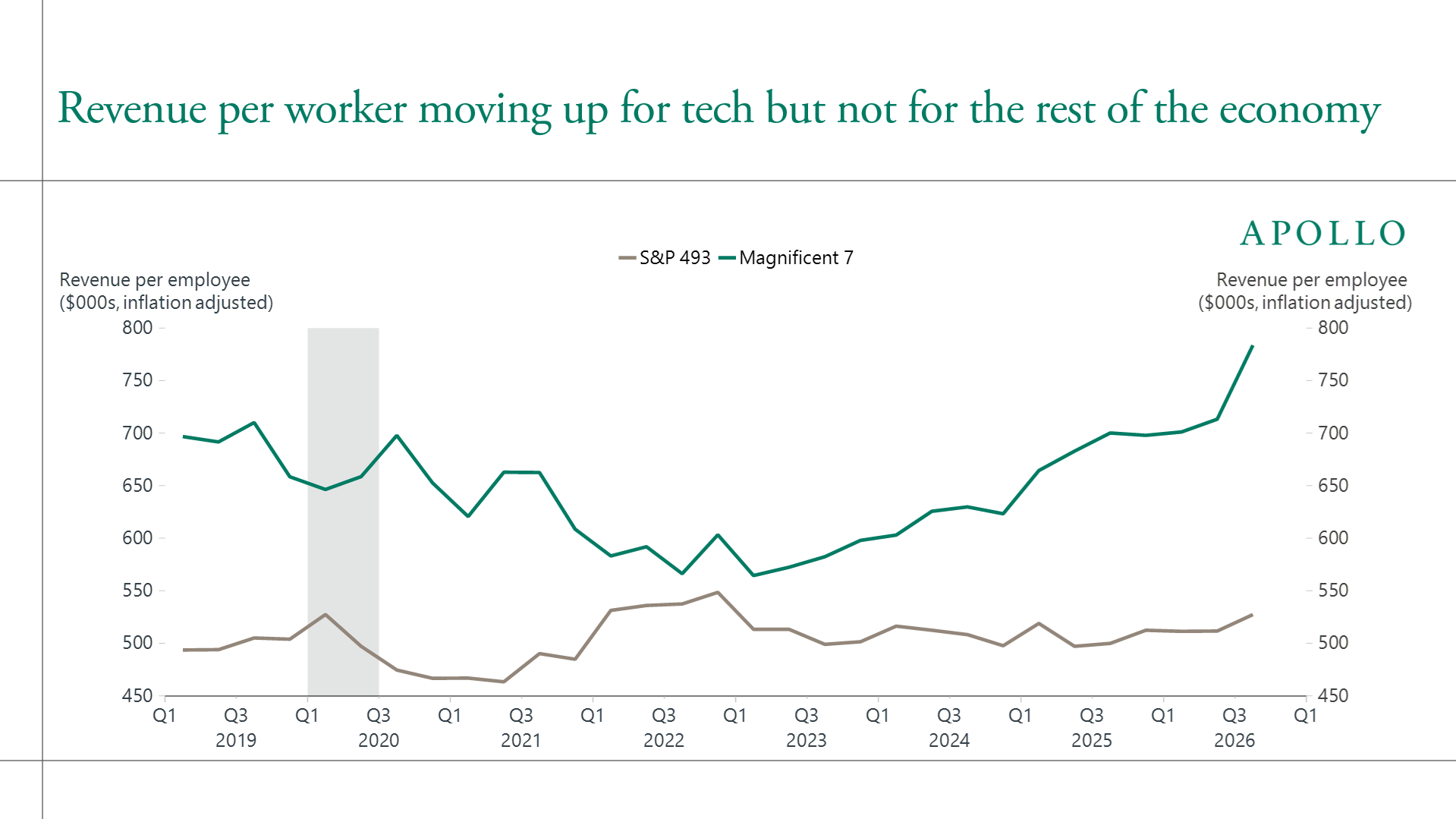
The Daily Front Page 13 of 24
Saturday, October 24, 2026 The Daily Front No. #261024 — Sleep, Plaques, and Mice
article

Alzheimer's breakthrough: 2 hrs of sleep restored without clearing brain plaques

by amichail·▲ 139 points·26 comments·sciencedaily.com ↗
removing them restored more than two hours of sleep per day in mice.

Scientists Restore Sleep in Alzheimer's Mice

Scientists discovered that overactive brain immune cells drive sleep loss in Alzheimer’s, and removing them restored more than two hours of sleep per day in mice. Credit: Shutterstock

Scientists have discovered an unexpected reason why Alzheimer's disease disrupts sleep, and their findings suggest that the problem may be reversible. In experiments involving mice with Alzheimer's-like brain changes, researchers restored more than two hours of sleep per day without removing the amyloid plaques associated with the disease.

The surprising discovery points to an overlooked culprit: the brain's own immune cells. Rather than simply protecting the brain from damage, these cells can trigger inflammation that interferes with healthy sleep.

Researchers at the University of Kentucky found that temporarily eliminating most of these immune cells allowed the mice to sleep longer and spend more time in the deep, restorative stages of sleep. The results suggest a potential new approach to treating one of the most disruptive symptoms of Alzheimer's disease.

The findings, published in the journal Alzheimer's & Dementia, were reported by a team led by Shannon L. Macauley, Ph.D., an associate professor of physiology at the University of Kentucky College of Medicine, and first author Nicholas J. Constantino, Ph.D., a recent doctoral graduate.

Macauley described the discovery as "paradigm-shifting" because it challenges the prevailing understanding of why people with Alzheimer's often experience severe sleep problems.

How the Brain's Immune System Can Disrupt Sleep

To understand what the researchers uncovered, imagine a small fire breaking out in a kitchen. Instead of containing the flames, the building's sprinkler system activates everywhere, flooding the entire house and causing widespread damage.

Something similar may happen in the brain during Alzheimer's disease.

Amyloid plaques are deposits of sticky protein fragments that accumulate between nerve cells. They are one of the characteristic features of Alzheimer's and have long been investigated for their role in the disease.

The brain also contains specialized immune cells known as microglia. These cells normally protect the nervous system by removing debris, responding to injuries, and helping maintain a healthy environment for neurons.

However, when microglia detect amyloid plaques, their defensive response can become excessive. Instead of simply addressing the threat, they release inflammatory signals that may interfere with normal brain activity.

Scientists have traditionally linked sleep problems in Alzheimer's primarily to damaged neurons or the accumulation of amyloid plaques. The new findings suggest that the immune system's reaction to those plaques plays a major role.

"Basically, we showed that it is not the plaques themselves, or solely dysfunctional neurons, that cause sleep loss but actually microglia," said Macauley. "Microglia are immune cells that, when they respond to plaques, kick off this elaborate cascade of inflammation, as if the microglia are partying all night, and keeping the brain awake."

In other words, the brain's response to Alzheimer's pathology may create additional problems beyond those caused by the plaques themselves. The researchers compared this widespread reaction to a "whole house response," in which a defense mechanism ends up causing more disruption than expected.

Tracking Alzheimer's Sleep Changes Inside the Brain

To investigate the connection between microglia and sleep, the scientists studied two groups of mice. One group was genetically predisposed to develop amyloid plaques, while the other consisted of normal "wild-type" mice that experienced typical aging.

The researchers examined the animals at two ages: six months, when plaques first appeared in the genetically modified mice, and 18 months, when the disease model showed more advanced pathology.

Comparing these groups helped the scientists distinguish changes associated with Alzheimer's pathology from those that naturally occur as the brain ages.

The team used several advanced technologies to measure sleep and examine what was happening inside the brain.

Each mouse was fitted with a small device that recorded electroencephalography (EEG) and electromyography (EMG).

EEG measures the brain's electrical activity, including the patterns and rhythms produced when networks of neurons communicate. These electrical signals change depending on whether the brain is awake, dreaming or experiencing deep sleep.

EMG measures electrical activity in muscles. Combining the two techniques allowed researchers to identify different sleep stages and determine how long the animals remained in each one.

The scientists also wanted to visualize the relationship between amyloid plaques and immune cells throughout the brain.

For this, they used light-sheet microscopy, an imaging technique that makes biological tissue transparent and illuminates it with a thin layer of laser light. The resulting images can be assembled into detailed three-dimensional maps, allowing scientists to examine structures that would otherwise be difficult to see.

This approach revealed the distribution of plaques and microglia across the brain, helping researchers understand where immune cells were responding to Alzheimer's pathology.

Scientists Temporarily Remove 87% of Brain Immune Cells

To determine whether microglia were actually responsible for disrupted sleep, the team conducted an experiment designed to temporarily eliminate most of these cells.

The researchers administered a drug called Pexidartinib (PLX3397), which was originally developed for cancer research. It blocks a cellular signal that microglia depend on for survival.

After the mice received the medication in their food for 14 days, approximately 87% of their microglia had been depleted.

This allowed the scientists to test whether sleep would improve when the cells driving the inflammatory response were largely absent.

The researchers also performed a detailed analysis of the animals' brain activity using a mathematical method called Fitting Oscillations and One Over Frequency (FOOOF).

This technique separates electrical signals into periodic activity (the rhythmic waves we usually think of as brain waves) and aperiodic activity (the background electrical noise).

By examining these different components, the team could identify changes in how the brain was functioning, including whether it remained unusually active during periods when it should have been resting.

The process is somewhat like monitoring a car engine to determine whether it continues running at high speed even when the vehicle is supposed to be idle.

A Surprising Discovery About Alzheimer's Brain Plaques

Macauley called the results "mind-blowing and unexpected."

One of the most surprising findings was that sleep problems did not continue worsening as amyloid plaques accumulated.

The researchers initially expected that increasing plaque buildup would lead to progressively more severe sleep disturbances. Instead, the mice developed substantial sleep problems relatively early, and those problems remained largely unchanged even as plaque levels increased dramatically.

"I expected that as plaque burden became more severe, sleep disruption would also worsen," said Constantino. "The disruptions in sleep and cortical EEG activity that occur at 6 months, when plaques first emerge, did not worsen by 18 months, despite more than double the amount of plaque burden."

The team described this pattern as a ceiling effect. Essentially, sleep disruption appeared to reach a certain level early in the disease process rather than increasing in direct proportion to the amount of amyloid in the brain.

This suggests that the initial inflammatory response triggered by plaques may be particularly important. Once microglia become activated and disrupt sleep, additional plaque accumulation may not necessarily produce an equivalent increase in sleep loss.

The discovery offers an important clue as to why sleep disturbances can emerge relatively early in Alzheimer's disease.

Alzheimer's Disrupts a Different Type of Sleep Than Normal Aging

The study also revealed a notable difference between sleep changes caused by normal aging and those associated with Alzheimer's pathology.

Sleep is not a single, uniform state. Throughout the night, the brain moves through several stages that perform different functions.

Rapid eye movement (REM) sleep is strongly associated with vivid dreaming and plays an important role in processing memories. The researchers found that normal aging primarily reduced this type of sleep.

Alzheimer's pathology, however, had a different effect. It selectively disrupted non-rapid eye movement (NREM) sleep, which includes the deepest and most physically restorative stages of sleep.

During NREM sleep, the brain performs essential maintenance functions that support learning, memory, and recovery. Deep sleep is also associated with processes that help clear metabolic waste products from the brain.

"That restorative sleep is super important for physical repair, learning and memory and washing out the toxins of the day," Macauley said.

Losing this important stage of sleep could have consequences beyond daytime fatigue.

Because healthy sleep helps maintain the brain's internal environment, disruptions may interfere with processes that normally remove potentially harmful waste. Researchers suspect this could contribute to a self-reinforcing cycle in which Alzheimer's pathology disturbs sleep, and inadequate sleep may further aggravate the disease.

Breaking that cycle could therefore become an important treatment strategy.

More Than Two Hours of Sleep Restored Without Removing Plaques

The most striking result emerged after the researchers temporarily removed most of the microglia from the brains of mice with Alzheimer's-like pathology.

The animals gained more than two hours of sleep per day.

They also experienced longer periods of restorative NREM sleep, giving them more opportunities to transition naturally into REM sleep, which is important for memory formation.

Even more surprisingly, these improvements occurred without any reduction in amyloid plaque levels.

The plaques were still present, but the mice were sleeping substantially better.

This finding provides evidence that the inflammatory response driven by microglia contributes directly to sleep disruption and that suppressing this response can reverse at least some of the associated sleep problems.

It also suggests that researchers may not need to eliminate amyloid plaques to improve sleep in Alzheimer's disease.

Although these findings are promising, the experiments were conducted in mice, and the same benefits have not yet been demonstrated in people. Temporarily removing most of the brain's immune cells is also not an established or practical treatment for Alzheimer's patients.

The researchers are now interested in whether the beneficial effects can be reproduced by adjusting microglial activity rather than eliminating the cells themselves.

If such an approach eventually proves successful in humans, it could provide a way to improve sleep and potentially reduce some of the additional stress that poor sleep places on the brain.

The Research Team Behind the Discovery

The work was conducted in Macauley's laboratory in the Department of Physiology at the University of Kentucky's Sanders-Brown Center on Aging.

Macauley credits the achievement to a "beautiful partnership" with students and researchers who were willing to challenge established ideas about Alzheimer's disease.

"I love people who take initiative, find their passion, are curious, and keep pushing to find an answer," Macauley said.

She encourages members of her laboratory to be "calculated risk-takers," emphasizing that meaningful discoveries often require scientists to investigate possibilities that may initially seem unlikely.

A quote from hockey legend Wayne Gretzky hangs in her office: "You miss 100% of the shots you don't take."

Constantino, who recently completed his doctorate at the university, said the laboratory's collaborative environment encouraged him to pursue questions that crossed traditional scientific disciplines.

"Dr. Macauley has also taught me to embrace uncertainty and failure as part of the scientific process," Constantino said. "Some of the most interesting studies I have been a part of emerged because our original hypothesis was wrong."

Macauley reinforces this mindset with a simple instruction to her team: "Follow the data, ask better questions, and figure out what is actually happening."

That approach helped the researchers move beyond the traditional emphasis on neurons and amyloid plaques to examine the broader role of the brain's immune system.

Could Existing Medications Help Restore Sleep in Alzheimer's?

The research team is now exploring ways to translate these findings into treatments and diagnostic tools that could eventually benefit people with Alzheimer's disease.

One promising direction involves calming overactive microglia without removing them.

Because microglia perform essential protective functions, eliminating them is not an ideal long-term strategy. Instead, the researchers hope to modify how these immune cells respond to amyloid plaques and regulate inflammation.

The laboratory is investigating existing medications, including the diabetes drug Metformin and the anti-seizure medication Stiripentol.

These drugs are being studied for their potential to alter how microglia produce and use energy, a process known as cellular metabolism. Changing that energy use could potentially reduce excessive immune activation and its harmful effects on sleep.

The hope is to prevent the brain's inflammatory response from becoming so intense that it disrupts normal sleep activity.

Researchers are particularly interested in whether intervention during the earlier stages of Alzheimer's could improve sleep and quality of life before substantial memory loss develops.

"If we can target that process, it might help with quality of life, attention, cognition and confusion," Macauley said.

The proposed drug strategies remain experimental for this purpose, and additional research will be necessary to determine whether they can safely produce similar benefits in humans.

A Simpler Way to Detect Early Alzheimer's Changes

Beyond identifying a potential treatment target, the study uncovered electrical activity patterns that may help distinguish Alzheimer's pathology from normal brain aging.

The researchers believe these patterns could eventually make EEG a useful tool for detecting and monitoring changes associated with Alzheimer's disease.

Unlike more expensive imaging procedures, EEG records electrical signals through electrodes placed on the scalp. It is relatively affordable, does not require surgery, and can be repeated to follow changes over time.

The team envisions EEG becoming a "readily accessible, affordable and longitudinal biomarker of Alzheimer's disease."

A biomarker is a measurable biological sign that provides information about a person's health or a particular disease. A longitudinal biomarker can be tracked repeatedly to monitor how a condition develops or changes.

"Portable EEG systems could allow us to monitor people in their home environments and potentially screen for changes associated with an Alzheimer's disease, without the initial need for expensive or invasive tests," Macauley said.

If future human studies confirm the usefulness of these electrical signatures, portable EEG devices might eventually help doctors identify people who need additional testing.

This could be particularly valuable in rural communities across Kentucky, where patients sometimes must travel long distances to reach specialized medical centers.

Instead of requiring every potentially at-risk patient to undergo advanced testing immediately, local clinics might use simpler monitoring tools to identify individuals who would benefit from further evaluation.

Although this application still requires validation, it offers a possible path toward more accessible Alzheimer's screening and monitoring.

Ultimately, the study suggests that treating Alzheimer's may require looking beyond the plaques themselves and examining how the brain responds to them.

By identifying the immune cells responsible for much of the sleep disruption in their mouse models, the University of Kentucky researchers have uncovered a potential way to restore an essential brain function without first removing the underlying amyloid deposits.

The next challenge is determining whether calming these cells can deliver similar benefits in people, potentially improving sleep, cognition and quality of life long before the most severe symptoms of Alzheimer's develop.

The Daily Front Page 14 of 24
Saturday, October 24, 2026 The Daily Front No. #261024 — The Research iPhone
article

Apple Security Research Device

by neom·▲ 179 points·124 comments·security.apple.com ↗
a specially fused iPhone that allows you to perform iOS security research without having to bypass its security features.

iPhone is the world's most secure consumer mobile device, which can make it challenging for even skilled security researchers to get started. We created the Apple Security Research Device Program to help new and experienced researchers accelerate their work with iOS.

Now accepting applications through October 30, 2026.

Apply below.

How it works.

The Security Research Device (SRD) is a specially fused iPhone that allows you to perform iOS security research without having to bypass its security features. You also benefit from access to software previews, security beta projects, the SRD research community, and special tooling to augment research and vulnerability discovery. Shell access is available, and you can run any tools, choose your own entitlements, and even customize the kernel.

All iOS and iPhone components are eligible for SRD Program research, except Apple Pay and third-party apps. Using the SRD allows you to confidently report all your findings to Apple without the risk of losing access to the inner layers of iOS security. Plus, any vulnerabilities that you discover with the SRD are automatically considered for Apple Security Bounty — including bonus awards for preview and beta software programs.

Code terminal within an iPhone

Guidelines.

The SRD is intended for use in a controlled setting for security research only. If your application is approved, we will provide you an SRD as a 12-month renewable loan. During this time, the device remains the property of Apple.

The SRD isn't meant for personal use or daily carry, and must remain on the premises of program participants at all times. Access to and use of the SRD must be limited to people authorized by Apple.

If you use the SRD to find, test, validate, verify, or confirm a vulnerability, you must promptly report it to us and, if the bug is in third-party code, to the appropriate third party.

Our ultimate goal is to protect users, so if you find a vulnerability without using the SRD for any aspect of your work, we'd still like to receive your report. We review all research submitted to us and consider all eligible reports for rewards through Apple Security Bounty.

Eligibility.

Participation in the Security Research Device Program is subject to review of your application.

To be eligible for the Security Research Device program, you must:

  • Have a proven track record of success in finding security issues on Apple platforms, or other modern operating systems and platforms.
  • Be based in an eligible country or region.*
  • Be the legal age of majority in the jurisdiction in which you reside (18 years of age in many countries).
  • Not be employed by Apple currently or in the last 12 months.

How to apply for a Security Research Device.

A limited number of Apple Security Research Devices are available each year.

To apply, sign in with your Apple Account. To enroll as a company, university, or other type of organization, you must be authorized to act on your organization's behalf and provide the names of everyone who will need access to an SRD. If approved by Apple, each person will have to acknowledge their responsibilities.

Apply for a Security Research Device.

This year's application period ends October 30, 2026.

* This program is available in: Argentina, Armenia, Australia, Austria, Azerbaijan, Belgium, Bosnia and Herzegovina, Brazil, Bulgaria, Canada, Croatia, Czechia, Denmark, Estonia, Finland, France, Georgia, Germany, Greece, Hungary, Iceland, India, Ireland, Italy, Japan, Latvia, Liechtenstein, Lithuania, Luxembourg, Moldova, Montenegro, Morocco, Netherlands, New Zealand, North Macedonia, Norway, Poland, Portugal, Romania, Senegal, Serbia, Singapore, Slovakia, Slovenia, South Africa, South Korea, Spain, Sweden, Switzerland, United Kingdom (UK), United States.

This program is not available in any U.S. embargoed countries or regions, or to those on the U.S. Department of Treasury's Specially Designated Nationals List, on the U.S. Department of Commerce's Denied Persons List or Entity List, or on any other restricted party lists.

The Daily Front Page 15 of 24
Saturday, October 24, 2026 The Daily Front No. #261024 — Robots on Demand
article

Dream-1

by GaggiX·▲ 172 points·77 comments·dreamlabs.ai ↗
controls robots it has never seen, performs tasks it was never shown.

Today, we're releasing Dream-1, a World Action Model that controls robots it has never seen, performs tasks it was never shown, and runs from $3/hour.

Give Dream-1 a new bimanual robot with parallel grippers, connect it to our API, and it can start performing tasks out of the box. No fine-tuning, no demonstrations from that robot, and no machine learning expertise required.

This is an important step toward general-purpose robot intelligence.

Today, Dream Labs is also coming out of stealth with $90M in seed funding and making Dream-1 available to people all around the world through a public API.

Dream-1 controls robots it has never seen, on tasks it was never shown, in places it has never been, from $3/hour.

Breaking the chicken-and-egg problem

Robotics' chicken-and-egg problem.

For decades, robotics has been stuck in a chicken-and-egg problem: a robot needs to be useful before people want to buy it, but making it useful requires data from that exact robot, and that data only exists once enough people start using it. Dream-1 is our first step toward breaking that loop.

Self-driving found a way around this cold-start problem. Cars were useful from day one with zero autonomy, so millions of people drove them every day and generated the data needed to train increasingly capable models. Most other robots never had that advantage.

Two things are changing that.

First, robot hardware is getting cheap enough to reach far more people. A capable bimanual arm setup can now cost as little as $2k1.

Second, a robot may no longer need a large dataset of its own before it can be useful. If a model can generalize zero-shot to unseen environments, tasks, and even robots, a new robot can start with useful capabilities.

Put those together and the flywheel can finally start. Cheaper hardware puts more robots into the world. Generalizable models make those robots useful earlier. Useful robots generate more data, and that data makes the models better for the next robot.

The Cambrian explosion of cheap, affordable robots

Robot hardware is getting cheap faster than anyone expected. See the robots above, where 7 semi-humanoid robots cost less than $15k, a price tier that barely existed a year ago. At the far end of the price curve, Hugging Face's $399 Microduck sold more than 10,000 units within 4 days of its launch in late August2. We believe the robotics take-off will start with robots like these.

That's because their buyers are consumers, prosumers, and small teams, not enterprises. An enterprise buyer is making a spreadsheet decision. If the robot doesn't beat a person on cost, speed, or reliability, it doesn't get bought; that's a high bar to clear. Consumers are different. 10,000+ people just paid $399 within 4 days for a robot whose main job is to be delightful and cute: it walks, waddles, and roller-skates. Somewhere between that and a fully capable home robot is a sweet spot, a robot affordable enough to be an easy yes and useful enough to earn its place in the home. Once robots hit that point, we think adoption starts to compound, and every robot in a home becomes a source of new training data. Imagine two Microducks folding your laundry, using their beaks as grippers.

The result that started Dream Labs

In February 2026, our team released DreamZero, the paper that introduced World Action Models3. Since then, the community has adopted WAMs as one of the most promising paradigms in robot learning. At that time, the most surprising result for us was when after post-training DreamZero on just 30 minutes of YAM robot data, we saw it generalize zero-shot to tasks it had never seen. That kind of generalization used to take hundreds or even thousands of hours of embodiment-specific data. If 30 minutes of data from a given robot was enough to transfer general-purpose task knowledge to that robot, breaking the chicken-and-egg loop no longer looked impossible. Combined with the hardware wave above, the timing felt right. That's when we decided to start Dream Labs.

After six months of building, we're excited to share a new research breakthrough that was only made possible through world action models: early signs of zero-shot embodiment generalization.

Introducing Dream-1

Dream-1 is our first World Action Model available through a public API that can be used all around the world. Out of the box, it can control unseen robots for unseen tasks in unseen environments.

Unseen Tasks Dream-1 was able to do. Autonomous. 8x speed at the beta testers’ sites, 4x in-house.

Get started in minutes

We want generalizable robotics to be accessible to anyone with a robot, not just large labs. So we designed Dream-1 to be as close to plug-and-play as possible. Connect your robot, point it at the API, and run. No machine learning background is needed to get started. Every week, we run internal hackathons to keep time-to-deploy as short as possible. Getting started tutorial

import dream

client = dream.DreamClient(
    api_key=<API_KEY>,
)
client.policy({"checkpoint": "dreamlabs/dream-1"})
client.set_observation(observation)
action = client.get_action()
client.close()

Condensed client side code

Zero-shot on robots it has never seen

Dream-1 can zero-shot generalize to many bimanual, parallel-gripper robots. Here are some we've tested. It can even control the original PR2, a general-purpose bimanual research robot released 18 years ago. Note that no embodiment-specific data was used to get these rollouts.

Unseen Robots Dream-1 was able to control. 4x speed on real robots, 3x in simulation.

This is one of the first reported zero-shot generalizations to completely unseen robot embodiments.4 If you have a bimanual parallel-gripper robot, try prompting Dream-1 and let us know how it goes. Zero-shot performance depends partly on your robot's inverse kinematics (IK) solver, so we've written a guide to help you get the most out of it. IK guide. Performance also varies across robots. Below, we break down zero-shot performance in simulation and on real robots.

Dream-1 zero-shot performance on 27 unseen robots in simulation and 4 real robots, relative to YAM, the robot Dream-1 was actually trained on. The real robots ran earlier Dream-1 checkpoints that never trained on them, each compared with the same checkpoint on YAM; OpenYAM was tested on unseen tasks only. Simulated evaluations are conducted by doing 300 rollouts per embodiment: 150 rollouts of 50 tasks quantifying language following and 150 rollouts of 150 tasks quantifying unseen task generalization.

Below, we explain how zero-shot embodiment generalization works and where it falls short. We then show how one-shot embodiment learning closes that gap.

How zero-shot embodiment generalization works

Two ways to control a robot: joints or end-effectors. Robot policies commonly output joint angles, which ties them to one specific robot's body. Dream-1 can do the same for the embodiments it supports natively, but it can also predict end-effector (EEF) poses: where each gripper should be and whether it should be open or closed. Every robot with two arms and parallel grippers shares that EEF action space, and its own IK solver turns the poses into joint commands. That shared interface gives Dream-1 a common way to command robots it has never seen, but on its own it isn't enough to make zero-shot transfer work.

Why does this work? Dream-1 sees the world through three cameras: a head view and a wrist view on each arm. Prior work on the Universal Manipulation Interface (UMI) showed that policies can transfer zero-shot across robot arms when every arm uses the same gripper and the policy relies only on wrist cameras5. From the wrist's point of view, the robots look identical. But that shortcut has a hard limit. It only works when the gripper hardware matches exactly, and it gives up the head camera's view of the whole scene.

World Action Models remove that limit. A WAM learns to predict video and actions together, so controlling a robot and imagining what that robot will do are the same problem. And every robot shows up the same way: as pixels. The head camera sees a UMI gripper, a two-finger gripper or an arm Dream-1 has never met as nothing more than shapes moving through a scene, which makes video the one representation every robot type shares. If Dream-1 can predict what a robot will look like as it completes a task, it can produce the actions that get it there. That’s why it can control robots with grippers that look nothing like UMI’s, and even entirely new bodies seen through the head camera.

How a World Action Model works.

Limitations

Predicting EEF trades some control for generality. Compared with joint-angle prediction with per-embodiment adaptation:

  • Performance depends on the quality of each robot's IK solver.
  • Dream-1 doesn't control how the arm reaches a pose, only where the gripper ends up, which can matter around obstacles or near joint limits.
  • Robots whose workspace or kinematics / dynamics differ sharply from what Dream-1 has seen may predict future states that are infeasible.

What Dream-1 can and can't do

Robocurve’s independent report on Dream-1: mean score per task attempt on RoboDojo-RC Tier 1.

Ahead of launch, Robocurve6, a Public Benefit Corporation that measures and reports frontier robotics capabilities to the public, evaluated Dream-1 independently. Their report, above, shows Dream-1 is better, faster and cheaper: a new Pareto frontier for robot control. It scores above the next best models, Opus 5.5 and Gemini 4 Argon, at 16x lower cost per task attempt than Gemini 4 Argon and 1.7x faster than the fastest LLM, GPT-6 Astra. While current LLMs excel at planning, robots still require a fast, general System 1 to act, and that is what Dream-1 is built to be.

How much does it cost to run Dream-1? We want you to know exactly what to expect before you try it. Running the model costs just $3 per hour for Dream-1, or $2 per hour for Dream-1-flash. Each call to the model returns 1.6 seconds of actions, so an hour is 2,250 calls: about $0.0013 an action for Dream-1, and $0.0009 for Dream-1-flash.

Across tasks. We break Dream-1’s performance down into eight task categories, from what it handles well to where it still struggles.

Fine-tune for your task with FaaS. If Dream-1 falls short on a task you care about, you don’t have to wait for our next release. Collect some data on your own robot, run it through FaaS, and get a custom model built for that task.

We want anyone with a robot to work like a forward-deployed engineer: find a task someone needs done, collect a bit of data, adapt Dream-1 to it, and deploy. If people will pay for what your robot does, you keep everything above the hourly cost.

Dream-1 is a research beta

It will make mistakes, and it has not been validated for safety-critical use. Please test it in controlled settings, and take extra care whenever a robot is running near people. If you see unsafe behavior, please report it to safety@dreamlabs.ai.

One-shot embodiment learning

When zero-shot isn't enough, we fine-tune Dream-1 for your robot. We call this Fine-tuning-as-a-Service (FaaS).

Here's what that looks like in practice: timelapses of data collection on two of our partners' robots, 5 minutes each.

Five minutes of data collection on two robots at 8x: reBot B601-DM on the left, Maker Arm on the right.

After adapting on just those 5 minutes, the difference shows side-by-side with the zero-shot run. Dream-1 now understands a bit better the affordance and kinematics of the robot.

Zero-shot and after FaaS on the same instruction, “go ahead and put the banana in the bowl”, with five minutes of the robot’s own data in between: reBot B601-DM in its simulated twin, Maker Arm on the real robot. 3x speed.

Some embodiments sit much further from what Dream-1 already knows, and closing a gap that large takes more of the robot’s own data. Dexmate with Sharpa dexterous hands grasps with hands in place of grippers, and took 77 minutes of its data. On YAM, we swapped in different end effectors for this task, a compliant gripper and a modified knife gripper, and it took 98 minutes of data.

After FaaS on embodiments far from Dream-1’s training data, on the real robots. 5x speed.

Across twelve robots from our FaaS beta partners, fine-tuning lifts the language-following score on ten of them:

Zero-shot versus after FaaS on the same twelve robots, in simulation, relative to YAM.

One-shot adaptation still outperforms zero-shot, so a gap remains. Closing it is one of our main goals: the better zero-shot gets, the closer any new robot comes to working out of the box.

Looking forward

Dream-1 today is a manipulation policy for bimanual robots with parallel grippers. It’s a starting point. We believe a strong, general robot foundation model can extend to mobile manipulators, dexterous hands, and bodies we haven't imagined yet, opening up many more of the things people actually want robots to do. Robotics won't be solved on day one, and Dream-1 has real limits, which we've tried to show transparently above.

Robotics is still stuck in a difficult loop: every new robot or task demands new data and a custom policy, often with limited generalization. With Dream-1 as a robotics API, we want to break that loop and put robot intelligence into more people's hands, so everyday users, not only researchers, can discover new applications for general-purpose robot intelligence.

Notes and references

  1. MakerMods, Maker Arm: a bimanual arm setup from about $2k.
  2. Yahoo Tech, Hugging Face's $399 Microduck robot has already sold more than 10,000 units, 1 September 2026: more than 10,000 units since pre-orders opened on 28 August.
  3. DreamZero: the paper that introduced World Action Models, February 2026.
  4. LAP also showed signs of life of embodiment generalization: Zha et al., LAP: Language-Action Pre-Training Enables Zero-shot Cross-Embodiment Transfer.
  5. Chi et al., Universal Manipulation Interface: In-The-Wild Robot Teaching Without In-The-Wild Robots, RSS 2024: zero-shot transfer across arms that share one gripper, from wrist cameras alone.
  6. Robocurve, a Public Benefit Corporation measuring and reporting frontier robotics capabilities to the public: Dream-1 on RoboDojo-RC Tier 1, October 18, 2026, CC BY 4.0.
The Daily Front Page 16 of 24
Saturday, October 24, 2026 The Daily Front No. #261024 — Clouds and Clearcuts
article

Google illegally cut down 250K trees in Finland for data center

by rustybolt·▲ 253 points·202 comments·nypost.com ↗
cleared 816 acres of woodlands in Northern Finland.

Google illegally demolished an estimated 250,000 trees in Finland to make way for a data center, leaving behind a lifeless mud wasteland that forced packs of wolves into a nearby town in search of food and infuriated locals, according to a report.

The tech super giant – continuing its expansion of the booming artificial intelligence industry – cleared 816 acres of woodlands in Northern Finland, The Guardian reported Thursday.

Google is accused of removing the trees and clearing the land before it had full approval — as Finnish law requires companies to complete a mandatory Environmental Impact Assessment before large-scale operations.

Finnish officials, outraged by the mass destruction, suspended all development at two of Google’s data center sites to assess the environmental impact.

An aerial view shows the site where a Google data center is set to be built in Muhos, Finland, on Sept. 29, 2026.

An aerial view shows the site where a Google data center is set to be built in Muhos, Finland, on Sept. 29, 2026. AFP via Getty Images

The operation took place outside the rural town of Muhos — southeast of Finland’s fifth-largest city, Oulu — as devastating images of the aftermath captured the vast barren land filled only with tire tracks, muddy puddles and mounds of dirt.

The removal of the large area of trees destroyed the wildlife in the forest, leaving predators like wolves to search for food closer to human developments in the village of Otanmäki, 50 miles from the site.

“We had wolves coming into the village because all the wild animals moved out of the forest,” resident Anni Ranta told the Guardian.

“They fled. What worries me about the data centers is also the noise because this is hard rock soil. Even when we are standing here talking,” she added, comparing the sound to a drum.

Angry residents called out Google, asking for reprieve from the company to help repay for losses the community sustained from previous tech expansions on the land.

“It has been done in the wrong way. American style. No sense. No sense at all,” Muhos resident Antti Jakonen told the outlet, calling on the company to help restore the local salmon population that had been destroyed by hydropower years ago.

The removal of the trees led to water sources flowing near the site to turn brown and pollute the streams that feed the Oulujoki River.

The removal of the trees led to water sources flowing near the site to turn brown and pollute the streams. AFP via Getty Images

The site earmarked for Google's new data center in Vaala, Finland.

The site earmarked for Google’s new data center is seen in Vaala, Finland on Sept. 29, 2026. AFP via Getty Images

Ranta revealed she feared the construction of the data centers would be a perfect target for Russian aggression in the already tense European domain.

“I don’t want them in Finland at all. I don’t like the whole idea of AI and the world changing and the way it’s changing. It’s going too fast, too soon.”

Google’s two sites near Muhos and Kajaani, roughly 90 miles apart, are part of its $15 billion investment for AI infrastructure in the Nordic country, which was announced in September.

The Finnish Licensing and Supervision Agency gave Google’s project subsidiary, Tuike Finland Oy, a deadline of Oct. 23 to suspend all operations

“In the opinion of the Finnish Licensing and Supervision Authority, extensive preparatory measures have already been taken in the project areas based on the currently available reports, such as the removal of trees, the stripping of topsoil, the construction of construction site roads and storage areas, changes to ditches and culverts, and stormwater arrangements,” Tommi Muilu, Head of the Environmental Department, said.

“In our opinion, the measures in question will change the environment and cause impacts, the identification and assessment of which are among the key objectives of the EIA procedure,” Muilu said.

The removal of the trees led to water sources flowing near the site to turn brown and pollute the streams that feed the Oulujoki River.

Google’s Finnish top chief Antti Järvinen claimed the company believed it had legislative approval to commence the large-scale tree cutting.

Järvinen’s explanation was blasted as being “pure arrogance” from the trillion dollar Alphabet company.

“They bought the vast land area and they just started to cut it, just like that,” she said. “It’s pure arrogance and it’s amazing,” Finnish Association for Nature Conservation (SLL) chair Hanna Halmeenpää said, according to the Guardian.

Hanna Halmenpaa, chair of the board of the Finnish Association for Nature Conservation, is pictured near the site where Google's new data center is set to be built before construction was suspended.

Hanna Halmenpaa, chair of the board of the Finnish Association for Nature Conservation, is pictured near the site where Google’s new data center is set to be built before construction was suspended. AFP via Getty Images

Angry residents called out Google, asking for reprieve from the company to help repay for losses the community sustained from previous tech expansions on the land.

Angry residents called out Google, asking for reprieve from the company to help repay for losses the community sustained from previous tech expansions on the land. AFP via Getty Images

Opponents of the data center believe Google had been rushing to construct the complex before legislation in Finland caught up on AI advancements to implement regulations.

Järvinen apologized for the destruction as the company said it would work to protect water sources before planting back trees around 321 of the acres.

“I wonder why we have to sacrifice so much of our nature. They give everything away too easily,” conservationist Vesa Hyyryläinen told the outlet.

In July, New York Gov. Kathy Hochul signed an executive order, banning all large-scale AI data centers from the state, the first such ban in the US.

The executive order paused new permits for so-called “hyperscale” data centers that looked to use the Empire State’s electrical grid for up to a year.

“I don’t want New York to just be first. I want New York to be first in the right way,” Hochul said at the time.

The Daily Front Page 17 of 24
Saturday, October 24, 2026 The Daily Front No. #261024 — The Samsung in the Living Room
The Daily Front Page 18 of 24
Saturday, October 24, 2026 The Daily Front No. #261024 — Useful Machines
repository

OBS Studio 33

by pentagrama·▲ 453 points·172 comments·github.com ↗
★ 78,187⑂ 10,852 forks C

OBS Studio - Free and open source software for live streaming and screen recording

33.0 New Features

  • Updated CEF from 127/6533 to 150/7871 [WizardCM] (#13900)

    • This is a massive update to the underlying framework used for browser sources and docks from the July 2024 release to September 2026
    • All of this work is on the backend and should be invisible to users. Please be sure to report any new weirdness or problems you run into with browser sources!
  • Complete overhaul to plugin loading [FiniteSingularity/PatTheMav] (#13594)

    • First-party plugins are now in a new folder named core
    • Third-party plugins have an updated installation location and folder structure
    • Existing third-party plugins will continue to load from the legacy locations until OBS Studio 34.0
    • More information is available in our knowledge base article
  • Improved how source snapping works in the preview [Warchamp7] (#12298)

    • New visual indicator added
    • Sources now snap along the entire axis instead of only when directly touching
    • Sources no longer snap to hidden sources
  • Improved behavior of spinboxes for number values [Warchamp7] (#12337)

    • Typing is no longer mysteriously blocked in some situations
    • Numbers are no longer cut off in some situations
    • Values now update only after pressing Enter and Enter does not close the window
    • Holding Shift + Up/Down now advances multiple steps at a time
    • Dragging the cursor inside the input but outside the text itself now works properly
  • Enabled NVENC on Arm64 [RytoEX] (#13827)

33.0 Changes

  • Added a check for encoders being missing when loading a profile [derrod] (#11340)

  • Added support for newest NVIDIA Broadcast SDKs for NVIDIA Audio Effects and Video Effects [pkviet] (#13838)

  • Added hotkeys for controlling audio monitoring of a source [Warchamp7] (#13599)

  • Changed Safe Mode to not start WebSocket Server [FiniteSingularity/RytoEX] (#13984)

  • Fixed issues with groups in Studio Mode [Warchamp7] (#11092)

    • Fixed moving sources inside a group causing them to glitch out in Program
    • Fixed moving sources inside a group showing up live in Program
  • Adjusted naming of Window Capture methods on Windows [Penwy] (#12047)

  • Improved detection of fullscreen games for Game Capture [Kira-NT] (#10880)

  • Improved transparency handling for macOS Screen Capture [jcm93] (#13030)

  • Scaled simple output recording audio bitrate by channel count [nickvonkaenel] (#13311)

  • Removed support for Ubuntu 24.04

33.0 Bug Fixes

  • Added a startup error if obs-transitions failed to load [notr1ch] (#13321)
  • Improved file splitting for Hybrid MP4/MOV [derrod] (#13386)
  • Fixed outputs getting stuck running when a bad rescale output resolution is set [suogesi] (#13375)
  • Fixed monitoring icon state getting desynced when using third-party tools or websockets [prgmitchell] (#13822)
  • Fixed a crash on macOS 27.2 when starting OBS Studio [RytoEX] (#14070)
  • Fixed potential crash when shader cache file is invalid [notr1ch] (#13538)
  • Fixed a potential crash on Linux when USB mic is removed [R0te/RytoEX] (#13922)
  • Fixed a potential crash when renaming a source with the Add Source window open [Warchamp7] (#13800)
  • Fixed a potential deadlock during video/audio tasks [exeldro] (#13579)
  • Fixed an issue with B-frame offset calculation in AMF that could cause streams to disconnect [lexano-ivs] (#13762)
  • Fixed PipeWire screencast sources being duplicated in studio mode [tytan652] (#13673)
  • Fixed a potential crash when switching off a newly created profile [Warchamp7] (#13182)
  • Fixed a source toolbar crash when source type is missing [Penwy] (#13539)
  • Fixed profile import failing on paths with a trailing slash [Ushkalovk] (#13863)

33.0 Developer Information

  • Added frontend event and output signal for replay buffer saving [Penwy] (#8955)

  • Added guidance regarding the theme system to the top of all theme files [Warchamp7] (#13733)

  • Added ability to set a file extension filter for OBS_PATH_FILE_SAVE path types [FiniteSingularity] (#10190)

  • Added obs_frontend_is_safe_mode for first-party plugins

    • Third-party plugins are not loaded at all in Safe Mode
  • Added versions to Flatpak plugin extension point [tytan652] (#13735)

  • Added obs_canvas_video_active() to check if the video of a canvas is active [exeldro] (#13110)

  • The minimum supported versions of Visual Studio, Windows SDK, and clang-format have been increased. Previous versions may continue to work, but will no longer be tested/supported. It is recommended that build environments are kept up-to-date with the project's toolchain.

    • Changed Windows builds to use Visual Studio 2026 and SDK 26100 [RytoEX] (#13543)
    • Changed clang-format version used to 22.1.3 [PatTheMav] (#13549)
  • Changed obs_canvas_reset_video() to allow resetting a canvas's video when any other canvas's video is active, but not its own video [exeldro] (#13110)

  • Updated libnsgif to 1.0.0 [RytoEX] (#11178)

    • This is a breaking change for any plugins using libobs/graphics gs_image_file
  • Clarified documentation for obs_module_unload [notr1ch] (#13327)

  • Required MbedTLS 3 and exclude 4 or later [tytan652] (#13799)

  • Removed support for FFmpeg 6.x and 7.x [RytoEX] (#13964)

  • Removed support for Qt 6.4-6.9 [RytoEX] (#13969)

  • Fixed repeated preview enable/disables not working [WarmUpTill] (#12580)

  • Only emit core signal handlers for public canvases [tt2468] (#13574)

  • Deprecated unused hidden API for sources [derrod] (#13122)

  • Deprecated APIs for audio source monitoring_type [Warchamp7] (#13599)

    • This is replaced by a new monitoring_enabled boolean

Checksums

OBS-Studio-33.0.0-Sources.tar.gz: c1ae3c98c1bb70ebdced33e894a526fcbbbda9bfd95806970a3fc31f74b08f6c
OBS-Studio-33.0.0-Ubuntu-26.04-x86_64-dbsym.ddeb: 12045838dfd0202ba26b77fb2e8572f4db27c709b3aabe425ac979ee0532a61c
OBS-Studio-33.0.0-Ubuntu-26.04-x86_64.deb: f5844914eadd560314f3a9db020afa7a8afbefb67a26c488f2956dc339704918
OBS-Studio-33.0.0-Windows-arm64-PDBs.zip: e43139f467ccedb4fbb583f09ce64341a7c96b44030181ef57abd1528142b947
OBS-Studio-33.0.0-Windows-arm64.zip: 02c53d7bff3f9c159401da79fc375d7b75b00c9ca62d2b4ec5fc05a575d2fa1f
OBS-Studio-33.0.0-Windows-x64-Installer.exe: 3bf55dae6d9db651505828090de74540296c742ed2a94a28cf055cb6ddc6bed3
OBS-Studio-33.0.0-Windows-x64-PDBs.zip: dbda0e1e9967262380e619e071de068809ccae2ccb3f68f52034db9a8276475d
OBS-Studio-33.0.0-Windows-x64.zip: 3369a3ecd67b5669a8a08d77357f87cc786d1fba42fbbd1054d841a69f6271a7
OBS-Studio-33.0.0-macOS-Apple-dSYMs.tar.xz: 6b162ccbafc2eaaee3ced192a851eb5d3d616ad8d54125ce5cd701d26e6939bf
OBS-Studio-33.0.0-macOS-Apple.dmg: b36f4e9da5f2f17c733ba711c8fe0656d6b0cd573cfe96eeb3e68325cffef739
OBS-Studio-33.0.0-macOS-Intel-dSYMs.tar.xz: 997ba41207e9fd7b045b955561cdd5c32b29f12d98ea3ea5a43de7c9edd8f1c7
OBS-Studio-33.0.0-macOS-Intel.dmg: 8524ff428f038573f8905a206841081d3da9ec607063906f7bbfe38d55810c1c
The Daily Front Page 19 of 24
Saturday, October 24, 2026 The Daily Front No. #261024 — GPU Aftermarket
repository

GPU-unlock: FP/BF16 instruction issue rate on Nvidia 3000's cards

by fragebogen·▲ 269 points·73 comments·github.com ↗
★ 4,738⑂ 525 forks C

Unlock FP/BF16 instruction issue rate on Nvidia 3000's cards to their professional equivalents

Unlock FP/BF16 instruction issue rate on Nvidia 3000's cards to their professional equivalents

This Linux kernel module combines the CMP unlocker's V67/PLM technique with the pre-driver timing of the UEFI approach. It runs the unlock, writes the speed selectors (SS0 0x88888888, which selects the full BF16 rate, and the 4-bit SS1 0x8 IMLA4) and performs FLR before the unmodified NVIDIA driver binds the card. It is neither a UEFI application nor a patched NVIDIA driver.

The benefit of this early kmod driver is that it does not require manual patching each time nvidia releases a new driver version.

The effect of this unlock is that it doubles the instruction issuing speed of FP/BF16 FMA into FP32 operations on GA102, GA103, GA104 and GA106 cards.

3090 Ti dense 8192³ GEMM at 450 W, five-sample medians with FP32 accumulation:

Input Before After
FP16 87.46 TFLOPS 118.39 TFLOPS
BF16 87.50 TFLOPS 157.41 TFLOPS
TF32 42.58 TFLOPS 82.61 TFLOPS

Tested cards

Results reported by users. The module accepts every GeForce ID listed in kernel/gpu_unlock/main.c, but the cards below are the ones someone has reported on. Please add yours with a compatibility report, whether it worked or not.

Chip Card PCI ID Result BF16 GEMM gain Reports
GA102 RTX 3090 Ti 10de:2203 Unlocked +68–80% #1
GA102 RTX 3090 10de:2204 Unlocked +25–67% #5, #9, #10, #17, #25, #27, #33
GA102 RTX 3080 Ti 20 GB (OEM, GA102-250) 10de:2205 Unlock completes, BF16 stays at half rate — #28
GA102 RTX 3080 10 GB 10de:2206 Unlocked +70–73% #14
GA102 RTX 3080 20 GB (memory upgrade) 10de:2206 Unlocked +56–59% #10, #15
GA104 RTX 3070 10de:2484 Unlocked +73–81% #10, #12
GA104 RTX 3070 Ti 10de:2482 Not tested with this module (the same unlock worked from a UEFI port on Windows) — #32
GA106 RTX 3060 12 GB 10de:2504 Unlocked about +80% #13, #31
GA103 any 10de:2414 No reports yet — —

The gains are dense GEMM throughput from each report's own benchmark, so they are not directly comparable. The power limit matters a lot: the lowest figure (+25%) is from cards capped at 225 W.

Matrix-heavy work speeds up: LLM prefill (+14–36% in #9, #15, #25 and #33), diffusion and FlashAttention. LLM decode, which is limited by memory bandwidth, and INT8 work stay about the same. The reports that compared outputs found them bit-identical before and after.

Reports also cover up to four cards in one machine, the card driving the display, and cards passed through to a VM with vfio-pci (#17).

How to install

First run:

git clone https://github.com/Zagitta/gpu-unlock
cd gpu-unlock
make install

Then append gpu_unlock.targets=all to your kernel command line, keeping existing options:

  • GRUB (Debian/Ubuntu/Mint): add it inside GRUB_CMDLINE_LINUX_DEFAULT in /etc/default/grub, then run sudo update-grub.
  • GRUB (Arch/CachyOS): same edit, then run sudo grub-mkconfig -o /boot/grub/grub.cfg.
  • Fedora/RHEL: run sudo grubby --update-kernel=ALL --args="gpu_unlock.targets=all".
  • systemd-boot: append it to the options line in your boot entry (bootctl status shows its location).
  • UKI / generated entries: add it to /etc/kernel/cmdline and regenerate your boot images/entries (e.g. sudo mkinitcpio -P for mkinitcpio UKIs).

Local build

Every build downloads the pinned NVIDIA/CachyOS inputs over HTTPS, checks their SHA-256, and generates firmware only in the build directory and the binary package. All three formats install through the same make install-* targets. Packages are built from the committed HEAD.

Build, install build dependencies, and install the packages in one step (asks for your sudo password):

make install        # detect the distribution and select an installer
make install-arch   # makepkg -sif
make install-deb    # apt-get build-dep, dpkg-buildpackage, apt-get install
make install-rpm    # dnf builddep, rpmbuild, dnf install

make install uses /etc/os-release (ID, then ID_LIKE) to detect Arch, Debian/Ubuntu, or Fedora/RHEL/CentOS families. The RPM installer requires DNF. For other distributions, select a compatible explicit target above.

make arch, make deb and make rpm only build. Debian and RPM packages go to build/deb and build/rpm. The NVIDIA inputs are cached in ~/.cache/gpu-unlock/inputs (make inputs; override with INPUTS=). dpkg-buildpackage itself never uses the network, so a clean-chroot build (sbuild or pbuilder) needs GPU_UNLOCK_INPUTS pointing at that cache. The make dist archive, the Debian source package and the .nosrc.rpm contain no NVIDIA archives or generated firmware.

Boot flow and opt-in

The packages put gpu_unlock and its firmware in the initramfs and load it there, before nvidia can bind a card:

  • mkinitcpio: /etc/mkinitcpio.conf.d/zz-gpu-unlock.conf inserts gpu_unlock right before nvidia in MODULES, so a display card is blank for as short a time as possible. Without nvidia in the image, it goes last and still runs before an nvidia loaded from the root filesystem. Images are rebuilt on install. mkinitcpio ignores drop-ins for an image built with -c <config> or a preset _config; put gpu_unlock right before nvidia in that config's MODULES yourself.
  • initramfs-tools: /usr/share/initramfs-tools/modules.d/gpu-unlock.conf.
  • dracut: /usr/lib/dracut/dracut.conf.d/gpu-unlock.conf.

With initramfs-tools and dracut, the module is built for every installed kernel that has headers, and those kernels' images are rebuilt on install and again on removal. Kernels installed later get the module and a new image from the kernel's own install hooks.

There is no softdep nvidia pre: rule: kmod honours only the first softdep nvidia line it reads, so other packages' rules (nvidia-utils, gddr6_hwmon) would silently override it, or it would override theirs.

The module does nothing unless the kernel command line opts in:

gpu_unlock.targets=all                          # every unbound GA102/GA103/GA104/GA106 card
gpu_unlock.targets=0000:21:00.0                 # only these cards
gpu_unlock.targets=0000:21:00.0,0000:22:00.0    # comma-separated

Addresses are full PCI names as lspci -D prints them (hex digits in either case), independent of GPU numbering and display role. An entry that is not a GA102/GA103/GA104/GA106 card, including all mixed with addresses, is logged and ignored. The cards are unlocked concurrently, about a second in all however many there are, and each on its own: a card that is already bound or powered down is skipped. Bus mastering that the board firmware left on (Supermicro X11 does this whatever its option ROM and bus master settings) is cleared first; a card some driver already initialised is still refused. Then nvidia loads and binds every card as usual.

The display card works too. Its firmware framebuffer (the boot console and Plymouth) keeps running while the unlock's firmware steps run, and is removed just before the card's reset, as nvidia-drm would do a moment later anyway. Its screen is blank from that reset until nvidia-drm takes over.

Loading the module by hand after boot does nothing to a card that nvidia has bound.

Suspend to RAM powers the cards off, which resets the speed selectors. After resume the module unlocks every card it unlocked at boot again, before nvidia resumes it: its suspend notifier runs just ahead of the one nvidia resumes its cards from (NVreg_UseKernelSuspendNotifiers=1, the default in current drivers; nvidia-resume.service runs later still). This adds about a second to resume. A card that kept power, as in suspend to idle, is still unlocked and is only read. A card that nvidia has already resumed, or that is bound to another driver, is left as it is, and the log says why. Add gpu_unlock.resume=0 to the kernel command line, or write 0 to /sys/module/gpu_unlock/parameters/resume, to turn this off. Hibernation is not covered.

Check the result with:

journalctl -k -b | grep gpu_unlock
lspci -nnk -s 0000:21:00.0

To stop unlocking, remove gpu_unlock.targets= from the kernel command line; for a one-off boot, delete it in the bootloader's edit screen. Removing the packages also removes the module and the initramfs drop-ins.

If the firmware on a card never stops, the module logs it and keeps the DMA buffers that firmware may still use until the next power off. Power off before trying again.

The kernel module and local packaging are GPL-2.0-only. The generated payload derives from the pinned CMP reference; NVIDIA firmware remains under its own terms. See firmware/NOTICE.md and licenses/ for attribution and notices.

The Daily Front Page 20 of 24
Saturday, October 24, 2026 The Daily Front No. #261024 — Software Desk
article

FreeDNS

by esher·▲ 307 points·83 comments·freedns.afraid.org ↗

Dynamic update demonstration example (v2 interface)

[~] $ curl https://sync.afraid.org/u/CyTXMbtq5cPnLjEg5vKHTPDE/
Updated demo.freshdns.com from 107.170.238.X to 50.23.197.94

IPv6 updates? Easy, same as above, just add v6.

[~] $ curl https://v6.sync.afraid.org/u/CyTXMbtq5cPnLjEg5vKHTPDE/
Updated demo.freshdns.com from 50.23.197.94 to 2607:f0d0:1102:d5::2

Common Uses:

  • Free DNS, Dynamic DNS, Static DNS and Premium DNS services
  • Simple to use, trusted by millions of users
  • Control your domain name traffic, anytime, anywhere, in realtime, WAN, LAN, and etc
  • 23,230 domains in the shared domain registry. Click on any to attach, or use your own
  • Access your computer with a name (like zeus.afraid.org or yourdomain.com) instead of a numeric IP address. Point to home/work/school/datacenter/cloud and etc

Feature List:

  • Free and premium subdomain hosting, domain hosting, backup dns, reverse IPv6 DNS hosting (forward/reverse)
  • Free and premium URL redirection [web forwarding]
  • Update your IP instantly using the automated update interface
  • Easy dynamic updates, examples: v1 DD-WRT Guide | v2 DD-WRT Guide (Native IPv6)

See more features...

Signup Q&A

Sign up Free    Premium Plans

article

SpeedCrunch 1.1

by LordNibbler·▲ 168 points·32 comments·speedcrunch.org ↗

A free, open-source high-precision scientific calculator.

Built for STEM professionals, students and teachers.

Download User Manual Donate

Free to download and use on Windows, macOS, and Linux.

Watch the SpeedCrunch demo

SpeedCrunch with multiple sessions, the formula book, and function, constant, variable, and unit panels

article

Danish Government silently drops plan to dump MS Office

by lowkeyokay·▲ 214 points·169 comments·computerworld.dk ↗

Artikel top billede

(Foto: Qëndrim Fazliu)

I al stilhed har Digitaliseringsministeriet droppet sit ellers meget omtalte pilotprojekt med et open souce-baseret alternativ til Microsofts Office-pakke, som ministeriet ellers anvender i stor stil.

Projektet blev søsat i sommeren 2025, da knap 40 medarbejdere i ministeriet gik i gang med at teste open source-systemet Collabora som alternativ til Office. Systemet blev dengang leveret af danske cBrain.

The Daily Front Page 21 of 24
Saturday, October 24, 2026 The Daily Front No. #261024 — In Brief
article

Why is AI generated language so hard to understand?

by canjobear·▲ 209 points·174 comments·arxiv.org ↗

There is a widespread sense that AI-generated text has recently become harder to understand. In this study, we investigate a set of psycholinguistic features that are known to correlate with human processing difficulty (e.g., object relative clauses, long syntactic dependencies, low-frequency n-grams). Using a novel corpus of AI-generated text across diverse domains, we find that AI models use these difficult features more often than paraphrases generated by round-trip translation. Compared with human writing, all nine frontier and near-frontier models use more inanimate subjects with animate verbs and more low-frequency n-grams, and most also use longer dependencies, more stacked nouns, and more reduced object relatives in conversation; we also demonstrate substantial variation across model families. We propose and test a hypothesis as to why: while human language is optimized for successful communication, AI-generated text is increasingly optimized for other goals like math, code, and reasoning, in which there is a pressure for information density rather than successful communication. We provide a proof-of-concept for this hypothesis by fine-tuning a language model under a length penalty, which leads to a divergence from human-like linguistic behavior. Our findings highlight the axes of misalignment between linguistic processing demands in humans and LLMs, and point toward possible remedies.

The Daily Front Page 22 of 24
Saturday, October 24, 2026 The Daily Front No. #261024 — Also on the Front Page
The Daily Front Page 23 of 24
Saturday, October 24, 2026 The Daily Front No. #261024 — Colophon

That's the Front for Today

Issue No. #261024 — Saturday, October 24, 2026 — went to press 2026-10-25 at 12:40 UTC.

About This Magazine

The Daily Front is a daily digital magazine assembled from the stories that reached the front page of Hacker News on Saturday, October 24, 2026. Headlines, points, and comment counts are recorded as they stood at press time. All articles remain the property of their original authors — every piece links back to its source and its discussion thread.

How It Was Made

Fetched, cleaned, and typeset by an automated pipeline. An editor model laid out the pages and chose the highlights; a second read a handful of the day's stories and briefed the cover illustrator — 31 model calls and 252k tokens in total. Set in Jacquard 12, Playfair Display, Source Serif 4, and IBM Plex Mono, all served via Google Fonts under the SIL Open Font License.

The Cover

The cover illustration was commissioned with this prompt:

At a London policy table, a European official reaches for a heavy metal switch as a satellite dish outside the window goes dark, its cable running across the table toward a miniature map of Ukraine. Beside it, an open ledger lies under a tangle of server components and a cracked database drive, while a printed page of dense, knotted sentences curls away from an unattended laptop. The official weighs the disconnected equipment in one hand and studies the ledger, as if deciding what Europe can afford to trust.

Render the London policy table as a brutal software crash-screen composition: fragmented, overlapping window-planes break the room into recursive geometry, with pixel debris and cursor-like traces without symbols linking the official’s reaching hand, the heavy switch, and the dark satellite dish beyond the window; keep the cable’s path across the table to the miniature Ukraine map legible. Preserve the tangled server components, cracked database drive, open ledger, curled dense-text page, and unattended laptop as disrupted but distinct forms, with the official weighing disconnected equipment while studying the ledger. Use an issue-specific palette of icy cyan, glacial white, deep cobalt, and sparse signal-red accents; cold monitor glow should fracture across metal, paper, and glass.

Absolutely no text, letters, numbers, readable symbols, or logos anywhere in the image. Keep the main image subject primarily below the upper 10% of the composition, where a title may be overlaid; the scene may extend naturally underneath that title area.

Production Ledger

StageModelCallsTokens InTokens Out
extractgpt-5.6-luna 27 156,995 71,486
layoutgpt-5.6-terra 1 17,772 1,980
covergpt-6-luna 2 1,663 252
covergpt-image-2.5-flare 1 302 1,372

The Publisher

Published by Johnny.

Support the Press

If The Daily Front brightens your morning, consider supporting its publisher.

Credits & Contact

All content — articles, posts, comments, and the images within them — belongs to its original authors and is reproduced here to point readers back to the source. Full credit goes to those creators; every item links to its original and its Hacker News discussion.

If you are an author and would like your content removed from an issue, write to hi@johnnys.page and it will be taken down.

Feedback is always welcome at the same address: hi@johnnys.page.

Credit where credit is due.

Every page of this issue began as someone else's work — these are the original sources, linked in full.

  1. No signs of AI payoff outside the tech sector by the-mitr — apollo.com·HN discussion ↗
  2. We should be more ambitious with the software we build by ltratt — danluu.com·HN discussion ↗
  3. Elon Musk Just Gave Europe a Reason to Replace American Technology by sblank — steveblank.com·HN discussion ↗
  4. America has lost 200k of jobs in media, film and the arts. How much is AI? by gnabgib — apricitas.io·HN discussion ↗
  5. Node2Shell evolves to HTTP2Shell, blast radius affects many HTTP libs and apps by theanonymousone — aikido.dev·HN discussion ↗
  6. Twelve years of distributed SQLite by otoolep — philipotoole.com·HN discussion ↗
  7. How close can pure functional programming get to C? by stmonty — rtfeldman.com·HN discussion ↗
  8. The Goose Programming Language by bobbydigitales — aardappel.github.io·HN discussion ↗
  9. The Goose Programming Language by andsoitis — aardappel.github.io·HN discussion ↗
  10. Small Programs and Languages by andsoitis — ratfactor.com·HN discussion ↗
  11. How Block Blast harvests its players for ad money by motionlessveloc — ayoships.com·HN discussion ↗
  12. Alzheimer's breakthrough: 2 hrs of sleep restored without clearing brain plaques by amichail — sciencedaily.com·HN discussion ↗
  13. Apple Security Research Device by neom — security.apple.com·HN discussion ↗
  14. Dream-1 by GaggiX — dreamlabs.ai·HN discussion ↗
  15. Google illegally cut down 250K trees in Finland for data center by rustybolt — nypost.com·HN discussion ↗
  16. Root shell on Samsung TV by testing22321 — twitter.com·HN discussion ↗
  17. OBS Studio 33 by pentagrama — github.com·HN discussion ↗
  18. GPU-unlock: FP/BF16 instruction issue rate on Nvidia 3000's cards by fragebogen — github.com·HN discussion ↗
  19. FreeDNS by esher — freedns.afraid.org·HN discussion ↗
  20. SpeedCrunch 1.1 by LordNibbler — speedcrunch.org·HN discussion ↗
  21. Danish Government silently drops plan to dump MS Office by lowkeyokay — computerworld.dk·HN discussion ↗
  22. Why is AI generated language so hard to understand? by canjobear — arxiv.org·HN discussion ↗
  23. Around a dozen banking apps began specifically permitting GrapheneOS by privacyishuman — grapheneos.social·HN discussion ↗
  24. Show HN: Steal My Bitcoin by cloudlandsdev — stealmybitcoin.com·HN discussion ↗
  25. I don't understand quantum physics (2018) by rramadass — southampton.ac.uk·HN discussion ↗
  26. Roku developer repositories moved from GitHub to GitLab by cxr — blog.roku.com·HN discussion ↗
  27. Listen and read USA nuclear forces Emergency Action Messages, heard on 11175 kHz by liotier — missileer.watch·HN discussion ↗
  28. PHP Foundation 'under-funded' with one full-time staff member, director says by firesteelrain — reuters.com·HN discussion ↗
  29. The St. Helena 5 pence coin shows Jonathan, a roughly 190 year old tortoise by schleck8 — de.numista.com·HN discussion ↗
  30. Bbtree: Fastest Ordered Map by aoli-al — bbtree.xiangpeng.systems·HN discussion ↗

Browse all issues in the archive →