Cover illustration

TheDaily Front

Issue No. #061009 Monday, October 9 2006 #061009 — MONDAY, OCTOBER 9, 2006
Every lesson now comes with a cap table.
Monday, October 9, 2006 The Daily Front No. #061009 — Contents
18stories
161points
4comments
105kllm tokens
Assembled with 13 model calls — 69,915 tokens read, 35,323 written.

Highlights

Y Combinator

Paul Graham’s YC retrospective casts founders as people who keep moving through obstacles until the company appears.

A Student's Guide to Startups

A sprawling argument for startups as the third path after graduation, beside jobs and graduate school.

The Hardest Lessons for Startups to Learn

YC’s hardest-won lessons land as a startup catechism: counterintuitive, repeated, and hard to forget.

Google, YouTube acquisition announcement could come tonight

Google and YouTube edge toward a deal that could redraw the map of online video overnight.

Participation Inequality: Encouraging More Users to Contribute

The 90-9-1 rule explains why most online communities are built on a tiny core of relentless contributors.

From the Editor

This morning’s paper belongs to the builders. Between Y Combinator’s latest evangelism, campus-to-company ambitions, and the web’s restless dealmaking, one can almost hear the new economy clearing its throat. A few old institutions still make their appearance, but only to remind us who is setting the pace.

  1. Y Combinator3
  2. A Student's Guide to Startups4
  3. LikeBetter featured by BBC5
  4. The Hardest Lessons for Startups to Learn6
  5. Participation Inequality: Encouraging More Users to Contribute7
  6. Will Silicon Light Illuminate the Future?8
  7. Feld: Question Regarding NDAs9
  8. Salaries at VC-backed companies9
  9. Sevin Rosen Unfunds - why?9
  10. NYC Developer Dilemma9
  11. Google, YouTube acquisition announcement could come tonight10
  12. Woz Interview: the early days of Apple10
  13. Wired: The Desktop is Dead10
  14. PhotoShow: Broadcast Photos to Cable TV10
  15. Voddler Raises $2.2M For Virtual Cable TV10
  16. weekendr: social network for the weekend11
  17. Business Intelligence the Inkling Way: cool prediction markets software11
  18. Small is Beautiful: Building a Successful Company with Less Capital11
The Daily Front Page 2 of 12
Monday, October 9, 2006 The Daily Front No. #061009 — Y Combinator
article

Y Combinator

by pg·▲ 57 points·3 comments·ycombinator.com ↗
A formidable person is one who seems like they’ll get what they want, regardless of whatever obstacles are in the way.

“A formidable person is one who seems like they’ll get what they want, regardless of whatever obstacles are in the way.” — Paul Graham

During YC

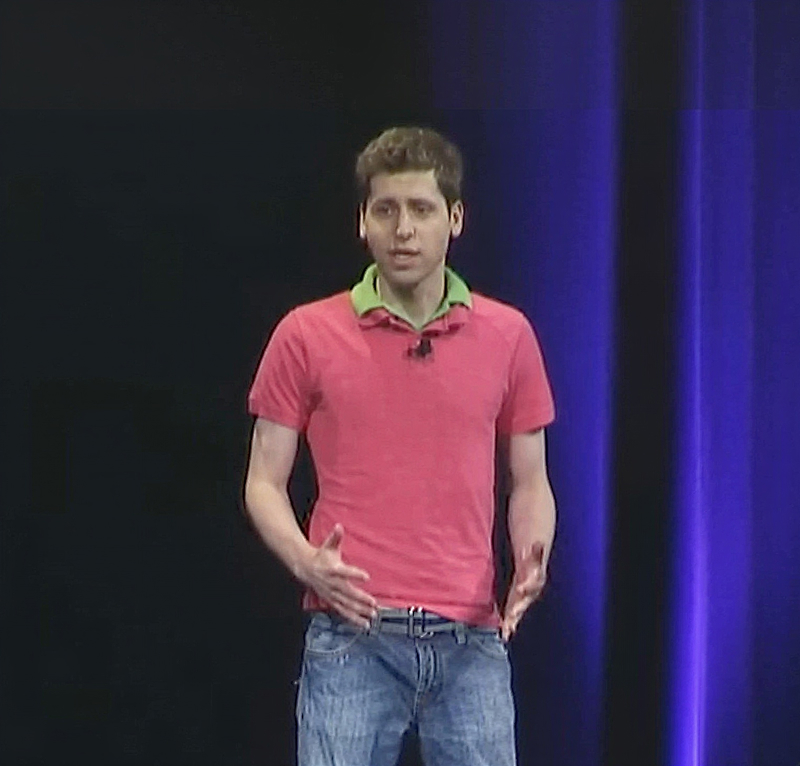
OpenAI during YC

Sam was part of YC's inaugural batch in S05 and founded OpenAI as YC Research in 2015.

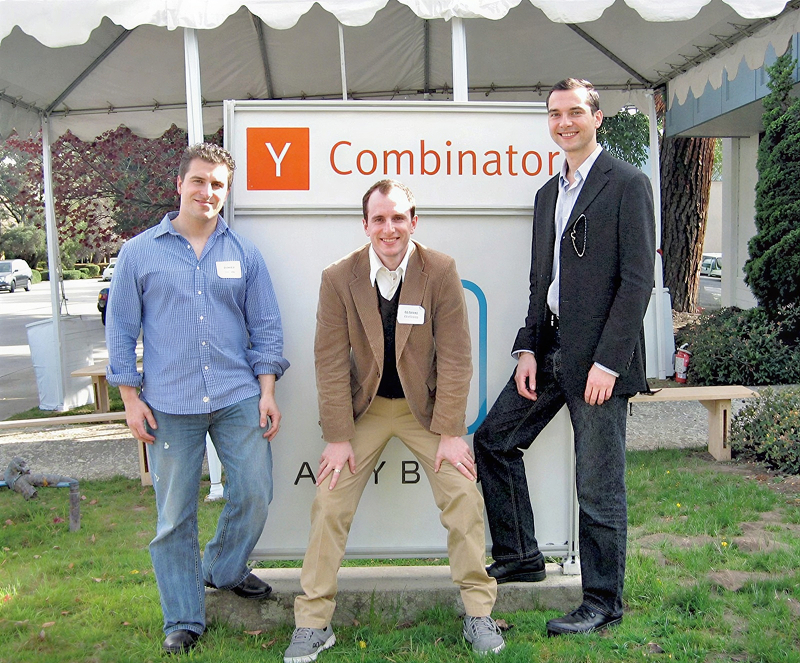
Airbnb during YC

Brian, Joe, and Nate did YC in W09.

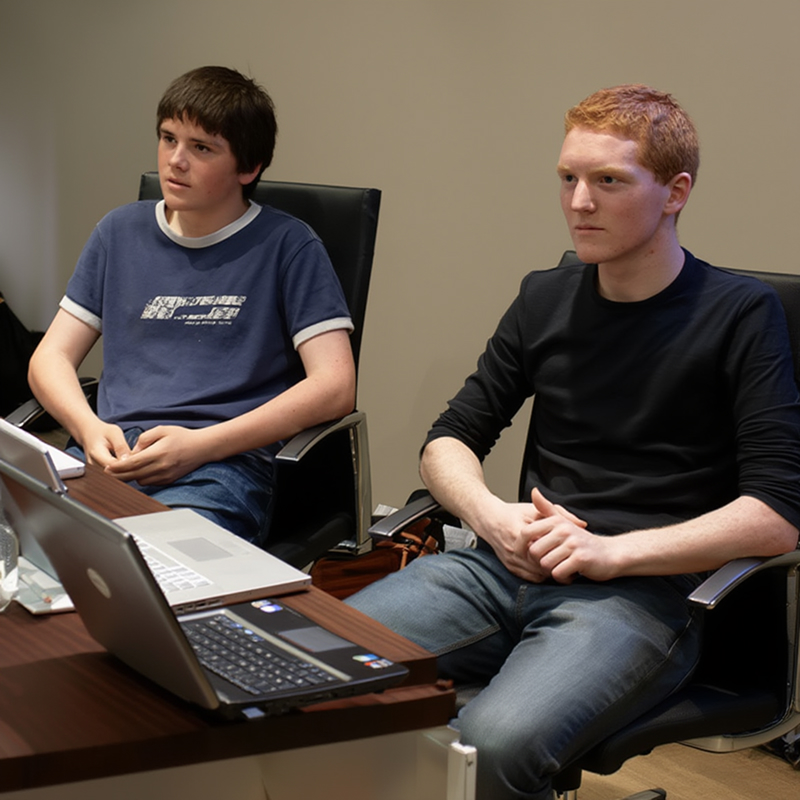
Stripe during YC

The Collison brothers did YC twice—first in W07 and then in S09, when they started Stripe.

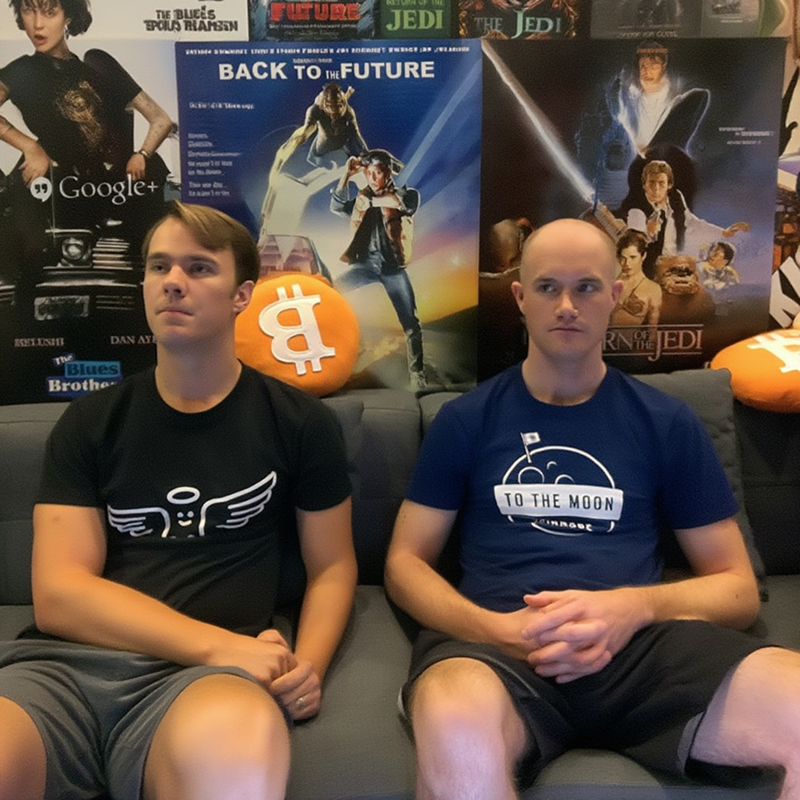
Coinbase during YC

Fred and Brian met on Reddit and did YC in S12.

DoorDash during YC

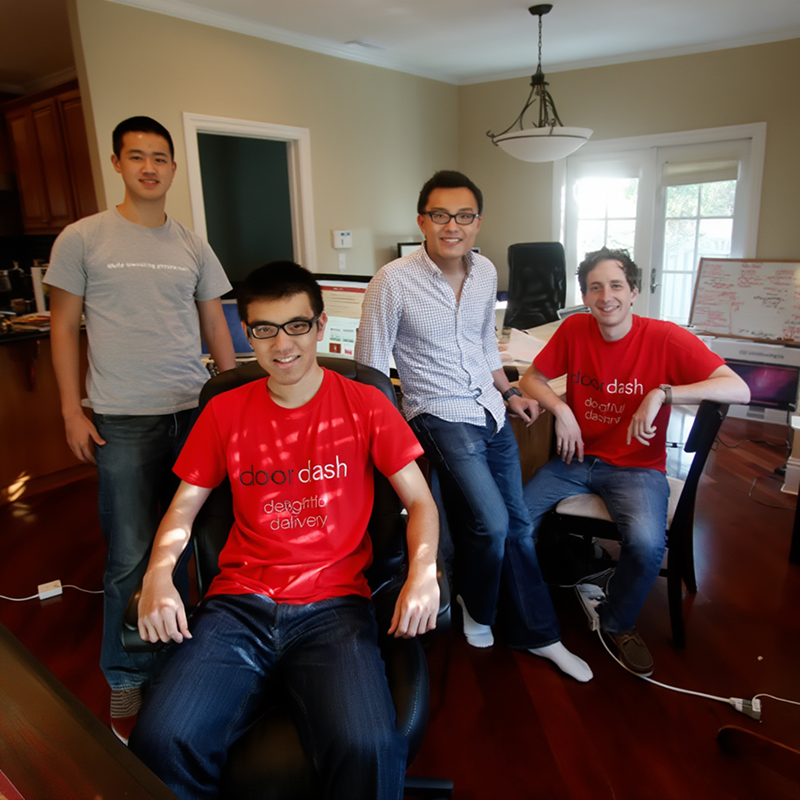
Andy, Stanley, Tony, and Evan did YC in S13.

Scale AI during YC

Alexandr and Lucy did YC S16 and pivoted during the batch.

Dropbox during YC

Arash and Drew started Dropbox at MIT and did YC in S07.

Reddit during YC

Alexis and Steve were in the inaugural YC batch in S05.

Instacart during YC

Apoorva, Max, and Brandon did YC in S12.

GitLab during YC

Sid and Dmytro did YC in S14.

Kalshi during YC

Tarek and Luana did YC in W19.

Replit during YC

Haya and Amjad interviewing for the YC W18 batch.

Twitch during YC

Michael, Justin, Kyle, and Emmett in YC W07.

Now

OpenAI now

Sam built OpenAI into a $500B company.

Airbnb now

Airbnb went public in 2020 at an over $100B valuation.

Stripe now

Stripe is now the internet’s $107B payments backbone.

Coinbase now

Coinbase went public in 2021 at a $86B valuation.

DoorDash now

DoorDash went public in 2020 at a valuation of $39B.

Scale AI now

In 2025, Meta acquired 49% of Scale for over $14B.

Dropbox now

Dropbox had the biggest tech IPO of 2018 at a $9B valuation.

Reddit now

Reddit went public in 2024 at a $6.4B valuation.

Instacart now

Instacart went public in 2023 at a $10B valuation.

GitLab now

GitLab went public in 2021 at an $11B valuation.

Kalshi now

Kalshi reached an $11B valuation in 2025.

Replit now

Replit became a leading AI coding platform valued at over $9B.

Twitch now

Twitch was acquired by Amazon for nearly $1B.

In 2005, Y Combinator developed a new model of startup funding. Four times a year we invest $500k in a select group of startups. They move to San Francisco for three months, where we work intensively with them to get the company into the best possible shape, before they present to a large audience of investors on Demo Day.

But YC doesn’t end on Demo Day. We and the YC alumni network continue to help founders for the life of their company, and beyond.

In Founders’ Words

YC compresses months of growth into weeks.

The sense of urgency is so infectious among founders that it becomes the most productive period in most people’s lives.

It’s a community of founders that you can’t find anywhere else.

It feels like having the entire world at your back—from Partners to batchmates.

Being surrounded by the top 1% of founders in the world just completely resets the bar.

You leave with a completely new sense of how fast ‘fast’ can be.

Be in the room with …

Brian Chesky — Airbnb

Sam Altman — OpenAI

Greg Brockman — OpenAI

Michael Truell — Cursor

Paul Graham — Y Combinator

Guillermo Rauch — Vercel

Dylan Field — Figma

Emmett Shear — Twitch

Tony Xu — DoorDash

All partners were YC founders first

Garry Tan — Posterous, S08

Harj Taggar — Auctomatic, W07

Jared Friedman — Scribd, S06

Aaron Epstein — Creative Market, W10

Diana Hu — Escher Reality, S17

Gustaf Alströmer — Heysan, W07

Nicolas Dessaigne — Algolia, W14

Tom Blomfield — GoCardless, S11

Brad Flora — Perfect Audience, S11

Pete Koomen — Optimizely, W10

Ankit Gupta — Reverie Labs, W18

Tyler Bosmeny — Clever, S12

David Lieb — Bump, S09

Andrew Miklas — PagerDuty, S10

Harshita Arora — AtoB, S20

Jon Xu — FutureAdvisor, S10

Chris Golda — BackType, S08

Grey Baker — Pincites, S23

It's never too early to apply.

We fund companies with no revenue, product, or fully baked idea.

Apply

The Daily Front Page 3 of 12
Monday, October 9, 2006 The Daily Front No. #061009 — Campus to Company
article

A Student's Guide to Startups

by phyllis·▲ 16 points·0 comments·paulgraham.com ↗
there will increasingly be a third option: to start your own startup.

Till recently graduating seniors had two choices: get a job or go to grad school. I think there will increasingly be a third option: to start your own startup. But how common will that be?

I'm sure the default will always be to get a job, but starting a startup could well become as popular as grad school. In the late 90s my professor friends used to complain that they couldn't get grad students, because all the undergrads were going to work for startups. I wouldn't be surprised if that situation returns, but with one difference: this time they'll be starting their own instead of going to work for other people's.

The most ambitious students will at this point be asking: Why wait till you graduate? Why not start a startup while you're in college? In fact, why go to college at all? Why not start a startup instead?

A year and a half ago I gave a talk where I said that the average age of the founders of Yahoo, Google, and Microsoft was 24, and that if grad students could start startups, why not undergrads? I'm glad I phrased that as a question, because now I can pretend it wasn't merely a rhetorical one. At the time I couldn't imagine why there should be any lower limit for the age of startup founders. Graduation is a bureaucratic change, not a biological one. And certainly there are undergrads as competent technically as most grad students. So why shouldn't undergrads be able to start startups as well as grad students?

I now realize that something does change at graduation: you lose a huge excuse for failing. Regardless of how complex your life is, you'll find that everyone else, including your family and friends, will discard all the low bits and regard you as having a single occupation at any given time. If you're in college and have a summer job writing software, you still read as a student. Whereas if you graduate and get a job programming, you'll be instantly regarded by everyone as a programmer.

The problem with starting a startup while you're still in school is that there's a built-in escape hatch. If you start a startup in the summer between your junior and senior year, it reads to everyone as a summer job. So if it goes nowhere, big deal; you return to school in the fall with all the other seniors; no one regards you as a failure, because your occupation is student, and you didn't fail at that. Whereas if you start a startup just one year later, after you graduate, as long as you're not accepted to grad school in the fall the startup reads to everyone as your occupation. You're now a startup founder, so you have to do well at that.

For nearly everyone, the opinion of one's peers is the most powerful motivator of all—more powerful even than the nominal goal of most startup founders, getting rich. [1] About a month into each funding cycle we have an event called Prototype Day where each startup presents to the others what they've got so far. You might think they wouldn't need any more motivation. They're working on their cool new idea; they have funding for the immediate future; and they're playing a game with only two outcomes: wealth or failure. You'd think that would be motivation enough. And yet the prospect of a demo pushes most of them into a rush of activity.

Even if you start a startup explicitly to get rich, the money you might get seems pretty theoretical most of the time. What drives you day to day is not wanting to look bad.

You probably can't change that. Even if you could, I don't think you'd want to; someone who really, truly doesn't care what his peers think of him is probably a psychopath. So the best you can do is consider this force like a wind, and set up your boat accordingly. If you know your peers are going to push you in some direction, choose good peers, and position yourself so they push you in a direction you like.

Graduation changes the prevailing winds, and those make a difference. Starting a startup is so hard that it's a close call even for the ones that succeed. However high a startup may be flying now, it probably has a few leaves stuck in the landing gear from those trees it barely cleared at the end of the runway. In such a close game, the smallest increase in the forces against you can be enough to flick you over the edge into failure.

When we first started Y Combinator we encouraged people to start startups while they were still in college. That's partly because Y Combinator began as a kind of summer program. We've kept the program shape—all of us having dinner together once a week turns out to be a good idea—but we've decided now that the party line should be to tell people to wait till they graduate.

Does that mean you can't start a startup in college? Not at all. Sam Altman, the co-founder of Loopt, had just finished his sophomore year when we funded them, and Loopt is probably the most promising of all the startups we've funded so far. But Sam Altman is a very unusual guy. Within about three minutes of meeting him, I remember thinking "Ah, so this is what Bill Gates must have been like when he was 19."

If it can work to start a startup during college, why do we tell people not to? For the same reason that the probably apocryphal violinist, whenever he was asked to judge someone's playing, would always say they didn't have enough talent to make it as a pro. Succeeding as a musician takes determination as well as talent, so this answer works out to be the right advice for everyone. The ones who are uncertain believe it and give up, and the ones who are sufficiently determined think "screw that, I'll succeed anyway."

So our official policy now is only to fund undergrads we can't talk out of it. And frankly, if you're not certain, you should wait. It's not as if all the opportunities to start companies are going to be gone if you don't do it now. Maybe the window will close on some idea you're working on, but that won't be the last idea you'll have. For every idea that times out, new ones become feasible. Historically the opportunities to start startups have only increased with time.

In that case, you might ask, why not wait longer? Why not go work for a while, or go to grad school, and then start a startup? And indeed, that might be a good idea. If I had to pick the sweet spot for startup founders, based on who we're most excited to see applications from, I'd say it's probably the mid-twenties. Why? What advantages does someone in their mid-twenties have over someone who's 21? And why isn't it older? What can 25 year olds do that 32 year olds can't? Those turn out to be questions worth examining.

Plus

If you start a startup soon after college, you'll be a young founder by present standards, so you should know what the relative advantages of young founders are. They're not what you might think. As a young founder your strengths are: stamina, poverty, rootlessness, colleagues, and ignorance.

The importance of stamina shouldn't be surprising. If you've heard anything about startups you've probably heard about the long hours. As far as I can tell these are universal. I can't think of any successful startups whose founders worked 9 to 5. And it's particularly necessary for younger founders to work long hours because they're probably not as efficient as they'll be later.

Your second advantage, poverty, might not sound like an advantage, but it is a huge one. Poverty implies you can live cheaply, and this is critically important for startups. Nearly every startup that fails, fails by running out of money. It's a little misleading to put it this way, because there's usually some other underlying cause. But regardless of the source of your problems, a low burn rate gives you more opportunity to recover from them. And since most startups make all kinds of mistakes at first, room to recover from mistakes is a valuable thing to have.

Most startups end up doing something different than they planned. The way the successful ones find something that works is by trying things that don't. So the worst thing you can do in a startup is to have a rigid, pre-ordained plan and then start spending a lot of money to implement it. Better to operate cheaply and give your ideas time to evolve.

Recent grads can live on practically nothing, and this gives you an edge over older founders, because the main cost in software startups is people. The guys with kids and mortgages are at a real disadvantage. This is one reason I'd bet on the 25 year old over the 32 year old. The 32 year old probably is a better programmer, but probably also has a much more expensive life. Whereas a 25 year old has some work experience (more on that later) but can live as cheaply as an undergrad.

Robert Morris and I were 29 and 30 respectively when we started Viaweb, but fortunately we still lived like 23 year olds. We both had roughly zero assets. I would have loved to have a mortgage, since that would have meant I had a house. But in retrospect having nothing turned out to be convenient. I wasn't tied down and I was used to living cheaply.

Even more important than living cheaply, though, is thinking cheaply. One reason the Apple II was so popular was that it was cheap. The computer itself was cheap, and it used cheap, off-the-shelf peripherals like a cassette tape recorder for data storage and a TV as a monitor. And you know why? Because Woz designed this computer for himself, and he couldn't afford anything more.

We benefitted from the same phenomenon. Our prices were daringly low for the time. The top level of service was $300 a month, which was an order of magnitude below the norm. In retrospect this was a smart move, but we didn't do it because we were smart. $300 a month seemed like a lot of money to us. Like Apple, we created something inexpensive, and therefore popular, simply because we were poor.

A lot of startups have that form: someone comes along and makes something for a tenth or a hundredth of what it used to cost, and the existing players can't follow because they don't even want to think about a world in which that's possible. Traditional long distance carriers, for example, didn't even want to think about VoIP. (It was coming, all the same.) Being poor helps in this game, because your own personal bias points in the same direction technology evolves in.

The advantages of rootlessness are similar to those of poverty. When you're young you're more mobile—not just because you don't have a house or much stuff, but also because you're less likely to have serious relationships. This turns out to be important, because a lot of startups involve someone moving.

The founders of Kiko, for example, are now en route to the Bay Area to start their next startup. It's a better place for what they want to do. And it was easy for them to decide to go, because neither as far as I know has a serious girlfriend, and everything they own will fit in one car—or more precisely, will either fit in one car or is crappy enough that they don't mind leaving it behind.

They at least were in Boston. What if they'd been in Nebraska, like Evan Williams was at their age? Someone wrote recently that the drawback of Y Combinator was that you had to move to participate. It couldn't be any other way. The kind of conversations we have with founders, we have to have in person. We fund a dozen startups at a time, and we can't be in a dozen places at once. But even if we could somehow magically save people from moving, we wouldn't. We wouldn't be doing founders a favor by letting them stay in Nebraska. Places that aren't startup hubs are toxic to startups. You can tell that from indirect evidence. You can tell how hard it must be to start a startup in Houston or Chicago or Miami from the microscopically small number, per capita, that succeed there. I don't know exactly what's suppressing all the startups in these towns—probably a hundred subtle little things—but something must be. [2]

Maybe this will change. Maybe the increasing cheapness of startups will mean they'll be able to survive anywhere, instead of only in the most hospitable environments. Maybe 37signals is the pattern for the future. But maybe not. Historically there have always been certain towns that were centers for certain industries, and if you weren't in one of them you were at a disadvantage. So my guess is that 37signals is an anomaly. We're looking at a pattern much older than "Web 2.0" here.

Perhaps the reason more startups per capita happen in the Bay Area than Miami is simply that there are more founder-type people there. Successful startups are almost never started by one person. Usually they begin with a conversation in which someone mentions that something would be a good idea for a company, and his friend says, "Yeah, that is a good idea, let's try it." If you're missing that second person who says "let's try it," the startup never happens. And that is another area where undergrads have an edge. They're surrounded by people willing to say that. At a good college you're concentrated together with a lot of other ambitious and technically minded people—probably more concentrated than you'll ever be again. If your nucleus spits out a neutron, there's a good chance it will hit another nucleus.

The number one question people ask us at Y Combinator is: Where can I find a co-founder? That's the biggest problem for someone starting a startup at 30. When they were in school they knew a lot of good co-founders, but by 30 they've either lost touch with them or these people are tied down by jobs they don't want to leave.

Viaweb was an anomaly in this respect too. Though we were comparatively old, we weren't tied down by impressive jobs. I was trying to be an artist, which is not very constraining, and Robert, though 29, was still in grad school due to a little interruption in his academic career back in 1988. So arguably the Worm made Viaweb possible. Otherwise Robert would have been a junior professor at that age, and he wouldn't have had time to work on crazy speculative projects with me.

Most of the questions people ask Y Combinator we have some kind of answer for, but not the co-founder question. There is no good answer. Co-founders really should be people you already know. And by far the best place to meet them is school. You have a large sample of smart people; you get to compare how they all perform on identical tasks; and everyone's life is pretty fluid. A lot of startups grow out of schools for this reason. Google, Yahoo, and Microsoft, among others, were all founded by people who met in school. (In Microsoft's case, it was high school.)

Many students feel they should wait and get a little more experience before they start a company. All other things being equal, they should. But all other things are not quite as equal as they look. Most students don't realize how rich they are in the scarcest ingredient in startups, co-founders. If you wait too long, you may find that your friends are now involved in some project they don't want to abandon. The better they are, the more likely this is to happen.

One way to mitigate this problem might be to actively plan your startup while you're getting those n years of experience. Sure, go off and get jobs or go to grad school or whatever, but get together regularly to scheme, so the idea of starting a startup stays alive in everyone's brain. I don't know if this works, but it can't hurt to try.

It would be helpful just to realize what an advantage you have as students. Some of your classmates are probably going to be successful startup founders; at a great technical university, that is a near certainty. So which ones? If I were you I'd look for the people who are not just smart, but incurable builders. Look for the people who keep starting projects, and finish at least some of them. That's what we look for. Above all else, above academic credentials and even the idea you apply with, we look for people who build things.

The other place co-founders meet is at work. Fewer do than at school, but there are things you can do to improve the odds. The most important, obviously, is to work somewhere that has a lot of smart, young people. Another is to work for a company located in a startup hub. It will be easier to talk a co-worker into quitting with you in a place where startups are happening all around you.

You might also want to look at the employment agreement you sign when you get hired. Most will say that any ideas you think of while you're employed by the company belong to them. In practice it's hard for anyone to prove what ideas you had when, so the line gets drawn at code. If you're going to start a startup, don't write any of the code while you're still employed. Or at least discard any code you wrote while still employed and start over. It's not so much that your employer will find out and sue you. It won't come to that; investors or acquirers or (if you're so lucky) underwriters will nail you first. Between t = 0 and when you buy that yacht, someone is going to ask if any of your code legally belongs to anyone else, and you need to be able to say no. [3]

The most overreaching employee agreement I've seen so far is Amazon's. In addition to the usual clauses about owning your ideas, you also can't be a founder of a startup that has another founder who worked at Amazon—even if you didn't know them or even work there at the same time. I suspect they'd have a hard time enforcing this, but it's a bad sign they even try. There are plenty of other places to work; you may as well choose one that keeps more of your options open.

Speaking of cool places to work, there is of course Google. But I notice something slightly frightening about Google: zero startups come out of there. In that respect it's a black hole. People seem to like working at Google too much to leave. So if you hope to start a startup one day, the evidence so far suggests you shouldn't work there.

I realize this seems odd advice. If they make your life so good that you don't want to leave, why not work there? Because, in effect, you're probably getting a local maximum. You need a certain activation energy to start a startup. So an employer who's fairly pleasant to work for can lull you into staying indefinitely, even if it would be a net win for you to leave. [4]

The best place to work, if you want to start a startup, is probably a startup. In addition to being the right sort of experience, one way or another it will be over quickly. You'll either end up rich, in which case problem solved, or the startup will get bought, in which case it it will start to suck to work there and it will be easy to leave, or most likely, the thing will blow up and you'll be free again.

Your final advantage, ignorance, may not sound very useful. I deliberately used a controversial word for it; you might equally call it innocence. But it seems to be a powerful force. My Y Combinator co-founder Jessica Livingston is just about to publish a book of interviews with startup founders, and I noticed a remarkable pattern in them. One after another said that if they'd known how hard it would be, they would have been too intimidated to start.

Ignorance can be useful when it's a counterweight to other forms of stupidity. It's useful in starting startups because you're capable of more than you realize. Starting startups is harder than you expect, but you're also capable of more than you expect, so they balance out.

Most people look at a company like Apple and think, how could I ever make such a thing? Apple is an institution, and I'm just a person. But every institution was at one point just a handful of people in a room deciding to start something. Institutions are made up, and made up by people no different from you.

I'm not saying everyone could start a startup. I'm sure most people couldn't; I don't know much about the population at large. When you get to groups I know well, like hackers, I can say more precisely. At the top schools, I'd guess as many as a quarter of the CS majors could make it as startup founders if they wanted.

That "if they wanted" is an important qualification—so important that it's almost cheating to append it like that—because once you get over a certain threshold of intelligence, which most CS majors at top schools are past, the deciding factor in whether you succeed as a founder is how much you want to. You don't have to be that smart. If you're not a genius, just start a startup in some unsexy field where you'll have less competition, like software for human resources departments. I picked that example at random, but I feel safe in predicting that whatever they have now, it wouldn't take genius to do better. There are a lot of people out there working on boring stuff who are desperately in need of better software, so however short you think you fall of Larry and Sergey, you can ratchet down the coolness of the idea far enough to compensate.

As well as preventing you from being intimidated, ignorance can sometimes help you discover new ideas. Steve Wozniak put this very strongly:

All the best things that I did at Apple came from (a) not having money and (b) not having done it before, ever. Every single thing that we came out with that was really great, I'd never once done that thing in my life.

When you know nothing, you have to reinvent stuff for yourself, and if you're smart your reinventions may be better than what preceded them. This is especially true in fields where the rules change. All our ideas about software were developed in a time when processors were slow, and memories and disks were tiny. Who knows what obsolete assumptions are embedded in the conventional wisdom? And the way these assumptions are going to get fixed is not by explicitly deallocating them, but by something more akin to garbage collection. Someone ignorant but smart will come along and reinvent everything, and in the process simply fail to reproduce certain existing ideas.

Minus

So much for the advantages of young founders. What about the disadvantages? I'm going to start with what goes wrong and try to trace it back to the root causes.

What goes wrong with young founders is that they build stuff that looks like class projects. It was only recently that we figured this out ourselves. We noticed a lot of similarities between the startups that seemed to be falling behind, but we couldn't figure out how to put it into words. Then finally we realized what it was: they were building class projects.

But what does that really mean? What's wrong with class projects? What's the difference between a class project and a real startup? If we could answer that question it would be useful not just to would-be startup founders but to students in general, because we'd be a long way toward explaining the mystery of the so-called real world.

There seem to be two big things missing in class projects: (1) an iterative definition of a real problem and (2) intensity.

The first is probably unavoidable. Class projects will inevitably solve fake problems. For one thing, real problems are rare and valuable. If a professor wanted to have students solve real problems, he'd face the same paradox as someone trying to give an example of whatever "paradigm" might succeed the Standard Model of physics. There may well be something that does, but if you could think of an example you'd be entitled to the Nobel Prize. Similarly, good new problems are not to be had for the asking.

In technology the difficulty is compounded by the fact that real startups tend to discover the problem they're solving by a process of evolution. Someone has an idea for something; they build it; and in doing so (and probably only by doing so) they realize the problem they should be solving is another one. Even if the professor let you change your project description on the fly, there isn't time enough to do that in a college class, or a market to supply evolutionary pressures. So class projects are mostly about implementation, which is the least of your problems in a startup.

It's not just that in a startup you work on the idea as well as implementation. The very implementation is different. Its main purpose is to refine the idea. Often the only value of most of the stuff you build in the first six months is that it proves your initial idea was mistaken. And that's extremely valuable. If you're free of a misconception that everyone else still shares, you're in a powerful position. But you're not thinking that way about a class project. Proving your initial plan was mistaken would just get you a bad grade. Instead of building stuff to throw away, you tend to want every line of code to go toward that final goal of showing you did a lot of work.

That leads to our second difference: the way class projects are measured. Professors will tend to judge you by the distance between the starting point and where you are now. If someone has achieved a lot, they should get a good grade. But customers will judge you from the other direction: the distance remaining between where you are now and the features they need. The market doesn't give a shit how hard you worked. Users just want your software to do what they need, and you get a zero otherwise. That is one of the most distinctive differences between school and the real world: there is no reward for putting in a good effort. In fact, the whole concept of a "good effort" is a fake idea adults invented to encourage kids. It is not found in nature.

Such lies seem to be helpful to kids. But unfortunately when you graduate they don't give you a list of all the lies they told you during your education. You have to get them beaten out of you by contact with the real world. And this is why so many jobs want work experience. I couldn't understand that when I was in college. I knew how to program. In fact, I could tell I knew how to program better than most people doing it for a living. So what was this mysterious "work experience" and why did I need it?

Now I know what it is, and part of the confusion is grammatical. Describing it as "work experience" implies it's like experience operating a certain kind of machine, or using a certain programming language. But really what work experience refers to is not some specific expertise, but the elimination of certain habits left over from childhood.

One of the defining qualities of kids is that they flake. When you're a kid and you face some hard test, you can cry and say "I can't" and they won't make you do it. Of course, no one can make you do anything in the grownup world either. What they do instead is fire you. And when motivated by that you find you can do a lot more than you realized. So one of the things employers expect from someone with "work experience" is the elimination of the flake reflex—the ability to get things done, with no excuses.

The other thing you get from work experience is an understanding of what work is, and in particular, how intrinsically horrible it is. Fundamentally the equation is a brutal one: you have to spend most of your waking hours doing stuff someone else wants, or starve. There are a few places where the work is so interesting that this is concealed, because what other people want done happens to coincide with what you want to work on. But you only have to imagine what would happen if they diverged to see the underlying reality.

It's not so much that adults lie to kids about this as never explain it. They never explain what the deal is with money. You know from an early age that you'll have some sort of job, because everyone asks what you're going to "be" when you grow up. What they don't tell you is that as a kid you're sitting on the shoulders of someone else who's treading water, and that starting working means you get thrown into the water on your own, and have to start treading water yourself or sink. "Being" something is incidental; the immediate problem is not to drown.

The relationship between work and money tends to dawn on you only gradually. At least it did for me. One's first thought tends to be simply "This sucks. I'm in debt. Plus I have to get up on monday and go to work." Gradually you realize that these two things are as tightly connected as only a market can make them.

So the most important advantage 24 year old founders have over 20 year old founders is that they know what they're trying to avoid. To the average undergrad the idea of getting rich translates into buying Ferraris, or being admired. To someone who has learned from experience about the relationship between money and work, it translates into something way more important: it means you get to opt out of the brutal equation that governs the lives of 99.9% of people. Getting rich means you can stop treading water.

Someone who gets this will work much harder at making a startup succeed—with the proverbial energy of a drowning man, in fact. But understanding the relationship between money and work also changes the way you work. You don't get money just for working, but for doing things other people want. Someone who's figured that out will automatically focus more on the user. And that cures the other half of the class-project syndrome. After you've been working for a while, you yourself tend to measure what you've done the same way the market does.

Of course, you don't have to spend years working to learn this stuff. If you're sufficiently perceptive you can grasp these things while you're still in school. Sam Altman did. He must have, because Loopt is no class project. And as his example suggests, this can be valuable knowledge. At a minimum, if you get this stuff, you already have most of what you gain from the "work experience" employers consider so desirable. But of course if you really get it, you can use this information in a way that's more valuable to you than that.

Now

So suppose you think you might start a startup at some point, either when you graduate or a few years after. What should you do now? For both jobs and grad school, there are ways to prepare while you're in college. If you want to get a job when you graduate, you should get summer jobs at places you'd like to work. If you want to go to grad school, it will help to work on research projects as an undergrad. What's the equivalent for startups? How do you keep your options maximally open?

One thing you can do while you're still in school is to learn how startups work. Unfortunately that's not easy. Few if any colleges have classes about startups. There may be business school classes on entrepreneurship, as they call it over there, but these are likely to be a waste of time. Business schools like to talk about startups, but philosophically they're at the opposite end of the spectrum. Most books on startups also seem to be useless. I've looked at a few and none get it right. Books in most fields are written by people who know the subject from experience, but for startups there's a unique problem: by definition the founders of successful startups don't need to write books to make money. As a result most books on the subject end up being written by people who don't understand it.

So I'd be skeptical of classes and books. The way to learn about startups is by watching them in action, preferably by working at one. How do you do that as an undergrad? Probably by sneaking in through the back door. Just hang around a lot and gradually start doing things for them. Most startups are (or should be) very cautious about hiring. Every hire increases the burn rate, and bad hires early on are hard to recover from. However, startups usually have a fairly informal atmosphere, and there's always a lot that needs to be done. If you just start doing stuff for them, many will be too busy to shoo you away. You can thus gradually work your way into their confidence, and maybe turn it into an official job later, or not, whichever you prefer. This won't work for all startups, but it would work for most I've known.

Number two, make the most of the great advantage of school: the wealth of co-founders. Look at the people around you and ask yourself which you'd like to work with. When you apply that test, you may find you get surprising results. You may find you'd prefer the quiet guy you've mostly ignored to someone who seems impressive but has an attitude to match. I'm not suggesting you suck up to people you don't really like because you think one day they'll be successful. Exactly the opposite, in fact: you should only start a startup with someone you like, because a startup will put your friendship through a stress test. I'm just saying you should think about who you really admire and hang out with them, instead of whoever circumstances throw you together with.

Another thing you can do is learn skills that will be useful to you in a startup. These may be different from the skills you'd learn to get a job. For example, thinking about getting a job will make you want to learn programming languages you think employers want, like Java and C++. Whereas if you start a startup, you get to pick the language, so you have to think about which will actually let you get the most done. If you use that test you might end up learning Ruby or Python instead.

But the most important skill for a startup founder isn't a programming technique. It's a knack for understanding users and figuring out how to give them what they want. I know I repeat this, but that's because it's so important. And it's a skill you can learn, though perhaps habit might be a better word. Get into the habit of thinking of software as having users. What do those users want? What would make them say wow?

This is particularly valuable for undergrads, because the concept of users is missing from most college programming classes. The way you get taught programming in college would be like teaching writing as grammar, without mentioning that its purpose is to communicate something to an audience. Fortunately an audience for software is now only an http request away. So in addition to the programming you do for your classes, why not build some kind of website people will find useful? At the very least it will teach you how to write software with users. In the best case, it might not just be preparation for a startup, but the startup itself, like it was for Yahoo and Google.

Notes

[1] Even the desire to protect one's children seems weaker, judging from things people have historically done to their kids rather than risk their community's disapproval. (I assume we still do things that will be regarded in the future as barbaric, but historical abuses are easier for us to see.)

[2] Worrying that Y Combinator makes founders move for 3 months also suggests one underestimates how hard it is to start a startup. You're going to have to put up with much greater inconveniences than that.

[3] Most employee agreements say that any idea relating to the company's present or potential future business belongs to them. Often as not the second clause could include any possible startup, and anyone doing due diligence for an investor or acquirer will assume the worst.

To be safe either (a) don't use code written while you were still employed in your previous job, or (b) get your employer to renounce, in writing, any claim to the code you write for your side project. Many will consent to (b) rather than lose a prized employee. The downside is that you'll have to tell them exactly what your project does.

[4] Geshke and Warnock only founded Adobe because Xerox ignored them. If Xerox had used what they built, they would probably never have left PARC.

The Daily Front Page 4 of 12
Monday, October 9, 2006 The Daily Front No. #061009 — Webscape
article

LikeBetter featured by BBC

by frobnicate·▲ 10 points·0 comments·news.bbc.co.uk ↗
You either love it or you hate it.

Kate Russell gives us her latest selection of the best sites on the World Wide Web.

SingShot website

SingShot

Every small child wants to be a pop star, but what do you do if you are grown-up, tone-deaf with as much rhythm as a bowl of apples? Well, there is always Karaoke.

You either love it or you hate it. But even if you are not the type of person to make a complete fool of yourself in front of a dumbstruck audience, you will find plenty to entertain you at SingShot.

SingShot is karaoke that has gone truly global, as users from all over the world log-in and record their own rather special versions of many popular tunes from a number of different genres.

Listening to other people's recordings requires nothing more than having your speakers plugged in, and in some cases the ability to endure some pretty tuneless warbling.

To vote on other people's recordings or make your own, you will need to register, which is free for the first 14 days. After that you will have to pay a monthly subscription to continue making recordings.

Once you have made a recording you can review it, and save it in either the public or private galleries, but be prepared for some fairly frank criticisms of your work if you choose to go public.


Qunu website

Qunu

Fed up with waiting for tech-support to pick up your ticket?

Need help right now and do not know where to turn?

Just point your browser at Qunu and enter a world of free information in real time, from real people.

It is early days yet, but as more experts register we can expect to see an enormous range of subjects tackled, not just in the technology sector.

Why not sign up to be an expert yourself? There are full instructions on the site.

It even works on mobile devices like your Blackberry, so you need never be far from a helping hand.


Likebetter website

Likebetter

Ever wondered what the things that you like say about you? Now you can find out at likebetter.

Rather than being a serious psychological profiling tool, this is just a bit of fun.

You are presented with two images, just click the one you like the look of better for whatever reason, be it aesthetics or content.

Keep going with image after image and when the brain icon in the bottom left-hand-corner of the page turns pink, click it to find out what the website thinks about you.

I found most of the predictions to be spookily accurate, and would love to know on what basis they make their conclusions.

If you choose to register you can even add your own images to the collection, invite your friends to guess which images you selected, or try out the game themselves to see how similar you are.


Imagination Cubed website

Imagination Cubed

Finally, a natty little toy that was sent in by Natasha Utting from New Zealand, and should be right up your street if you are into collaborative art projects.

Imagination Cubed's operation is simplicity itself.

You have a pen, a mouse, and if you have any friends who are online and looking for entertainment you have everything you need to start cubing your imagination.

Just click and drag the pen to draw. Inviting a friend can be done through e-mail, or if they are on AOL messenger that will work too.

Once they receive your invitation they will get a link to click to put them on the same page as you.

A great fun way to stay in touch with distant friends and relatives.

The Daily Front Page 5 of 12
Monday, October 9, 2006 The Daily Front No. #061009 — Hard Lessons
article

The Hardest Lessons for Startups to Learn

by phyllis·▲ 5 points·0 comments·paulgraham.com ↗
they're the ones I have to keep repeating.

The startups we've funded so far are pretty quick, but they seem quicker to learn some lessons than others. I think it's because some things about startups are kind of counterintuitive.

We've now invested in enough companies that I've learned a trick for determining which points are the counterintuitive ones: they're the ones I have to keep repeating.

So I'm going to number these points, and maybe with future startups I'll be able to pull off a form of Huffman coding. I'll make them all read this, and then instead of nagging them in detail, I'll just be able to say: number four!

1. Release Early.

The thing I probably repeat most is this recipe for a startup: get a version 1 out fast, then improve it based on users' reactions.

By "release early" I don't mean you should release something full of bugs, but that you should release something minimal. Users hate bugs, but they don't seem to mind a minimal version 1, if there's more coming soon.

There are several reasons it pays to get version 1 done fast. One is that this is simply the right way to write software, whether for a startup or not. I've been repeating that since 1993, and I haven't seen much since to contradict it. I've seen a lot of startups die because they were too slow to release stuff, and none because they were too quick. [1]

One of the things that will surprise you if you build something popular is that you won't know your users. Reddit now has almost half a million unique visitors a month. Who are all those people? They have no idea. No web startup does. And since you don't know your users, it's dangerous to guess what they'll like. Better to release something and let them tell you.

Wufoo took this to heart and released their form-builder before the underlying database. You can't even drive the thing yet, but 83,000 people came to sit in the driver's seat and hold the steering wheel. And Wufoo got valuable feedback from it: Linux users complained they used too much Flash, so they rewrote their software not to. If they'd waited to release everything at once, they wouldn't have discovered this problem till it was more deeply wired in.

Even if you had no users, it would still be important to release quickly, because for a startup the initial release acts as a shakedown cruise. If anything major is broken-- if the idea's no good, for example, or the founders hate one another-- the stress of getting that first version out will expose it. And if you have such problems you want to find them early.

Perhaps the most important reason to release early, though, is that it makes you work harder. When you're working on something that isn't released, problems are intriguing. In something that's out there, problems are alarming. There is a lot more urgency once you release. And I think that's precisely why people put it off. They know they'll have to work a lot harder once they do. [2]

2. Keep Pumping Out Features.

Of course, "release early" has a second component, without which it would be bad advice. If you're going to start with something that doesn't do much, you better improve it fast.

What I find myself repeating is "pump out features." And this rule isn't just for the initial stages. This is something all startups should do for as long as they want to be considered startups.

I don't mean, of course, that you should make your application ever more complex. By "feature" I mean one unit of hacking-- one quantum of making users' lives better.

As with exercise, improvements beget improvements. If you run every day, you'll probably feel like running tomorrow. But if you skip running for a couple weeks, it will be an effort to drag yourself out. So it is with hacking: the more ideas you implement, the more ideas you'll have. You should make your system better at least in some small way every day or two.

This is not just a good way to get development done; it is also a form of marketing. Users love a site that's constantly improving. In fact, users expect a site to improve. Imagine if you visited a site that seemed very good, and then returned two months later and not one thing had changed. Wouldn't it start to seem lame? [3]

They'll like you even better when you improve in response to their comments, because customers are used to companies ignoring them. If you're the rare exception-- a company that actually listens-- you'll generate fanatical loyalty. You won't need to advertise, because your users will do it for you.

This seems obvious too, so why do I have to keep repeating it? I think the problem here is that people get used to how things are. Once a product gets past the stage where it has glaring flaws, you start to get used to it, and gradually whatever features it happens to have become its identity. For example, I doubt many people at Yahoo (or Google for that matter) realized how much better web mail could be till Paul Buchheit showed them.

I think the solution is to assume that anything you've made is far short of what it could be. Force yourself, as a sort of intellectual exercise, to keep thinking of improvements. Ok, sure, what you have is perfect. But if you had to change something, what would it be?

If your product seems finished, there are two possible explanations: (a) it is finished, or (b) you lack imagination. Experience suggests (b) is a thousand times more likely.

3. Make Users Happy.

Improving constantly is an instance of a more general rule: make users happy. One thing all startups have in common is that they can't force anyone to do anything. They can't force anyone to use their software, and they can't force anyone to do deals with them. A startup has to sing for its supper. That's why the successful ones make great things. They have to, or die.

When you're running a startup you feel like a little bit of debris blown about by powerful winds. The most powerful wind is users. They can either catch you and loft you up into the sky, as they did with Google, or leave you flat on the pavement, as they do with most startups. Users are a fickle wind, but more powerful than any other. If they take you up, no competitor can keep you down.

As a little piece of debris, the rational thing for you to do is not to lie flat, but to curl yourself into a shape the wind will catch.

I like the wind metaphor because it reminds you how impersonal the stream of traffic is. The vast majority of people who visit your site will be casual visitors. It's them you have to design your site for. The people who really care will find what they want by themselves.

The median visitor will arrive with their finger poised on the Back button. Think about your own experience: most links you follow lead to something lame. Anyone who has used the web for more than a couple weeks has been trained to click on Back after following a link. So your site has to say "Wait! Don't click on Back. This site isn't lame. Look at this, for example."

There are two things you have to do to make people pause. The most important is to explain, as concisely as possible, what the hell your site is about. How often have you visited a site that seemed to assume you already knew what they did? For example, the corporate site that says the company makes

enterprise content management solutions for business that enable organizations to unify people, content and processes to minimize business risk, accelerate time-to-value and sustain lower total cost of ownership.

An established company may get away with such an opaque description, but no startup can. A startup should be able to explain in one or two sentences exactly what it does. [4] And not just to users. You need this for everyone: investors, acquirers, partners, reporters, potential employees, and even current employees. You probably shouldn't even start a company to do something that can't be described compellingly in one or two sentences.

The other thing I repeat is to give people everything you've got, right away. If you have something impressive, try to put it on the front page, because that's the only one most visitors will see. Though indeed there's a paradox here: the more you push the good stuff toward the front, the more likely visitors are to explore further. [5]

In the best case these two suggestions get combined: you tell visitors what your site is about by showing them. One of the standard pieces of advice in fiction writing is "show, don't tell." Don't say that a character's angry; have him grind his teeth, or break his pencil in half. Nothing will explain what your site does so well as using it.

The industry term here is "conversion." The job of your site is to convert casual visitors into users-- whatever your definition of a user is. You can measure this in your growth rate. Either your site is catching on, or it isn't, and you must know which. If you have decent growth, you'll win in the end, no matter how obscure you are now. And if you don't, you need to fix something.

4. Fear the Right Things.

Another thing I find myself saying a lot is "don't worry." Actually, it's more often "don't worry about this; worry about that instead." Startups are right to be paranoid, but they sometimes fear the wrong things.

Most visible disasters are not so alarming as they seem. Disasters are normal in a startup: a founder quits, you discover a patent that covers what you're doing, your servers keep crashing, you run into an insoluble technical problem, you have to change your name, a deal falls through-- these are all par for the course. They won't kill you unless you let them.

Nor will most competitors. A lot of startups worry "what if Google builds something like us?" Actually big companies are not the ones you have to worry about-- not even Google. The people at Google are smart, but no smarter than you; they're not as motivated, because Google is not going to go out of business if this one product fails; and even at Google they have a lot of bureaucracy to slow them down.

What you should fear, as a startup, is not the established players, but other startups you don't know exist yet. They're way more dangerous than Google because, like you, they're cornered animals.

Looking just at existing competitors can give you a false sense of security. You should compete against what someone else could be doing, not just what you can see people doing. A corollary is that you shouldn't relax just because you have no visible competitors yet. No matter what your idea, there's someone else out there working on the same thing.

That's the downside of it being easier to start a startup: more people are doing it. But I disagree with Caterina Fake when she says that makes this a bad time to start a startup. More people are starting startups, but not as many more as could. Most college graduates still think they have to get a job. The average person can't ignore something that's been beaten into their head since they were three just because serving web pages recently got a lot cheaper.

And in any case, competitors are not the biggest threat. Way more startups hose themselves than get crushed by competitors. There are a lot of ways to do it, but the three main ones are internal disputes, inertia, and ignoring users. Each is, by itself, enough to kill you. But if I had to pick the worst, it would be ignoring users. If you want a recipe for a startup that's going to die, here it is: a couple of founders who have some great idea they know everyone is going to love, and that's what they're going to build, no matter what.

Almost everyone's initial plan is broken. If companies stuck to their initial plans, Microsoft would be selling programming languages, and Apple would be selling printed circuit boards. In both cases their customers told them what their business should be-- and they were smart enough to listen.

As Richard Feynman said, the imagination of nature is greater than the imagination of man. You'll find more interesting things by looking at the world than you could ever produce just by thinking. This principle is very powerful. It's why the best abstract painting still falls short of Leonardo, for example. And it applies to startups too. No idea for a product could ever be so clever as the ones you can discover by smashing a beam of prototypes into a beam of users.

5. Commitment Is a Self-Fulfilling Prophecy.

I now have enough experience with startups to be able to say what the most important quality is in a startup founder, and it's not what you might think. The most important quality in a startup founder is determination. Not intelligence-- determination.

This is a little depressing. I'd like to believe Viaweb succeeded because we were smart, not merely determined. A lot of people in the startup world want to believe that. Not just founders, but investors too. They like the idea of inhabiting a world ruled by intelligence. And you can tell they really believe this, because it affects their investment decisions.

Time after time VCs invest in startups founded by eminent professors. This may work in biotech, where a lot of startups simply commercialize existing research, but in software you want to invest in students, not professors. Microsoft, Yahoo, and Google were all founded by people who dropped out of school to do it. What students lack in experience they more than make up in dedication.

Of course, if you want to get rich, it's not enough merely to be determined. You have to be smart too, right? I'd like to think so, but I've had an experience that convinced me otherwise: I spent several years living in New York.

You can lose quite a lot in the brains department and it won't kill you. But lose even a little bit in the commitment department, and that will kill you very rapidly.

Running a startup is like walking on your hands: it's possible, but it requires extraordinary effort. If an ordinary employee were asked to do the things a startup founder has to, he'd be very indignant. Imagine if you were hired at some big company, and in addition to writing software ten times faster than you'd ever had to before, they expected you to answer support calls, administer the servers, design the web site, cold-call customers, find the company office space, and go out and get everyone lunch.

And to do all this not in the calm, womb-like atmosphere of a big company, but against a backdrop of constant disasters. That's the part that really demands determination. In a startup, there's always some disaster happening. So if you're the least bit inclined to find an excuse to quit, there's always one right there.

But if you lack commitment, chances are it will have been hurting you long before you actually quit. Everyone who deals with startups knows how important commitment is, so if they sense you're ambivalent, they won't give you much attention. If you lack commitment, you'll just find that for some mysterious reason good things happen to your competitors but not to you. If you lack commitment, it will seem to you that you're unlucky.

Whereas if you're determined to stick around, people will pay attention to you, because odds are they'll have to deal with you later. You're a local, not just a tourist, so everyone has to come to terms with you.

At Y Combinator we sometimes mistakenly fund teams who have the attitude that they're going to give this startup thing a shot for three months, and if something great happens, they'll stick with it-- "something great" meaning either that someone wants to buy them or invest millions of dollars in them. But if this is your attitude, "something great" is very unlikely to happen to you, because both acquirers and investors judge you by your level of commitment.

If an acquirer thinks you're going to stick around no matter what, they'll be more likely to buy you, because if they don't and you stick around, you'll probably grow, your price will go up, and they'll be left wishing they'd bought you earlier. Ditto for investors. What really motivates investors, even big VCs, is not the hope of good returns, but the fear of missing out. [6] So if you make it clear you're going to succeed no matter what, and the only reason you need them is to make it happen a little faster, you're much more likely to get money.

You can't fake this. The only way to convince everyone that you're ready to fight to the death is actually to be ready to.

You have to be the right kind of determined, though. I carefully chose the word determined rather than stubborn, because stubbornness is a disastrous quality in a startup. You have to be determined, but flexible, like a running back. A successful running back doesn't just put his head down and try to run through people. He improvises: if someone appears in front of him, he runs around them; if someone tries to grab him, he spins out of their grip; he'll even run in the wrong direction briefly if that will help. The one thing he'll never do is stand still. [7]

6. There Is Always Room.

I was talking recently to a startup founder about whether it might be good to add a social component to their software. He said he didn't think so, because the whole social thing was tapped out. Really? So in a hundred years the only social networking sites will be the Facebook, MySpace, Flickr, and Del.icio.us? Not likely.

There is always room for new stuff. At every point in history, even the darkest bits of the dark ages, people were discovering things that made everyone say "why didn't anyone think of that before?" We know this continued to be true up till 2004, when the Facebook was founded-- though strictly speaking someone else did think of that.

The reason we don't see the opportunities all around us is that we adjust to however things are, and assume that's how things have to be. For example, it would seem crazy to most people to try to make a better search engine than Google. Surely that field, at least, is tapped out. Really? In a hundred years-- or even twenty-- are people still going to search for information using something like the current Google? Even Google probably doesn't think that.

In particular, I don't think there's any limit to the number of startups. Sometimes you hear people saying "All these guys starting startups now are going to be disappointed. How many little startups are Google and Yahoo going to buy, after all?" That sounds cleverly skeptical, but I can prove it's mistaken. No one proposes that there's some limit to the number of people who can be employed in an economy consisting of big, slow-moving companies with a couple thousand people each. Why should there be any limit to the number who could be employed by small, fast-moving companies with ten each? It seems to me the only limit would be the number of people who want to work that hard.

The limit on the number of startups is not the number that can get acquired by Google and Yahoo-- though it seems even that should be unlimited, if the startups were actually worth buying-- but the amount of wealth that can be created. And I don't think there's any limit on that, except cosmological ones.

So for all practical purposes, there is no limit to the number of startups. Startups make wealth, which means they make things people want, and if there's a limit on the number of things people want, we are nowhere near it. I still don't even have a flying car.

7. Don't Get Your Hopes Up.

This is another one I've been repeating since long before Y Combinator. It was practically the corporate motto at Viaweb.

Startup founders are naturally optimistic. They wouldn't do it otherwise. But you should treat your optimism the way you'd treat the core of a nuclear reactor: as a source of power that's also very dangerous. You have to build a shield around it, or it will fry you.

The shielding of a reactor is not uniform; the reactor would be useless if it were. It's pierced in a few places to let pipes in. An optimism shield has to be pierced too. I think the place to draw the line is between what you expect of yourself, and what you expect of other people. It's ok to be optimistic about what you can do, but assume the worst about machines and other people.

This is particularly necessary in a startup, because you tend to be pushing the limits of whatever you're doing. So things don't happen in the smooth, predictable way they do in the rest of the world. Things change suddenly, and usually for the worse.

Shielding your optimism is nowhere more important than with deals. If your startup is doing a deal, just assume it's not going to happen. The VCs who say they're going to invest in you aren't. The company that says they're going to buy you isn't. The big customer who wants to use your system in their whole company won't. Then if things work out you can be pleasantly surprised.

The reason I warn startups not to get their hopes up is not to save them from being disappointed when things fall through. It's for a more practical reason: to prevent them from leaning their company against something that's going to fall over, taking them with it.

For example, if someone says they want to invest in you, there's a natural tendency to stop looking for other investors. That's why people proposing deals seem so positive: they want you to stop looking. And you want to stop too, because doing deals is a pain. Raising money, in particular, is a huge time sink. So you have to consciously force yourself to keep looking.

Even if you ultimately do the first deal, it will be to your advantage to have kept looking, because you'll get better terms. Deals are dynamic; unless you're negotiating with someone unusually honest, there's not a single point where you shake hands and the deal's done. There are usually a lot of subsidiary questions to be cleared up after the handshake, and if the other side senses weakness-- if they sense you need this deal-- they will be very tempted to screw you in the details.

VCs and corp dev guys are professional negotiators. They're trained to take advantage of weakness. [8] So while they're often nice guys, they just can't help it. And as pros they do this more than you. So don't even try to bluff them. The only way a startup can have any leverage in a deal is genuinely not to need it. And if you don't believe in a deal, you'll be less likely to depend on it.

So I want to plant a hypnotic suggestion in your heads: when you hear someone say the words "we want to invest in you" or "we want to acquire you," I want the following phrase to appear automatically in your head: don't get your hopes up. Just continue running your company as if this deal didn't exist. Nothing is more likely to make it close.

The way to succeed in a startup is to focus on the goal of getting lots of users, and keep walking swiftly toward it while investors and acquirers scurry alongside trying to wave money in your face.

Speed, not Money

The way I've described it, starting a startup sounds pretty stressful. It is. When I talk to the founders of the companies we've funded, they all say the same thing: I knew it would be hard, but I didn't realize it would be this hard.

So why do it? It would be worth enduring a lot of pain and stress to do something grand or heroic, but just to make money? Is making money really that important?

No, not really. It seems ridiculous to me when people take business too seriously. I regard making money as a boring errand to be got out of the way as soon as possible. There is nothing grand or heroic about starting a startup per se.

So why do I spend so much time thinking about startups? I'll tell you why. Economically, a startup is best seen not as a way to get rich, but as a way to work faster. You have to make a living, and a startup is a way to get that done quickly, instead of letting it drag on through your whole life. [9]

We take it for granted most of the time, but human life is fairly miraculous. It is also palpably short. You're given this marvellous thing, and then poof, it's taken away. You can see why people invent gods to explain it. But even to people who don't believe in gods, life commands respect. There are times in most of our lives when the days go by in a blur, and almost everyone has a sense, when this happens, of wasting something precious. As Ben Franklin said, if you love life, don't waste time, because time is what life is made of.

So no, there's nothing particularly grand about making money. That's not what makes startups worth the trouble. What's important about startups is the speed. By compressing the dull but necessary task of making a living into the smallest possible time, you show respect for life, and there is something grand about that.

Notes

[1] Startups can die from releasing something full of bugs, and not fixing them fast enough, but I don't know of any that died from releasing something stable but minimal very early, then promptly improving it.

[2] I know this is why I haven't released Arc. The moment I do, I'll have people nagging me for features.

[3] A web site is different from a book or movie or desktop application in this respect. Users judge a site not as a single snapshot, but as an animation with multiple frames. Of the two, I'd say the rate of improvement is more important to users than where you currently are.

[4] It should not always tell this to users, however. For example, MySpace is basically a replacement mall for mallrats. But it was wiser for them, initially, to pretend that the site was about bands.

[5] Similarly, don't make users register to try your site. Maybe what you have is so valuable that visitors should gladly register to get at it. But they've been trained to expect the opposite. Most of the things they've tried on the web have sucked-- and probably especially those that made them register.

[6] VCs have rational reasons for behaving this way. They don't make their money (if they make money) off their median investments. In a typical fund, half the companies fail, most of the rest generate mediocre returns, and one or two "make the fund" by succeeding spectacularly. So if they miss just a few of the most promising opportunities, it could hose the whole fund.

[7] The attitude of a running back doesn't translate to soccer. Though it looks great when a forward dribbles past multiple defenders, a player who persists in trying such things will do worse in the long term than one who passes.

[8] The reason Y Combinator never negotiates valuations is that we're not professional negotiators, and don't want to turn into them.

[9] There are two ways to do work you love: (a) to make money, then work on what you love, or (b) to get a job where you get paid to work on stuff you love. In practice the first phases of both consist mostly of unedifying schleps, and in (b) the second phase is less secure.

The Daily Front Page 6 of 12
Monday, October 9, 2006 The Daily Front No. #061009 — The Participation Gap
article

Participation Inequality: Encouraging More Users to Contribute

by frobnicate·▲ 5 points·0 comments·useit.com ↗
most users don't participate very much.

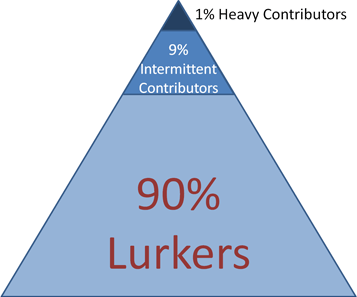
Summary: In most online communities, 90% of users are lurkers who never contribute, 9% of users contribute a little, and 1% of users account for almost all the action.

All large-scale, multi-user communities and online social networks that rely on users to contribute content or build services share one property: most users don't participate very much. Often, they simply lurk in the background.

In contrast, a tiny minority of users usually accounts for a disproportionately large amount of the content and other system activity. This phenomenon of participation inequality was first studied in depth by Will Hill in the early '90s, when he worked down the hall from me at Bell Communications Research.

the 90-9-1 rule for participation in an online community

When you plot the amount of activity for each user, the result is a Zipf curve, which shows as a straight line in a log-log diagram.

User participation often more or less follows a 90–9–1 rule:

  • 90% of users are lurkers (i.e., read or observe, but don't contribute).
  • 9% of users contribute from time to time, but other priorities dominate their time.
  • 1% of users participate a lot and account for most contributions: it can seem as if they don't have lives because they often post just minutes after whatever event they're commenting on occurs.

Early Inequality Research

Before the web, researchers documented participation inequality in media such as Usenet newsgroups, CompuServe bulletin boards, Internet mailing lists, and internal discussion boards in big companies. A study of more than 2 million messages on Usenet found that 27% of the postings were from people who posted only a single message. Conversely, the most active 3% of posters contributed 25% of the messages.

In Whittaker et al.'s Usenet study, a randomly selected posting was equally likely to come from one of the 580,000 low-frequency contributors or one of the 19,000 high-frequency contributors. Obviously, if you want to assess the "feelings of the community" it's highly unfair if one subgroup's 19,000 members have the same representation as another subgroup's 580,000 members. More importantly, such inequities would give you a biased understanding of the community, because many differences almost certainly exist between people who post a lot and those who post a little. And you would never hear from the silent majority of lurkers.

Inequality on the Web

There are about 1.1 billion Internet users, yet only 55 million users (5%) have weblogs according to Technorati. Worse, in 2006 there are only 1.6 million postings per day; because some people post multiple times per day, only 0.1% of users post daily.

Blogs have even worse participation inequality than is evident in the 90–9–1 rule that characterizes most online communities. With blogs, the rule is more like 95–5–0.1.

Inequalities are also found on Wikipedia, where more than 99% of users are lurkers. According to Wikipedia's "about" page, it has only 68,000 active contributors, which is 0.2% of the 32 million unique visitors it has in the U.S. alone.

Wikipedia's most active 1,000 people — 0.003% of its users — contribute about two-thirds of the site's edits. Wikipedia is thus even more skewed than blogs, with a 99.8–0.2–0.003 rule.

Participation inequality exists in many places on the web. A quick glance at Amazon.com, for example, showed that the site had sold thousands of copies of a book that had only 12 reviews, meaning that less than 1% of customers contribute reviews.

Furthermore, at the time I wrote this, 167,113 of Amazon's book reviews were contributed by just a few "top-100" reviewers; the most prolific reviewer had written 12,423 reviews. How anybody can write that many reviews — let alone read that many books — is beyond me, but it's a classic example of participation inequality.

Downsides of Participation Inequality

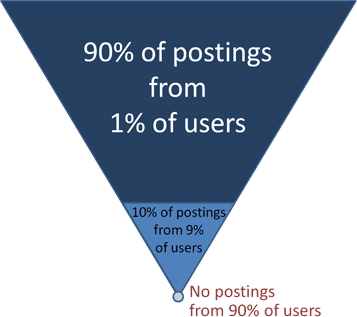
Visualization of the amount of contributions from different user segments

Participation inequality is not necessarily unfair because some users are more equal than others, to misquote Animal Farm. If lurkers want to contribute, they are usually allowed to do so.

The problem is that the overall system is not representative of average web users. On any given user-participation site, you almost always hear from the same 1% of users, who almost certainly differ from the 90% you never hear from. This can cause trouble for several reasons:

  • Customer feedback. If your company looks to Web postings for customer feedback on its products and services, you're getting an unrepresentative sample.
  • Reviews. Similarly, if you're a consumer trying to find out which restaurant to patronize or what books to buy, online reviews represent only a tiny minority of the people who have experiences with those products and services.
  • Politics. If a party nominates a candidate supported by the "netroots," it will almost certainly lose because such candidates' positions will be too extreme to appeal to mainstream voters. Postings on political blogs come from less than 0.1% of voters, most of whom are hardcore leftists (for Democrats) or rightists (for Republicans).
  • Search. Search engine results pages (SERP) are mainly sorted based on how many other sites link to each destination. When 0.1% of users do most of the linking, we risk having search relevance get ever more out of whack with what's useful for the remaining 99.9% of users. Search engines need to rely more on behavioral data gathered across samples that better represent users, which is why they are building internet access services.
  • Signal-to-noise ratio. Discussion groups drown in flames and low-quality postings, making it hard to identify the gems. Many users stop reading comments because they don't have time to wade through the swamp of postings from people with little to say.

Skewed Lurker–Contributor Ratio for Non-Profit Social Network

(Update 2009) The "Causes" application on Facebook had 25 million users in April 2009, but only 185,000 had given a donation, even though the application offers the ability to give to 179,000 different non-profit organizations. (This according to the Washington Post.)

Thus, social networking for charity fundraising has a 99.3% lurkers and 0.7% contributors rule — even more skewed than the other participation inequalities we have seen. The data doesn't say how many of the 0.7% of users who donated have been frequent contributors, but most likely it's less than 1/10, meaning that the full rule would look something like 99–1–0 (when rounded to the nearest integer).

This finding comes as no big surprise, for 3 reasons:

  • Despite the hype, Facebook is just another form of collaborative environment, meaning that long-established laws for online communities should hold. Maybe with small modifications, but the basics are due to human nature and don't change when moving to a new platform.
  • Donating money is a stronger form of action than simply writing user-contributed content, so it makes sense that this form of contribution would have extremely strong participation inequality. If we measured the amount of money donated and not just a binary give/not-give distinction, the skew would likely be even more extreme.
  • Our research on the user experience of donating to charities online found that most non-profits don't provide the information users want before they're willing to be separated from their money. (Or the info isn't shown in a sufficiently web-oriented manner.)

How to Overcome Participation Inequality

You can't.

The first step to dealing with participation inequality is to recognize that it will always be with us. It's existed in every online community and multi-user service that has ever been studied.

Your only real choice here is in how you shape the inequality curve's angle. Are you going to have the usual 90–9–1 distribution, or the more radical 99–1–0.1 distribution common in some social websites? Can you achieve a more equitable distribution of, say, 80–16–4? (That is, only 80% lurkers, with 16% contributing some and 4% contributing the most.)

Although participation will always be somewhat unequal, there are ways to better equalize it, including:

  • Make it easier to contribute. The lower the barrier, the more people will jump through the hoop. For example, Netflix lets users rate movies by clicking a star rating, which is much easier than writing a natural-language review.
  • Make participation a side effect. Even better, let users participate with zero effort by making their contributions a side effect of something else they're doing. For example, Amazon's "people who bought this book, bought these other books" recommendations are a side effect of people buying books. You don't have to do anything special to have your book preferences entered into the system. Will Hill coined the term read wear for this type of effect: the simple activity of reading (or using) something will "wear" it down and thus leave its marks — just like a cookbook will automatically fall open to the recipe you prepare the most.
  • Edit, don't create. Let users build their contributions by modifying existing templates rather than creating complete entities from scratch. Editing a template is more enticing and has a gentler learning curve than facing the horror of a blank page. In avatar-based systems like Second Life, for example, most users modify standard-issue avatars rather than create their own.
  • Reward — but don't over-reward — participants. Rewarding people for contributing will help motivate users who have lives outside the Internet, and thus will broaden your participant base. Although money is always good, you can also give contributors preferential treatment (such as discounts or advance notice of new stuff), or even just put gold stars on their profiles. But don't give too much to the most active participants, or you'll simply encourage them to dominate the system even more.
  • Promote quality contributors. If you display all contributions equally, then people who post only when they have something important to say will be drowned out by the torrent of material from the hyperactive 1%. Instead, give extra prominence to good contributions and to contributions from people who've proven their value, as indicated by their reputation ranking.

Your website's design undoubtedly influences participation inequality for better or worse. Being aware of the problem is the first step to alleviating it, and finding ways to broaden participation will become even more important as the web's social networking services continue to grow.

The Daily Front Page 7 of 12
Monday, October 9, 2006 The Daily Front No. #061009 — Shared Governance
article

Will Silicon Light Illuminate the Future?

by pg·▲ 2 points·0 comments·technologyreview.com ↗
shared governance and collaborative decision-making.

Graduate Students and administrators now collaborate on decisions that affect grad student life.

Over the past three years, MIT has begun to adopt a new way of making decisions–one that fosters experiential learning of leadership skills and promotes a sense of community among graduate students. While graduate students at many of our peer institutions have moved toward unionization, MIT has embraced the ideals of shared governance and collaborative decision-making. The Institute has not fully realized these ideals, but it has made progress on the graduate level–and the results have been overwhelmingly positive.

I became involved in student-life issues during my first year at MIT, amidst a string of student-life “crises.” In January 2002, a proposal was put forward to convert half of Ashdown House, the cultural hub of MIT’s graduate community, into undergraduate housing. Neither students nor faculty housemasters had been involved in shaping the proposal, and the graduate community, feeling the injustice of its exclusion, quickly mobilized against it.

By fall 2002, the situation at MIT had reached a turning point. Frustrated by a number of Institute decisions, graduate students pushed for increased transparency, accountability, and student involvement in decision-making. When the next major student-life issue arose–the restructuring of graduate residence hall rents to more equitably reflect differences among rooms–the Graduate Student Council (GSC) was invited to help address it.

The GSC worked with student leaders from all graduate residences to develop and conduct a survey of the grad student population and, based on the data obtained, determined an optimal rent structure.

In the spring, graduate students faced another challenge. The Institute announced that health insurance premiums for graduate students would increase by 60 percent the next year. Students were outraged, and some even began to feel that unionization might be the only way to fight back. The Graduate Student Council immediately voiced the students’ concerns to administrators and began working with them to find a solution to the problem. In the end, MIT agreed to fully subsidize health insurance for all graduate students supported by the Institute.

About the same time, MIT began to search for its 16th president. As another sign of the changing MIT culture, students were given a historic opportunity to provide input into the selection process. The students described what they saw as MIT’s opportunities and challenges for the future and the characteristics MIT’s next president would need to best lead the institution, and they nominated candidates for the position. The report presented by the student advisory group is regarded by faculty and MIT Corporation members as having made a significant contribution to the process that led to the selection of President Susan Hockfield.

Through these projects, graduate students have proven that, if given an opportunity, they can bring a level of professionalism, dedication, and creative thought to the table that can result in better solutions to campus problems. They have also proven the value of collaborative decision-making, which involves students in its early stages, rather than leaving them to react after decisions are made. Students have noticed the success of the process over the past few years and, as a result, have become more active in the Graduate Student Council and in Institute affairs more generally.

This year, the council has been proactive in its initiatives and further increased its collaborations. Its initiatives include the formation of a student advisory board (in collaboration with the Undergraduate Association) to orient President Hockfield toward student culture and concerns, an examination of the state of graduate advising and how it can be improved, and an in-depth look at the needs of graduate student families.

Every year, through mechanisms such as national conferences, the Graduate Student Council is able to get an idea of how our peer organizations fare in their efforts to make their voices heard. We see many of them still struggling and feeling forced to turn to the aggressive and polarizing model of graduate student unions. The MIT model of shared governance puts us far ahead of the curve. We must continue to place value on the principles essential to effective collaboration–inclusiveness, communication, transparency, and accountability.

The Daily Front Page 8 of 12
Monday, October 9, 2006 The Daily Front No. #061009 — Startup Wire
The Daily Front Page 9 of 12
Monday, October 9, 2006 The Daily Front No. #061009 — Platform Deals
article

Google, YouTube acquisition announcement could come tonight

by perler·▲ 7 points·0 comments·techcrunch.com ↗

Update: The NYTimes is now reporting that according to people involved in the talks, Google and YouTube will have separate board meetings today to approve a deal between them and could announce an acquisition after trading ends.

Acquisition was not yet among this morning’s early announcements, but several more content deals were unveiled today between Google, YouTube and big content publishers. Warner Music and Sony BMG will allow Google to play music videos and various value added content like artist interviews. According to the Financial Times, Google also said that “it would develop technology that would enable users to include certain content in videos that they create and upload to Google Video.” That sounds a lot like the copyright detecting technology YouTube touted when it signed its own deal with Warner last month. The FT reported that there would be both ad supported free content provided in the deal as well as downloads priced at $1.99. So far this morning free videos from Madonna, Justin Timberlake, Panic! At the Disco, John Mayer and Green Day are highlighted on the front page of Google Video. Don’t rush over all at once, please.

Meanwhile, YouTube announced deals this morning with CBS, Vivendi’s Universal Music Group and Sony BMG. CBS will populate a branded channel on YouTube with clips from Survivor, previews of upcoming shows and other content. Vivendi Universal and Sony BMG announced deals almost identical to the Warner deal last month and today with Google; featured content and permission for users to reuse content in the context of automated copyright detection.

What does it all mean? Unless copyrighted content detection just happened to be announced by Google at the same time a possible acquisition of YouTube and their technology was under discussion – that alone may rightly add more fuel to the fire. I was wondering last night whether this was in part a technology acquisition by Google and not just aimed at pulling in the community of users. It’s also entirely possible that Google has built its own copyrighted content detection technology. We covered a startup, Guba, that announced its own in July.

No matter what it says about a possible acquisition, today’s early announcements are a sign that YouTube and its deal with Warner were both important trail blazers for things to come.

article

PhotoShow: Broadcast Photos to Cable TV

by frobnicate·▲ 3 points·0 comments·techcrunch.com ↗

We’ve been tracking SimpleStar’s PhotoShow since Brian Ascher, a general partner at Venrock Associates, mentioned them in passing over lunch a couple of months ago. The hook? He said “Imagine if you could watch your friends’ Flickr pictures or YouTube videos on a dedicated cable television channel.” No need to get your grandmother online. Just point her to channel 917 and she can see your most recent vacation pictures right there on her television.

Photoshow’s core offering is an online slide-show service. Users can create a slide show, adding photos, video clips, templates, music, transitions, captions and effects. I created a test slide show in a couple of minutes. It’s free, and registration is not required to create a slide show.

These shows can then be embedded into MySpace or any other website, or a link to the show can be sent from the service. Photoshow also allows users to buy a dvd version of the show. As far as basic tools to create slide show memories of vacations and other events, PhotoShow is top notch.

And then there is the broadcast-to-tv feature.

It’s currently available only to Time Warner cable subscribers in Hawaii. On October 18 the company will have an official launch party and announce expanded coverage of the service. Once it’s live, users can click a button and, once approved, add it to a local cable channel. This channel is menu driven – when viewers go to the site they can scroll through various topical categories and find slide shows that people have published to the channel. There’s no privacy for these shows, but the convenience factor for sharing these with people who want to view them on television is innovative. If Photoshow is successful in closing deals with local cable channels, this differentiating factor with competitors could make it a winner.

The company has raised $6.3 million from Venrock in August 2005. The company, which also sells a desktop version of the PhotoShow software, presented at DEMO two weeks ago (the video of the demo is available here). See Dan Farber’s recent coverage of the company as well.

The Daily Front Page 10 of 12
Monday, October 9, 2006 The Daily Front No. #061009 — Odds & Ends
article

Business Intelligence the Inkling Way: cool prediction markets software

by perler·▲ 4 points·0 comments·360techblog.com ↗

ADUBOLA kini tampil sebagai pionir situs gacor yang mengandalkan keunggulan mesin server Slot Thailand untuk menjamin kelancaran bermain dan peluang kemenangan tertinggi. Dikenal luas sebagai pusat permainan Slot Gacor paling menjanjikan hari ini, situs ADUBOLA memberikan gebrakan baru dengan menetapkan standar minimal deposit 1000 yang sangat ramah di kantong semua kalangan. Anda tidak perlu menyiapkan modal besar, karena cukup dengan nominal 1000 atau yang sering disebut 1k rupiah, akses menuju jackpot maxwin bernilai fantastis sudah terbuka sangat lebar. Ekosistem transaksi di sini juga dibangun dengan sangat efisien bagi para member dapat memanfaatkan kemudahan deposit 1000 maupun alternatif deposit 1k yang selalu diproses secara instan dan aman. Melalui layanan Slot Deposit 1000 yang terintegrasi secara profesional ini, setiap pengguna dijamin mendapatkan pengalaman bertaruh yang mutakhir, adil, dan sangat menguntungkan di setiap putaran mesin favorit mereka.

The Daily Front Page 11 of 12
Monday, October 9, 2006 The Daily Front No. #061009 — Colophon

That's the Front for Today

Issue No. #061009 — Monday, October 9, 2006 — went to press 2026-07-31 at 11:14 UTC.

About This Magazine

The Daily Front is a daily digital magazine assembled from the stories that reached the front page of Hacker News on Monday, October 9, 2006. Headlines, points, and comment counts are recorded as they stood at press time. All articles remain the property of their original authors — every piece links back to its source and its discussion thread.

How It Was Made

Fetched, cleaned, and typeset by an automated pipeline. An editor model laid out the pages, chose the highlights, and briefed the cover illustrator — 13 model calls and 105k tokens in total. Set in Jacquard 12, Playfair Display, Source Serif 4, and IBM Plex Mono, all served via Google Fonts under the SIL Open Font License.

The Cover

The cover illustration was commissioned with this prompt:

A cinematic newspaper-style illustration of a crowded garage classroom at dusk: young founders in hoodies and rolled-up sleeves gathered around a long wooden table covered with laptops, circuit boards, notebooks, coffee cups, and hand-drawn startup diagrams; behind them, an old printing press fades into shadow while a glowing seedling of light rises from the table and branches into a web of wires, tiny rockets, and a vintage television silhouette, symbolizing the shift from old media to new builders. Warm dramatic lighting, rich paper textures, realistic detail, one striking scene, no text, no letters, no logos.

Editorial gouache-and-ink illustration on heavyweight newsprint, preserving the crowded garage classroom and every specified object; use a restrained dusk palette of tobacco brown, charcoal, oxidized teal, muted vermilion, and electric amber, with the seedling’s glow as the sole luminous accent. Cast cinematic side-light through dusty air, creating long shadows, rim-lit faces, and soft pools of reflected light across the wooden table. Build tactile dry-brush, stippled halftone, rubbed graphite, and imperfect ink-registration textures, with realistic figures and objects. Use a slightly elevated wide-angle perspective, centered on the table’s glowing seedling as the visual axis, compressing the old printing press into the shadowed background while the wire branches lead outward through the crowded foreground; maintain a single dense, newspaper-cover tableau with no added elements.

Absolutely no text, letters, numbers, readable symbols, or logos anywhere in the image.

Production Ledger

Stage Model Calls Tokens In Tokens Out
extract gpt-5.6-luna 10 65,464 23,668
layout gpt-5.4-mini 1 3,892 5,996
cover gpt-5.6-luna 1 247 171
cover gpt-image-2 1 312 5,488

The Publisher

Published by Johnny.

Support the Press

If The Daily Front brightens your morning, consider supporting its publisher.

Credits & Contact

All content — articles, posts, comments, and the images within them — belongs to its original authors and is reproduced here to point readers back to the source. Full credit goes to those creators; every item links to its original and its Hacker News discussion.

If you are an author and would like your content removed from an issue, write to hi@johnnys.page and it will be taken down.

Feedback is always welcome at the same address: hi@johnnys.page.

Credit where credit is due.

Every page of this issue began as someone else's work — these are the original sources, linked in full.

  1. Y Combinator by pg — ycombinator.com·HN discussion ↗
  2. A Student's Guide to Startups by phyllis — paulgraham.com·HN discussion ↗
  3. LikeBetter featured by BBC by frobnicate — news.bbc.co.uk·HN discussion ↗
  4. The Hardest Lessons for Startups to Learn by phyllis — paulgraham.com·HN discussion ↗
  5. Participation Inequality: Encouraging More Users to Contribute by frobnicate — useit.com·HN discussion ↗
  6. Will Silicon Light Illuminate the Future? by pg — technologyreview.com·HN discussion ↗
  7. Feld: Question Regarding NDAs by pg — feld.com·HN discussion ↗
  8. Salaries at VC-backed companies by pg — avc.blogs.com·HN discussion ↗
  9. Sevin Rosen Unfunds - why? by phyllis — featured.gigaom.com·HN discussion ↗
  10. NYC Developer Dilemma by onebeerdave — avc.blogs.com·HN discussion ↗
  11. Google, YouTube acquisition announcement could come tonight by perler — techcrunch.com·HN discussion ↗
  12. Woz Interview: the early days of Apple by phyllis — foundersatwork.com·HN discussion ↗
  13. Wired: The Desktop is Dead by farmer — wired.com·HN discussion ↗
  14. PhotoShow: Broadcast Photos to Cable TV by frobnicate — techcrunch.com·HN discussion ↗
  15. Voddler Raises $2.2M For Virtual Cable TV by farmer — thealarmclock.com·HN discussion ↗
  16. weekendr: social network for the weekend by askjigga — weekendr.com·HN discussion ↗
  17. Business Intelligence the Inkling Way: cool prediction markets software by perler — 360techblog.com·HN discussion ↗
  18. Small is Beautiful: Building a Successful Company with Less Capital by pg — blogs.zdnet.com·HN discussion ↗

Browse all issues in the archive →